Roof Permits
Roof permit: do you need one to replace a roof? Nobody can answer that nationally — but the question has a five-minute answer
The most-searched version of this question ends with the word myself, and that changes what the answer has to cover. Whether a roof permit is required is decided by your city or county, not by your state and not by the internet: in Seattle a one- or two-family home can be re-roofed without one, in Miami-Dade every roofing job needs a permit application on file. This page shows how the rule is written, how to get yours in a single phone call, what the permit actually buys you, what it costs when you skip it, and — because the search says myself — what you legally become the moment you sign the application instead of a contractor.
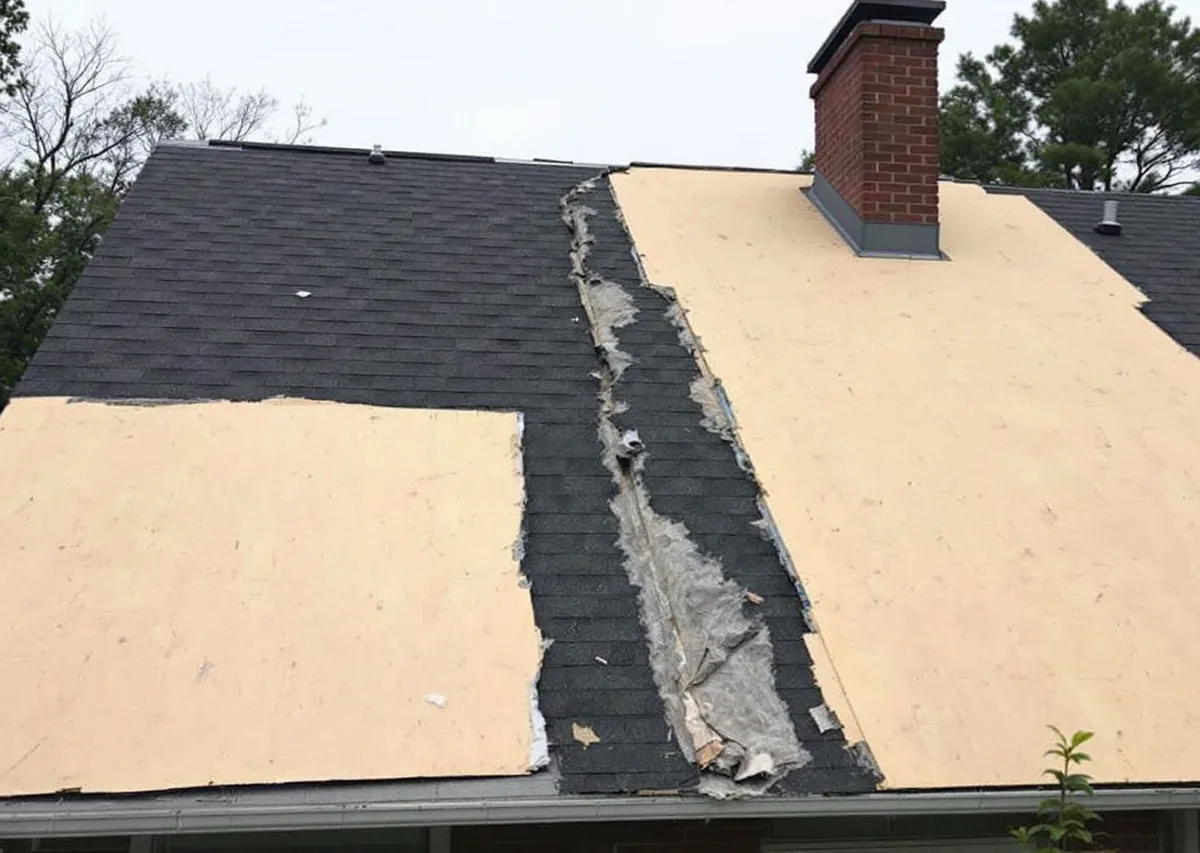
The short answer, and why every page you have read gives you the long one
For a full roof replacement, yes, in most of the United States you need a building permit — and the pages that stop there are not being cautious, they are being vague, because the rule is not theirs to state. Permits are issued by the jurisdiction that has building authority over your address: a city, a county, sometimes a township. Two houses forty minutes apart can have different answers, and both answers are correct.
That is why the honest version of “do you need a permit to replace a roof” is not a number or a yes. It is a method: find out who has authority over your address, ask them one sentence, and get the answer that is binding for you. Everything else on this page — what the permit is for, when a repair is small enough to be exempt, what happens if the work is done without one, what changes when you pull it yourself — is what to do with that answer once you have it.
- Is a permit needed for roof replacement? Usually. A tear-off and re-cover changes the roof assembly, and that is the work re-roof rules are written around. Whether you call it replacing the roof or redoing it, the answer follows the work and not the word. Usually is not always, and the exception is not rare enough to guess at.
- Do I need a permit to fix my roof? Often not. Small like-for-like repairs are treated as maintenance in many places — up to a local threshold that is stated in square feet or dollars, and that you can ask for by name.
- Do I need a permit to replace my roof myself? The permit question and the myself question are two different questions. The first is about the work. The second is about who the building department will hold responsible, and that one has a federal-sized answer further down this page.
Jurisdiction
Who decides: the answer is written by your city or county, not by your state
A roofing permit requirement is a local ordinance built on a state-adopted code. The state sets the floor; the local building department writes the counter.
Three layers, and only one of them answers your phone
Most states adopt a version of a model residential code and amend it. Your city or county then adopts that code, amends it again, and runs the office that issues permits and sends inspectors. When someone asks “is a permit required to replace a roof” in Pennsylvania, Virginia, North Carolina, South Carolina or Oregon, the state-level answer is real but incomplete — the binding version is whatever the municipality with authority over the address has written, and that is the office you call.
The same question, asked in six places
“Do you need a permit to redo a roof in Chicago” is answered by Chicago’s buildings department, and the same question in Maryland is answered by the county or city there, not by Annapolis. A Denver roofing permit is Denver’s to issue, an OKC roofing permit is Oklahoma City’s, and whether you need a permit for roof repair in Fort Wayne is answered in Fort Wayne. Searching the city name plus “roofing permit” finds a page; calling the number on that page gets the version that applies to your address today, including the amendment that was passed after the page was written.
What is the purpose of a roof permit system in the first place
Not revenue — the fees are small compared with the job. A permit does three things: it creates a dated public record that the roof was replaced, it schedules an inspection by somebody who is not being paid by the roofer, and it gives the jurisdiction a way to stop work that is being done wrong before it is covered up. Those three are also exactly what a homeowner gets out of it, which is why the permit is worth more to you than to the city.
Who is the authority over your address, in thirty seconds
If you are inside city limits, it is the city. If you are unincorporated, it is the county. If you do not know which, your property tax bill does — it lists the taxing jurisdictions. Search “[city or county] building permit”, and if what you find is a permit-assistance service rather than a government office, keep looking: roofing permit assistance in FL and elsewhere is a paid service, not the authority, and the authority is free to ask.
Evidence
Two real cities, opposite answers
Both are large American jurisdictions. Both publish their rule. They disagree, and reading them side by side is the fastest cure for “you always need a permit” and “nobody checks anyway.”
Seattle: a one- or two-family home can be re-roofed with no permit
Seattle’s Department of Construction and Inspections states it plainly: “A permit is not required for re-roof work at one- and two-family homes and townhouses if no changes are made to the building envelope other than adding or replacing insulation, and the insulation value is equivalent to or better than the existing structure.” The line for when one is needed is equally explicit: “You need a re-roof permit when you are repairing an area greater than 500 square feet or replacing roofing materials on commercial and multifamily projects.” And when a permit is required, the process is not the obstacle people imagine — “We issue re-roofing permits on the same day that you apply online.”
Miami-Dade: every roofing job starts with a permit application
At the other end of the country and the other end of the weather, Miami-Dade County publishes the opposite default: “The Uniform Permit Application form is required for all roofing permits.” Roofing there also carries hurricane-mitigation obligations, including “Retrofit requirements and/or secondary waterproofing when an existing roof is replaced.” A Miami roof replacement is a permitted job with a documented assembly, because the roof is the part of the house that a hurricane tests first.
What the contrast is actually telling you
Not that one city is lax and the other strict. It is telling you that the permit rule tracks the local risk and the local code history: a city where roofs fail by rain has different priorities from a county where roofs fail by wind at 150 miles an hour. It also means that any page — including this one — that tells you the answer for your address without knowing your address is guessing. What we can do is tell you exactly which sentence to ask for.
| Question | Seattle, WA | Miami-Dade County, FL |
|---|---|---|
| Permit for re-roofing a single-family home? | Not required, if the building envelope is otherwise unchanged | Required — a Uniform Permit Application for all roofing permits |
| Where the line is drawn | Repairs over 500 square feet, and commercial or multifamily work | No stated exemption for roofing work |
| Extra obligations on replacement | Insulation value not to be worsened | Hurricane-mitigation retrofit and secondary waterproofing |
| Turnaround | Same day when applied for online | Contractor e-permitting available for selected assemblies |
Our Own Count
What six jurisdictions actually say, read on the same day
We read the published roofing rule of six American jurisdictions on September 2026 and wrote down what each one says. The result contradicts the answer you will find everywhere else.
The internet’s consensus is “yes, you need a permit.” Of the six jurisdictions below, four publish conditions under which a residential re-roof needs no building permit at all — and they are not small towns. Method and dates are in the note under the table.
| Jurisdiction | Permit for a residential re-roof? | Where the line sits, in their words |
|---|---|---|
| Seattle, WA | Not required, with conditions | “You need a re-roof permit when you are repairing an area greater than 500 square feet or replacing roofing materials on commercial and multifamily projects” |
| Portland, OR | Not required, with exceptions | “Reroofing with a roofing material of similar weight does not need a building permit” — but “You will need a permit to reroof dwellings in Wildfire Zones, to reroof a townhouse, or to install building-integrated photovoltaic (solar) roof panels and other photovoltaic roof coverings” |
| Chicago, IL | Not required on pitched residential roofs | “roof repair, recover, or replacement on a roof with a pitch of at least 2:12” — and “A building permit is required for any structural repair and any work on low-slope roofs” |
| Denver, CO | Required above a small threshold | “All repairs that are more than 10% of the roof square footage or two roof squares (whichever is smaller) require a roof permit” |
| Miami-Dade County, FL | Required for all roofing work | “The Uniform Permit Application form is required for all roofing permits” |
| Florida (statewide rule) | Statute governs how much must meet current code | “only the repaired, replaced, or recovered portion is required to be constructed in accordance with the Florida Building Code in effect” |
What this count changes
It kills two pieces of common advice at once. “You always need a permit” is wrong in four of these six places. And “nobody bothers” is wrong in the fifth, where the county requires an application for every roofing job and adds hurricane-mitigation obligations on top. Both halves of the folklore fail on the same table.
The pattern underneath
Read the middle column and the logic appears. Jurisdictions exempt the work when it is like-for-like and non-structural — Portland says similar weight, Chicago says pitched and non-structural, Seattle says the envelope is otherwise unchanged. They require it when the work touches structure, changes the assembly, or sits in a hazard zone: wildfire in Portland, hurricane in Miami-Dade, a landmark district in Denver, where “All roofing/siding work on individual landmarks or buildings within a historic district must be first approved by Landmark Preservation.” Your jurisdiction will be a variation on that logic — which is why the question to ask is about your scope, not about roofing in general.
Method: one reader, six jurisdictions, each rule taken verbatim from the jurisdiction’s own published page on September 2026; every source is linked in Sources. Sample chosen for geographic and climate spread, not randomly, and small enough that we describe it as six examples rather than a national rate. Rules change; the dates are on the record for that reason.
One State, In Detail
Florida is its own case: the 25 percent rule and what changed
If you are searching for a roofing permit in Florida, you are probably circling this rule without knowing its name.
What the rule used to mean
Florida’s building code has long carried a “25 percent rule”: once a quarter or more of a roof was repaired or replaced within a period, the whole roofing system had to be brought up to the current code rather than patched to the old one. On an older house that turned a repair into a replacement, which is precisely why the phrase shows up in every Florida roofing argument.
What the statute says now
Florida Statutes section 553.844 now carries an exception, and the wording is the part that matters: “if an existing roofing system or roof section was built, repaired, or replaced in compliance with the requirements of the 2007 Florida Building Code, or any subsequent editions of the Florida Building Code, and 25 percent or more of such roofing system or roof section is being repaired, replaced, or recovered, only the repaired, replaced, or recovered portion is required to be constructed in accordance with the Florida Building Code in effect, as applicable.” In plain terms — if the roof already met the 2007 Florida Building Code or a later edition, a 25-percent-or-greater repair no longer drags the entire roof up to current code; only the portion being worked on has to comply.
Why this drives so many permit searches
Because in Florida the roof is an insurance document. Insurers ask when the roof was replaced and to which code; buyers’ lenders ask the same; and the answer lives in the county permit record. That is why the search volume in this cluster is dominated by Floridians looking up permits by address rather than by people asking whether they need one — they are checking what the record already says. The section on searching permits by address is the practical half of that.
A caution about this section
We quote the statute because the statute is stable and public. We do not publish county-by-county Florida permit fees or thresholds, because those change on a local schedule we do not audit monthly, and a number that is wrong on the day you read it is worse than no number. The method in the next sections gets you the current local answer directly from the office that sets it.
Scope
When a roof job usually does need a permit
These are the scopes where, across most jurisdictions, the answer comes back yes. Local exceptions exist — Seattle is one — but this is the direction to expect.
- Full tear-off and replacement. The whole covering comes off and a new assembly goes on. This is the archetype the re-roof rules were written for.
- Any structural work. Replacing decking, sistering a rafter, cutting in a new opening. Once framing or sheathing is touched, the work stops being cosmetic and permits stop being optional.
- An overlay — a second layer over the first. Codes limit how many layers a roof may carry and on what slope, so the jurisdiction wants the layer count on record.
- A change of material or of load. Going from asphalt shingle to tile or slate adds weight the structure has to be checked for.
- Work driven by an insurance claim. Not because the insurer requires the permit, but because the claim file and the permit record are the two documents that will be compared later if anything is disputed.
- Anything visible from the street in a historic district or an HOA with architectural review. That is a second approval on top of the permit, not instead of it.
Scope
When it usually does not
“Do you need a permit to fix your roof” and “do you need a permit to reshingle your roof” are different questions, and the difference is size.
The small like-for-like repair
Replacing a handful of blown-off shingles with the same material, no deck work, no change to the assembly: in many jurisdictions this is ordinary maintenance and needs nothing. The important part is that the exemption has a stated boundary. Seattle’s is an area of 500 square feet. Yours will be a square-foot figure, a dollar valuation, or a percentage of the roof — and the person on the phone can tell you which in one sentence.
Where the exemption quietly ends
Three common tripwires. The repair grows past the local threshold once the crew opens the roof. The “repair” turns out to involve decking. Or the work is on a slope or structure that the code treats separately. If your job crosses any of those lines, the permit question reopens, and it reopens on your side of the table, not the contractor’s.
Adjacent jobs people ask about in the same breath
Building a new porch roof is not a repair at all — it is new construction, and it is permitted as such nearly everywhere. A roof access permit is a different animal again: that term belongs to commercial buildings and controls who may go onto a roof, not what may be done to it. Neither is covered by a re-roof exemption.
The Applicant
Who pulls it: you, or the contractor
Somebody has to be the applicant, and the choice has consequences that outlast the job.
The default: the contractor applies
On a hired job the licensed contractor normally pulls the permit, and that is the arrangement you want. The applicant is the party the building department holds responsible for the work, and when that is the contractor, the job is tied to their license. A roofer who asks you to pull the permit on a job they are doing for money is asking you to move that responsibility onto your name — sometimes for speed, sometimes because their license will not carry it.
How to get a roofing permit, in the order it actually happens
- Confirm the requirement and the scope with the building department for your address.
- The applicant files — increasingly online, with the property address, the parcel or folio number, the scope, the material and often the product approval.
- The fee is paid, usually calculated from the job valuation or the roof area.
- The permit is issued — same day in many jurisdictions for a straightforward re-roof, longer where a plan review applies.
- Work starts, inspections happen at the stages the department names: commonly after tear-off with the deck exposed, sometimes a dry-in inspection, then a final.
- The permit is closed out. This is the step everyone forgets, and the one that matters when the house is sold.
Looking for a contractor who does this without being asked
Local roofing contractors with permit experience are not a special category — they are the normal category. A roofer who works in your jurisdiction routinely knows the threshold, the inspection list and the turnaround without looking it up, and says so unprompted. When one does not, that is information about how often they work here. We connect homeowners with independent licensed and insured roofing contractors, and the permit question is a fair one to ask before you let anyone on the roof.
The Trap
The trap in “I’ll pull it myself”
The most-searched phrasing in this whole topic is do I need a permit to replace my roof myself. Here is the part of the answer nobody selling roofs has a reason to tell you.
What you become when you sign
Pulling your own permit makes you the owner-builder. California’s Contractors State License Board — the agency that licenses roofers in the largest state in the country — describes the position without decoration: “As an owner-builder, you assume full responsibility for all phases of your project and its integrity.” Every state words it differently and most say something similar, because the building department has to be able to point at somebody, and after you sign, that somebody is you.
The employer problem
This is the part that surprises people. CSLB again: “If you use anyone other than a licensed subcontractor for work, you may be considered an “employer”.” And what that status carries: “Employers must register with the state and federal governments and are obligated to participate in state and federal income tax withholding, federal Social Security taxes, workers' compensation insurance, disability insurance costs, and unemployment compensation contributions.” Hiring two guys off a jobsite to help tear off shingles for cash is not a favour between neighbours in the eyes of that sentence. The board adds the consequence plainly: “If your workers are injured, or your subcontractors are not licensed or do not carry liability insurance or workers' compensation insurance and they are injured, you could be asked to pay for injuries and rehabilitation through your homeowner's insurance policy or face lawsuits.”
And the scheduling nobody budgets for
As owner-builder, per CSLB, “An owner-builder also is responsible for supervising, scheduling, and paying subcontractors.” On a roof that means being on site for the inspections, coordinating the dumpster and the material delivery against the weather, and being the one who decides what to do at four in the afternoon when the deck turns out to be soft and rain is forecast. Permission to do the work is the easy part to obtain. Being the general contractor is the part people underestimate.
Where owner-builder genuinely makes sense
A homeowner with the skills, the time and one or two properly insured subcontractors can run a roof as owner-builder and save the general contractor’s margin. That is a real option, taken by real people. It is a different decision from “I want to avoid the permit,” and it is worth taking with the paperwork open rather than discovering the paperwork afterwards. In California specifically, the permit-California-re-roof-homeowner path is documented by CSLB in advance — read it before you are standing at the counter.
Value
What the permit actually buys you
Treat the fee as buying an inspection you would otherwise have to hire, and the arithmetic changes.
An independent look at the deck
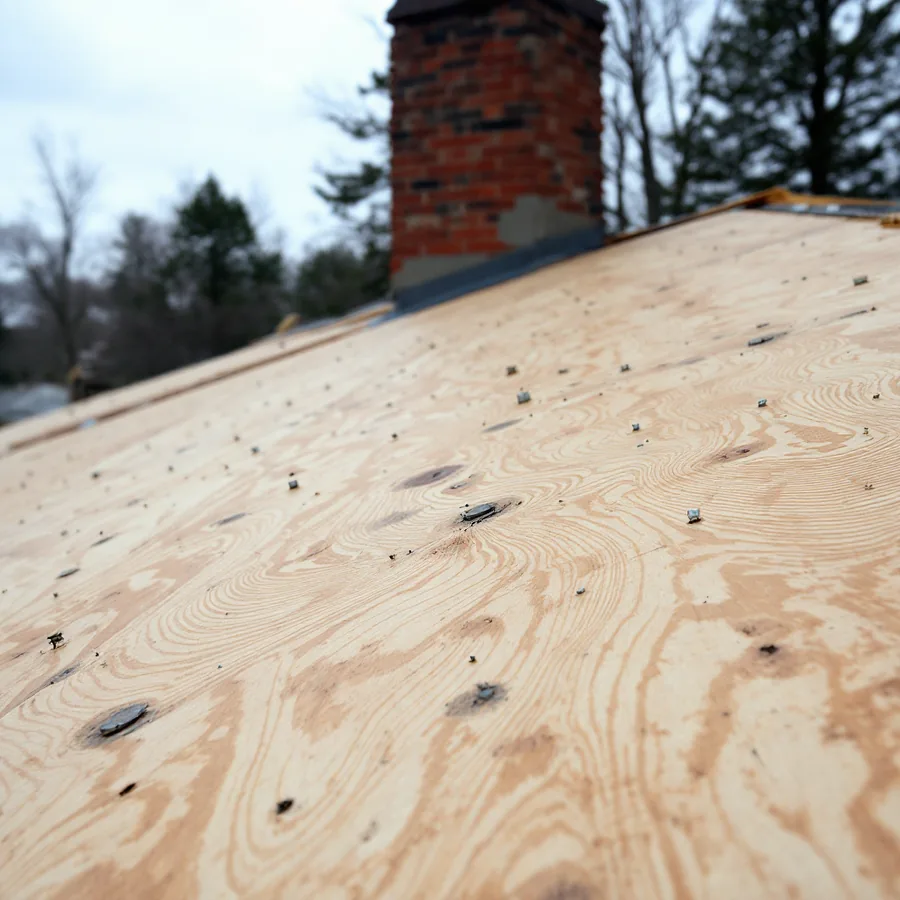
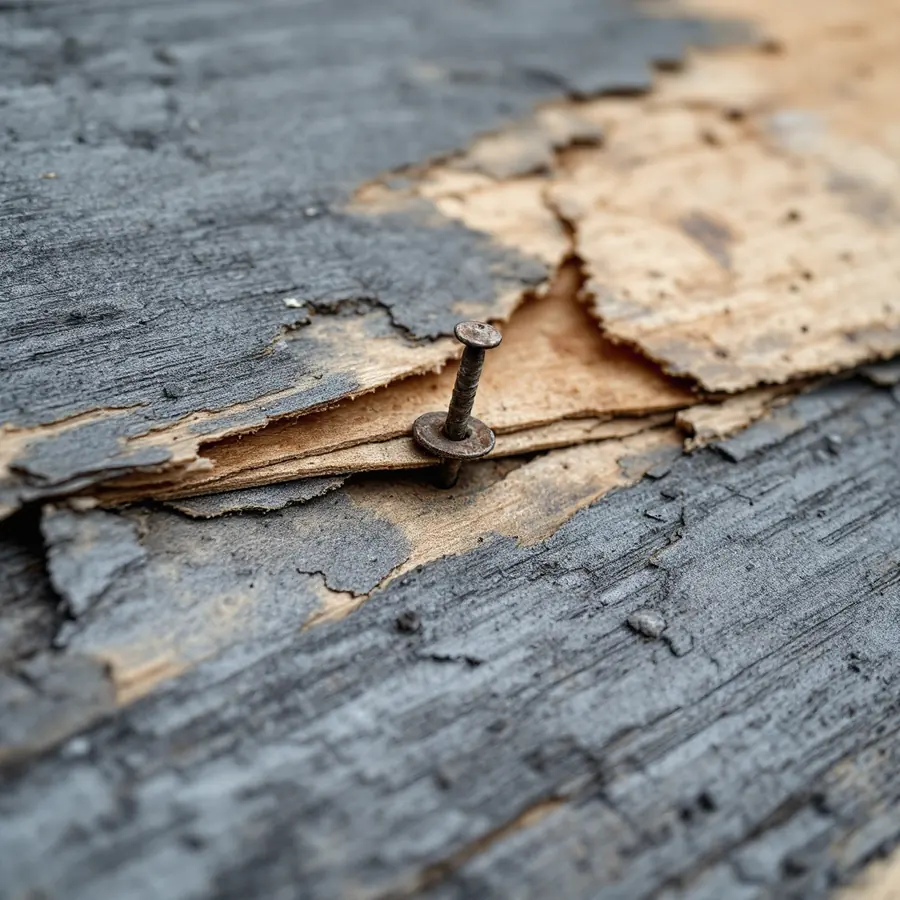
The single inspection worth the whole fee is the one that happens after tear-off, while the sheathing is bare. That is the only moment anybody can see whether the deck is sound, whether the old work was nailed properly, and whether water has been getting in for years. After the underlayment goes down, it is invisible for the next twenty years — and the inspector is the one person on site who is not being paid by the roofer.
The details that inspections catch
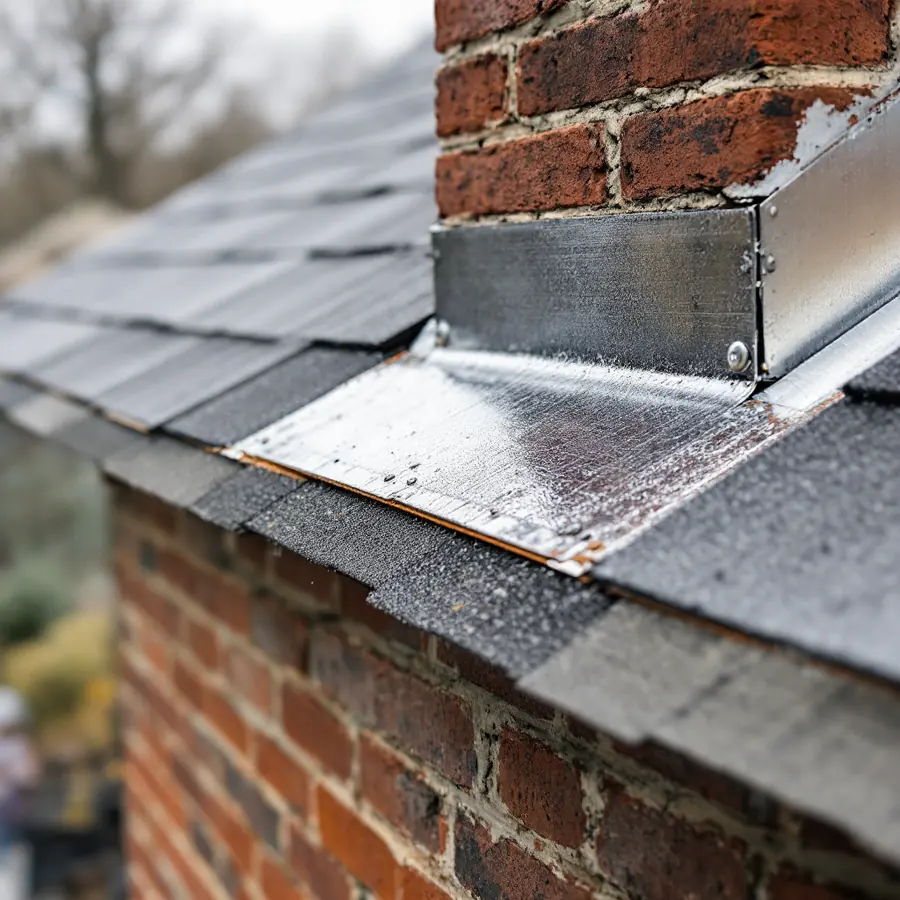
- Flashing at walls, chimneys and valleys — reused old flashing is the classic hidden shortcut, and it is where roofs leak first.
- Nailing pattern and fastener type — wrong count or wrong placement voids most material warranties and is invisible once the next course covers it.
- Ice barrier and underlayment where the code requires them, which is a climate question and therefore a local one.
- Ventilation — intake and exhaust in balance. Miami-Dade even states the arithmetic: soffit ventilation must equal or exceed ridge ventilation.
- Drip edge and starter course at the eaves, which is what holds the edge down in wind.
The record, which matters years later
A closed permit is a dated, public, third-party statement that the roof was replaced and passed inspection. It is what a buyer’s agent finds, what an insurer asks for, and what settles an argument about the roof’s age without anybody’s word against anybody else’s. An unpermitted roof is not just a risk at the time — it is a blank space in the property record that someone will notice at the worst moment.
Fees
What it costs and why the number moves
We publish no dollar figure for a roofing permit, and the reason is the same one that makes the question hard: there is no national fee, and local fees change without notice.
How the fee is calculated
Three common methods, and jurisdictions mix them. A flat fee for a simple re-roof — the straightforward case. A fee scaled to the declared job valuation, which is why the contract price ends up on the application. Or a fee by roof area, in squares or square feet. On top of any of these sit state surcharges, technology fees and plan-review fees where a review applies.
Why “how much is a roof permit” has no honest single answer
Because the same house would pay different amounts in two neighbouring jurisdictions, and because a figure published today can be stale by the next budget cycle. What is stable is the shape of the answer: for a residential re-roof, the permit is a small fraction of the job, far smaller than the change order for decking that the inspection exists to catch.
Getting your number in one minute
Ask the building department for the fee schedule and which line applies to a residential re-roof. Most publish it as a PDF. If a contractor’s quote carries a permit allowance well above that line, ask what the difference covers — sometimes it is legitimate administrative time, sometimes it is margin with a government-sounding label.
| Driver | What it means | Where to look |
|---|---|---|
| Fee method | Flat, by valuation, or by roof area | The jurisdiction’s published fee schedule |
| Declared valuation | The contract price you or the contractor state | The permit application itself |
| Plan review | Applies where structure or a material change is involved | Ask whether your scope triggers it |
| Surcharges | State and technology fees added to the base | Bottom of the fee schedule |
| Re-inspection | Charged when an inspection fails and must be repeated | Fee schedule, under inspections |
| Working first, permitting later | Investigation or double fees where the work started without one | Enforcement section of the fee schedule |
Consequences
Doing it without one: the four bills that arrive later
Roofing without a permit is rarely caught during the job. It is caught afterwards, by people with paperwork.
One: the fine and the stop-work order
Seattle’s department publishes both halves. “We may issue a stop work order against you if you start a building, addition, or remodeling project without a permit.” And: “If you build without a permit, you may be fined up to $500 per day.” Per day. Many jurisdictions also charge a penalty or investigation fee on the permit you then have to obtain anyway — commonly double the normal fee — so the skipped step is not saved, it is bought later at a markup.
Two: the insurance conversation
The permit record is how the age and compliance of a roof are proved. When a claim turns on whether the roof was properly replaced three years ago, “we did it ourselves and there is no record” is a weak position to argue from. In states where roof age drives underwriting, the missing record can matter at renewal as much as at claim.
Three: the sale
Unpermitted work surfaces in a title or permit search, and it surfaces at the point of maximum leverage for the buyer. The remedies are all expensive: retroactive permitting with inspection of work that is already covered, a price concession, or opening the roof so an inspector can see what is under it.
Four: the roof itself
This is the bill nobody puts in the column. The inspection you skipped is the one that would have caught reused flashing or a soft deck. Unpermitted work is not automatically bad work — but it is work that nobody independent ever looked at, and on a roof the difference shows up as a stain on a ceiling in year four.
Before You Climb
Roofing yourself: the federal numbers nobody quotes at you
The permit is paperwork. This is the part of “myself” that is not.
What the data says about falls
The National Institute for Occupational Safety and Health reports that “Since 2013, construction workers have suffered approximately 300 fatal and 20,000 nonfatal fall-related injuries per year.” Those are people who do this for a living, with training and equipment. NIOSH also notes that “Construction workers made up nearly half (49%) of all fatal occupational slips, trips, and falls,” and that “Roofing contractors, residential building construction, and commercial/institutional building construction had the highest number of fatalities in 2022 compared to previous years and other industries.” Roofing contractors are at the top of that list.
The rule that applies to crews and not to you
OSHA requires that “Each employee engaged in residential construction activities 6 feet (1.8 m) or more above lower levels shall be protected by guardrail systems, safety net system, or personal fall arrest system”, and on a steep roof that “Each employee on a steep roof with unprotected sides and edges 6 feet (1.8 m) or more above lower levels shall be protected from falling by guardrail systems with toeboards, safety net systems, or personal fall arrest systems.” Those standards protect employees. A homeowner working on their own house is not an employee, so no one will cite you — which means the protection is not absent, it is optional, and the only person who will insist on it is you. The threshold the federal government chose for when a fall becomes serious is six feet. A single-storey eave is higher than that.
What the trade is worth, for perspective
The Bureau of Labor Statistics reports that “The median annual wage for roofers was $55,440 in May 2025” — $26.65 per hour — with “The lowest 10 percent earned less than $37,460, and the highest 10 percent earned more than $81,720.” It also describes the work: “Roofing work is physically demanding because it involves climbing, bending, kneeling, and heavy lifting.” Labour is the larger half of most roofing quotes, and that is the number you are proposing to save. Weigh it against a fall from six feet, the disposal of several tons of old shingles, and the fact that a warranty on materials you install yourself is usually a warranty on materials only.
What we are not doing here
We are not telling you not to. We do not sell roofing and we are not paid by the square, so we have no reason to talk you out of your own labour or into someone else’s. We are putting the two federal facts next to the permit question, because every other page that answers “can I replace my roof myself” is written by somebody who wants the job or wants the click.
Check The Record
How to check whether a permit was ever pulled on your address
Buying a house, checking a contractor, or answering an insurer: the permit record is public, free, and searchable by address in most of the country.
The method that works anywhere
- Find the authority — city if you are inside city limits, county if you are not.
- Search “[jurisdiction] permit search” and look for the government domain, not a data broker reselling the same record.
- Search by address or parcel number. Parcel is more reliable; your tax bill has it.
- Read the record, not just the list. Three fields matter: the type of work, the issue date, and the status.
- Check the status is closed or finaled. An open permit from 2019 means the work was never signed off, and that is a finding in itself.
What the record tells you that the seller might not
Whether the roof was replaced at all, when, by whom, whether an inspection passed, and whether anything was left open. On a house where the listing says “new roof”, the permit record either confirms it or raises a question worth asking before the inspection period closes.
The counties people search by name
Almost every high-volume “county roof permit search” query in the United States is for a Florida county — because in Florida the roof record is an insurance document. Each of these runs a public portal; the search is by address or parcel.
| County | Where the record lives |
|---|---|
| Miami-Dade, FL | Miami-Dade permits portal — search issued permits and inspections |
| Brevard, FL | Brevard County permit search — records from 1990 onward, no account needed |
| Sarasota, FL | Sarasota County online permitting |
| Volusia, FL | Volusia County permit and zoning center |
| Seminole, FL | Seminole County building division |
| Orange, Pasco, Hernando, FL | Each county runs its own portal under its county domain; search the county name plus “permit search” and confirm you are on the county’s own site |
| Anywhere else | Same method: jurisdiction name plus “permit search”, government domain, search by parcel |
Free Instant Tool
Build your permit checklist
Two questions. What comes back is the likely answer for your scope, the exact sentence to say to your building department, what the permit buys you, and what to watch on the quote — or on yourself, if you are the applicant. Nothing is sent anywhere.
We are paid a fixed fee for an introduction, the same whether the job is a patch or a full replacement. That is why this tool has a setting that tells you a permit probably is not needed at all.
Five Minutes
What to ask your building department in one call
Have the address ready. These six questions produce a complete answer, and the person answering them does it twenty times a day.
| Ask | Why it matters |
|---|---|
| “Does a residential re-roof at this address need a permit?” | The binding answer, from the office that issues it. Everything else is commentary. |
| “Is there a size or valuation threshold below which a repair is exempt?” | This is the number that decides whether your repair is maintenance or a permitted job. |
| “Which inspections are required, and at what stages?” | Tells you whether the deck gets looked at, and shapes the schedule. |
| “How long does it take to get a roofing permit here?” | Same day in many places; weeks where a plan review applies. It changes when the crew can start. |
| “What is the fee, and which line of the schedule applies?” | Gives you the figure to compare against the contractor’s permit allowance. |
| “Can a homeowner be the applicant, and what extra do you require?” | Only if you are considering it. Some departments require an affidavit and proof of occupancy. |
If the office is closed, the same six answers are usually on the jurisdiction’s building-department page, and the fee schedule is usually a PDF linked from it. Roofing permit assistance services will also answer — for a fee, for information the department gives away.
On Paper
Reading the contractor’s quote for permit language
Four lines to look for, and what each one tells you about the company.
- “Permit: included — contractor to apply.” What you want. Named line, named applicant, responsibility where it belongs.
- “Permit by owner.” Ask why. On a paid job this moves liability to you; sometimes there is a reason, and you are entitled to hear it before signing.
- “Permit allowance: $X.” Fine, if X is close to the fee schedule. Compare, and ask what the gap covers.
- Silence. No mention of a permit in a full-replacement quote means the conversation has not happened yet. Have it now, not on tear-off day.
The Federal Trade Commission’s standing advice on hiring any contractor applies here without modification: consider only contractors who are licensed and insured, get multiple written estimates, and do not automatically choose the lowest bidder. A quote that is cheap because it omits the permit is not cheaper — it is the same job with a step removed and the risk moved onto you.
Straight Answers
Roof permit questions, answered
Do I need a permit to replace my roof?
For a full replacement, in most US jurisdictions yes — but the rule is local, and large cities genuinely differ. Seattle does not require a permit to re-roof a one- or two-family home when the building envelope is otherwise unchanged; Miami-Dade requires a permit application for all roofing work. The binding answer comes from the building department with authority over your address, and one phone call gets it.
Do I need a permit to replace my roof myself?
Where a permit is required for the work, it is required regardless of who does it. What changes is the applicant. Pulling it yourself makes you the owner-builder: California's licensing board states that you then assume full responsibility for all phases of the project, that using anyone other than a licensed subcontractor may make you an employer, and that if workers are injured you could be asked to pay through your homeowner's policy or face lawsuits.
Do I need a permit to fix my roof or replace a few shingles?
Often not. Small like-for-like repairs are commonly treated as maintenance up to a local threshold — Seattle's is 500 square feet of repaired area. Ask your jurisdiction for its threshold in square feet or dollars, and remember that the exemption ends if the repair grows or the decking turns out to need work.
How much is a roofing permit?
There is no national figure. Fees are set locally and calculated as a flat charge, from the declared job valuation, or by roof area, with state and technology surcharges on top. Ask the building department for the fee schedule and which line covers a residential re-roof; compare that figure with any permit allowance on your contractor's quote.
What happens if a roof is replaced without a permit?
Four things, in rising order of cost: a fine and a stop-work order (Seattle publishes up to $500 per day), a penalty or double fee on the permit you then have to obtain, a weaker position in an insurance claim or at renewal because the roof's age and compliance are unproved, and a problem at sale when the permit search comes back empty. The fifth is the roof itself: the inspection you skipped was the one that would have looked at the bare deck.
How long does it take to get a roofing permit?
For a straightforward residential re-roof, often the same day when applied for online — Seattle states exactly that. Where a plan review applies, because structure or a material change is involved, the timeline moves to weeks. Ask which case yours is before scheduling the crew.
How do I check whether a permit was pulled on my address?
Search the jurisdiction's own permit portal by address or parcel number. Confirm you are on a government domain rather than a data broker, then read the type of work, the issue date and the status. A permit that was issued but never closed is as much a finding as no permit at all.
Does the 25 percent rule mean my whole Florida roof must be replaced?
Not since the statute was amended. Florida Statutes 553.844 now provides that if the existing roofing system or roof section was built, repaired or replaced in compliance with the 2007 Florida Building Code or later, and 25 percent or more is being repaired, replaced or recovered, only the repaired, replaced or recovered portion has to be built to the code in effect.
Where This Comes From
Sources
- When a re-roof permit is and is not required, and same-day issuance — Seattle Department of Construction and Inspections, Re-Roof Permit.
- Penalties for building without a permit — Seattle Department of Construction and Inspections, Construction Without a Permit.
- Permit application required for all roofing work; hurricane-mitigation retrofit — Miami-Dade County, Roofing Permits.
- The 25 percent rule and its exception — Florida Statutes § 553.844, windstorm loss mitigation.
- What an owner-builder takes on — California Contractors State License Board, The Responsibilities of an Owner-Builder and The Downside of Being an Owner-Builder.
- Fatal and nonfatal falls in construction; roofing contractors’ share — CDC / NIOSH, The Problem of Falls from Elevation in Construction (2024).
- Fall-protection duty at six feet, including steep roofs — OSHA, 29 CFR 1926.501 Duty to have fall protection.
- Chicago’s exemption for pitched residential roofs — City of Chicago, Guide to Building Permits: Roofing Work.
- Portland’s similar-weight rule and its exceptions — City of Portland, Do you need a permit for your home project?.
- Denver’s ten-percent threshold and landmark review — City and County of Denver, Quick Permits: Roofing.
- Roofers’ pay and working conditions — U.S. Bureau of Labor Statistics, Occupational Outlook Handbook: Roofers.
Our editorial standards explain how we source and check what we publish. Every quotation above was taken from the linked page on September 2026, including the six-jurisdiction table, whose method and limits are recorded in the page’s own data note; we publish no permit fee figures because they are local and change without notice, and no per-state rules beyond the ones quoted from their own statutes and departments. We are a referral service rather than a roofing contractor. Published , last checked .
Before you call anyone
The independent match — we are paid for the introduction, not for the size of your job
Most roofing advice is written by the company that wants to do the work. That is not a failing of the people who read it; it is a defect in who is talking. The estimate, the diagnosis and the invoice come from one party, and no amount of care on your side fixes that.
We are built the other way round. We do not repair roofs and we do not sell materials, so the payment reaches us when you are connected to a licensed, insured roofing company — the same amount whether your roof needs an eight-hundred-dollar repair or a twenty-thousand-dollar replacement. Nobody here has a reason to talk you into the larger number. How we make money and how we research are both written down.
Waiting is the one thing that actually costs money. An insurance clock runs from the date of the damage rather than the date you noticed it, and damage that sits through a season stops reading as sudden and starts reading as wear — which is the exclusion that pays nothing. And if your roof is simply worn out, say so on the call. No claim will pay for age, we will tell you that plainly, and you will have lost nothing but the call.