The Number, And Where It Comes From
Roof replacement cost, what it is, and why your quote will differ
A complete tear-off and replacement runs about $5.50 to $10.50 per square foot of roof, which puts a typical house somewhere between $11,000 and $21,000. That range is wide for a reason, and the reason is not that anybody is guessing. This page gives you a working number, then does the part every cost calculator skips: it tells you which lines are missing from it, and whether some of this should be an insurance claim rather than a purchase.
(844) 833-2185Toll-free and answered every day of the year. The call reaches an independent licensed and insured roofing company covering your area, we do not do the work ourselves, which is exactly why we can tell you when you do not need it.
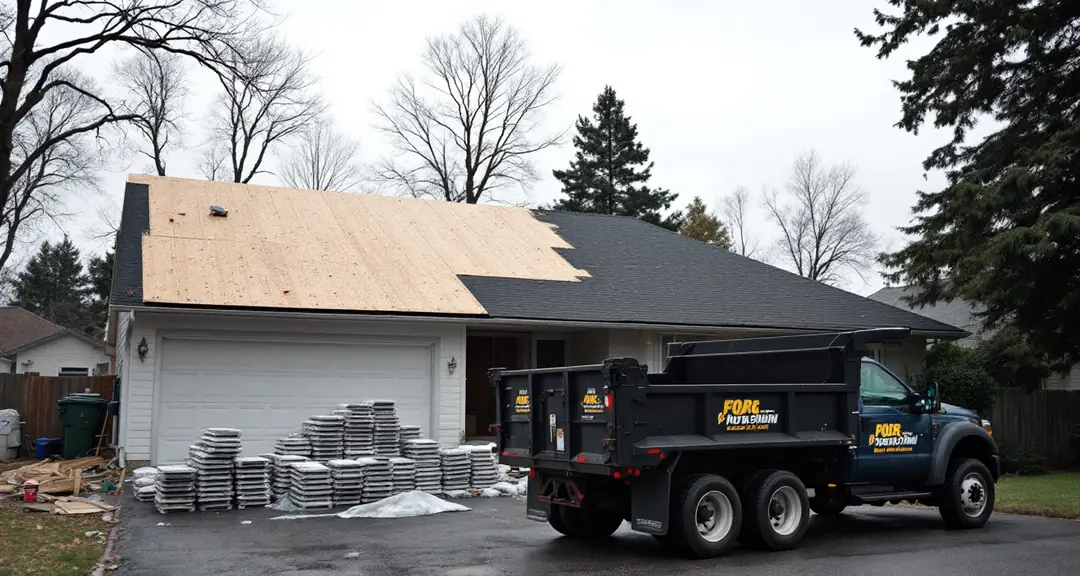
Four things that decide the number
- Roof area, not house area. A two-story 2,000 square foot house has roughly half that in footprint and about a quarter more again in roof surface because of the pitch.
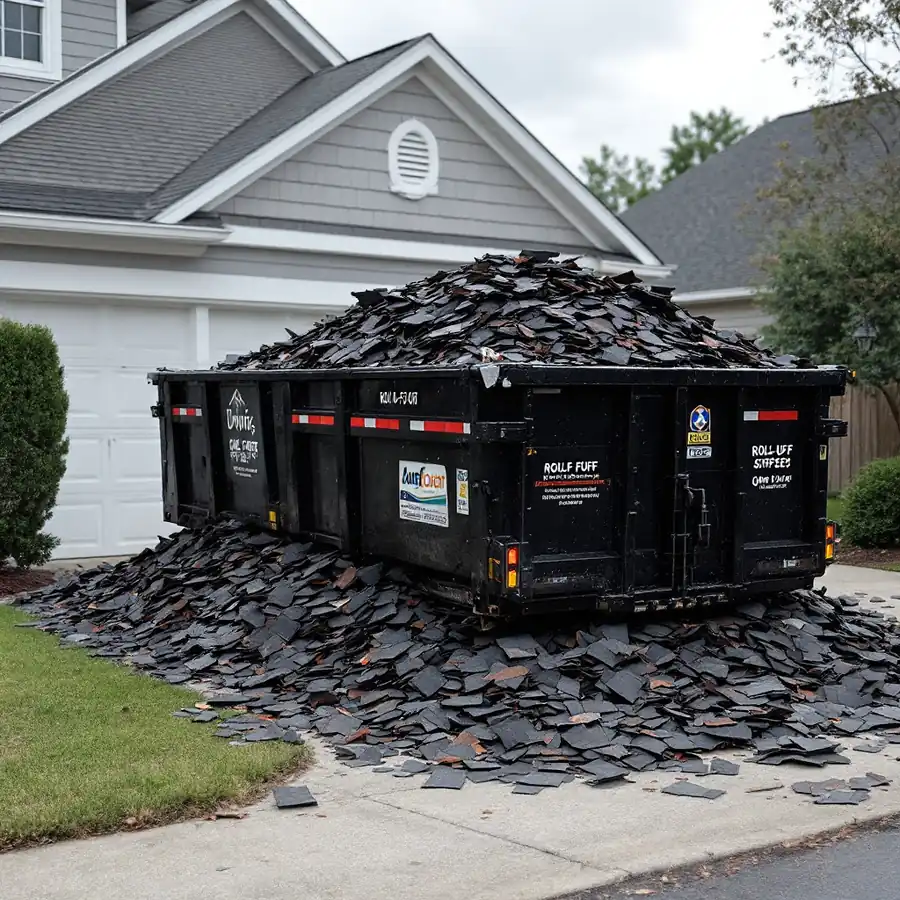
- What comes off first. Tear-off and disposal is $100 to $180 per square of roof, and a second layer doubles it.
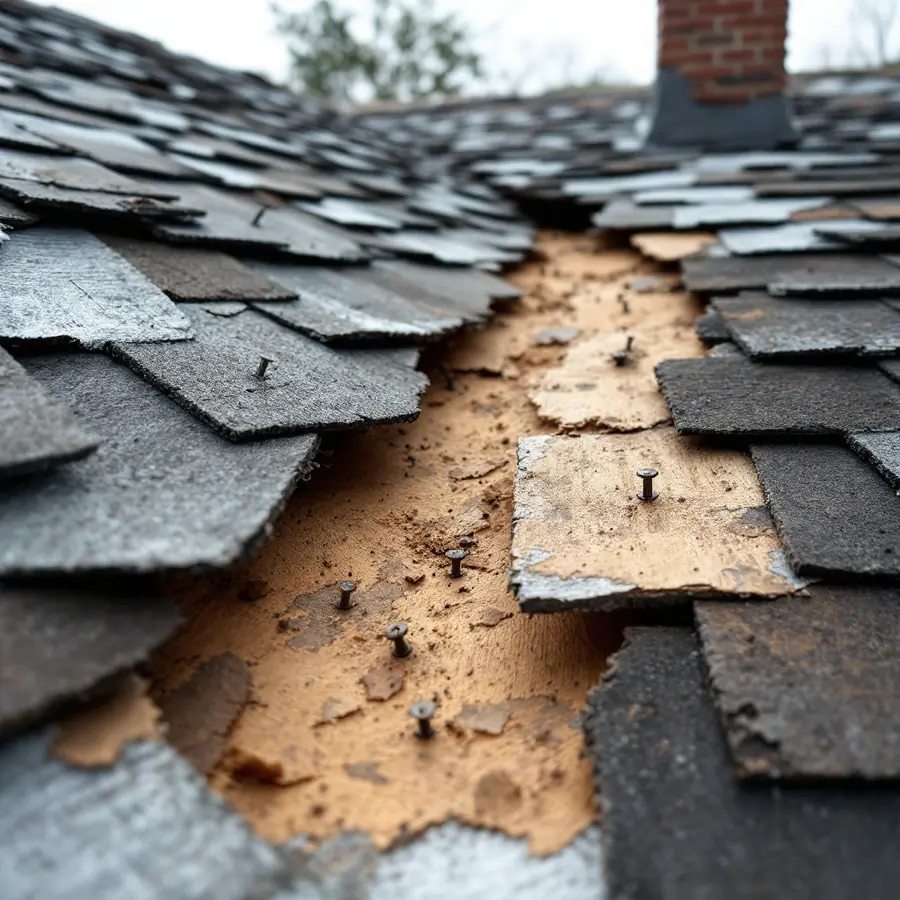
- What is underneath. Nobody can price the decking until the old covering is off. This is the single largest source of quote-to-invoice drift.
- Complexity, not size. Hips, valleys, dormers and skylights cost more than square footage does. A complicated roof can run half again the price of a simple gable of identical area.
Free Instant Tool
Roof replacement cost calculator
Pick the roof area and the covering. You get a range rather than a single figure, because a single figure would be a guess dressed up as an answer, and below it, the lines that are not included, which is where quotes actually diverge.
Includes tear-off of one layer and standard disposal. Does not include decking replacement, permit, or work beyond the roof plane, all set out below. National market pricing, not a quote: we are a referral service and do not price work.
The Way People Actually Ask
Cost to replace a roof by house size
Almost everybody searches by the size of the house, and almost every cost page answers by the size of the roof. Those are different numbers, and the gap between them is the commonest reason an online estimate feels wrong.
| House size | Stories | Approx. Roof area | Typical range |
|---|---|---|---|
| 1,000 sq ft | One | ~1,250 | $7,500–$11,300 |
| 1,500 sq ft | One | ~1,800 | $10,800–$16,200 |
| 1,500 sq ft | Two | ~950 | $5,700–$8,600 |
| 2,000 sq ft | One | ~2,500 | $15,000–$22,500 |
| 2,000 sq ft | Two | ~1,250 | $7,500–$11,300 |
| 3,000 sq ft | Two | ~1,900 | $11,400–$17,100 |
Where those roof areas come from
Footprint first: a single-story house has a footprint equal to its floor area, a two-story house roughly half. Then pitch: a moderate 6:12 roof has about 12 per cent more surface than the footprint beneath it, and a steep 12:12 roof about 41 per cent more. We have used a moderate pitch with a modest overhang allowance throughout, which is why the numbers above are approximations rather than measurements. Your roofer will measure it properly, and on a complex roof the measured figure can be meaningfully higher.
Roofing is priced by the square
A roofing square is 100 square feet of roof surface. Quotes and material orders are counted in squares, so a 2,500 square foot roof is a 25-square job. When a contractor quotes “per square”, multiply by a hundredth of your roof area, not by anything to do with the house.
The Biggest Single Variable You Control
Cost by roofing material
Installed, per square foot of roof, including tear-off of one layer. Everything above architectural asphalt is a choice rather than a necessity, and each has a page of its own here where the case for and against is set out honestly.
| Covering | Installed range | Service life commonly quoted |
|---|---|---|
| 3-tab asphalt | $5.00–$7.00 | 15–20 years |
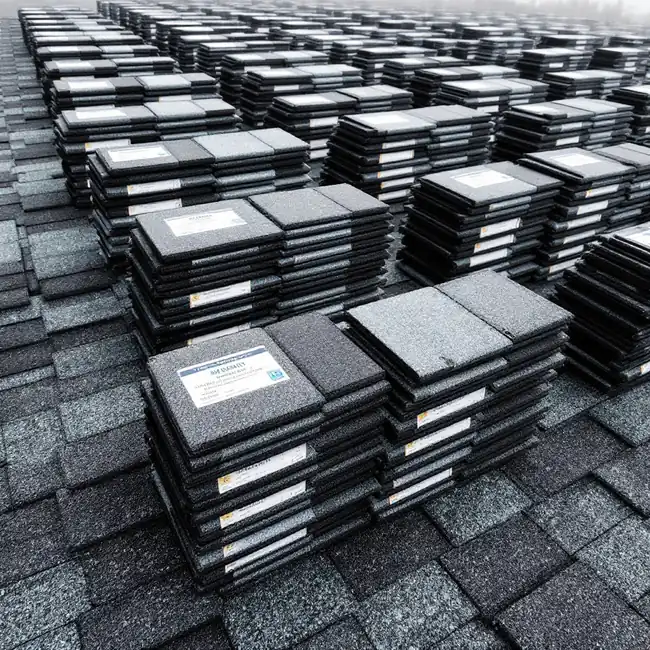
| Architectural asphalt | $6.00–$9.00 | 25–30 years |
| Impact-rated (Class 4) asphalt | $7.00–$11.00 | 25–30 years, often with an insurance discount |
| Metal, exposed fastener | $6.00–$14.00 | 25–40 years, with fastener maintenance |
| Metal, standing seam | $11.00–$18.00 | 40–70 years |
| Tile or slate | $12.00–$25.00 | 50+ years, with structural requirements |
Why the upgrade costs less than the sticker suggests
Tear-off, disposal, underlayment, flashing, ventilation and labor are the same whichever covering goes on. Only the material line changes, and it is a minority of the bill. That is why moving from 3-tab to architectural is cheap in relative terms, and why moving from asphalt to standing seam is not, the latter changes the labor as well as the material.
The one upgrade with a financial case
Impact-rated shingles carry a premium and attract insurance discounts from many carriers, reported publicly in the region of 5 to 35 per cent, though not guaranteed and varying by state and company. In a hail-prone county that is the upgrade worth pricing, and the arithmetic is on the shingles page.
Where Quotes Diverge
What the calculators leave out
Every estimate on this subject, ours included, prices the predictable part. Here is everything that sits outside it, in rough order of how often it appears on a final invoice.
Decking replacement
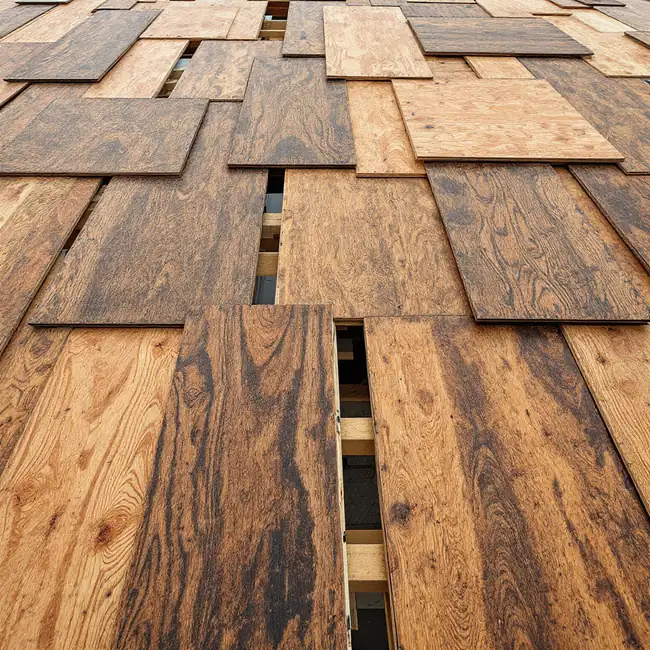
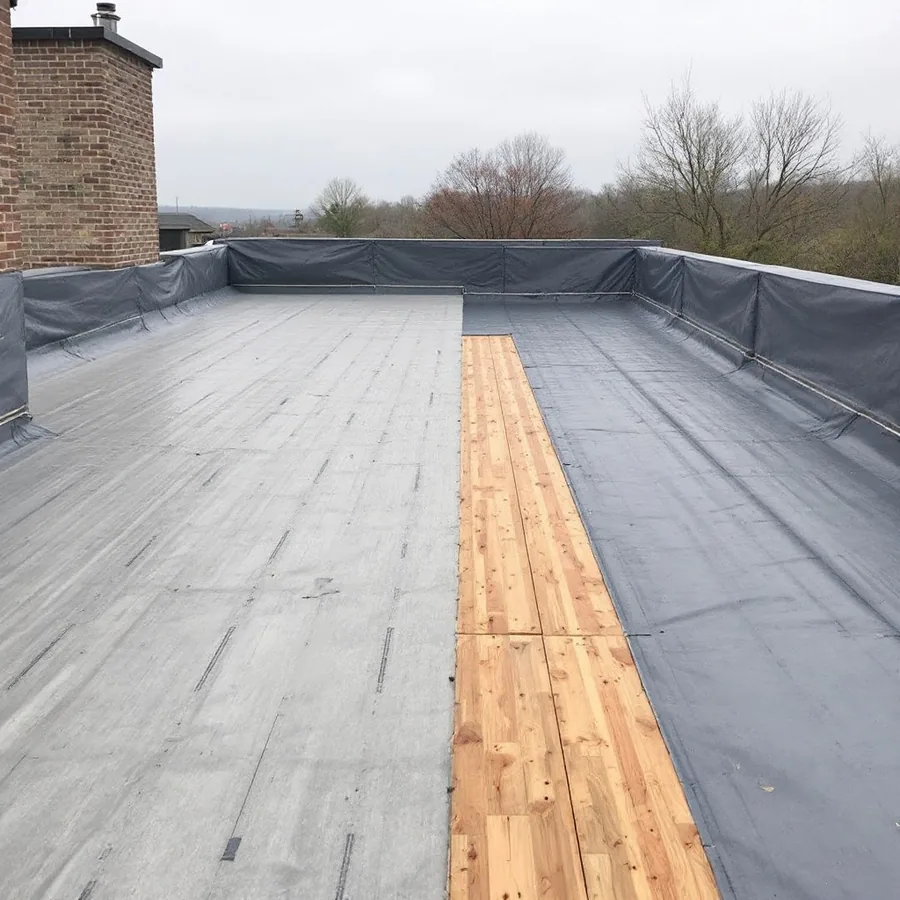
Roughly $2 to $5 per square foot, and genuinely unknowable until the old covering is off. This is the largest single source of drift between a quote and an invoice. The fix is not a better estimate, it is a quote that states a per-sheet rate up front, so the number is agreed before anybody is standing on your roof with a decision to make.
The second layer
If the existing roof is already two coverings deep, tear-off doubles and disposal with it. Many quotes assume one layer. It costs nothing to establish which you have before the quote rather than after.
The permit
Typically $150 to $500. Across 26 US cities the median is about $153, with real figures ranging from $27 in San Antonio to $688 in Portland. Small against the job, and a line that is sometimes quietly absent from the cheaper quote.
Ventilation put right
A re-roof is the one cheap moment to fix airflow that was wrong before. Skipping it means the new roof ages the way the old one did, and under-ventilation is what ends most asphalt roofs early.
Flashing, new rather than reused
Chimneys, walls, valleys, skylights. Reusing old flashing on a new roof is the commonest corner cut in residential roofing, and it is invisible on completion.
Everything not the roof plane
Gutters, fascia, soffit, chimney repointing, skylight replacement. Often sensible to do while access is paid for, and often not in the number you were shown.
A quote that lists a per-sheet decking rate, states the layer count, and names the flashing as new is worth more than a quote that is a few hundred dollars cheaper.
The second one is not lying. It is simply a smaller number describing less work, and the difference appears later.
Read This Before Comparing Quotes
Why your quote will not match any calculator
Including this one. These are the variables no estimate can know, and together they account for nearly all of the spread you will see between three quotes on the same roof.


Complexity beats size
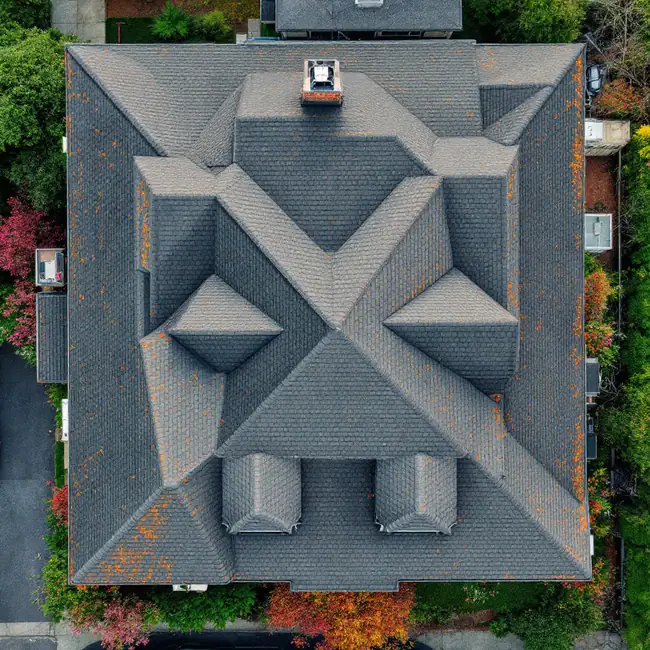
Every hip, valley, dormer, skylight and chimney is trim and flashing cut and fitted by hand. A cut-up roof of 2,000 square feet is a materially different job from a simple gable of the same area, and no square-footage calculator can see the difference. This is the single largest reason two houses on the same street get quotes thousands apart.
Pitch and access
Above a certain steepness the work needs staging and slows down. A roof that cannot be reached by a truck, or that sits over landscaping or a conservatory, costs more for reasons that have nothing to do with roofing.
Where you are
Labor is the majority of a roofing bill and labor rates are local. The same roof genuinely costs different amounts in different metros, and a national average is an average of those, not a prediction for any of them.
When you buy
Prices rise in the weeks after a large hail or wind event because every crew in the region is booked at once, and they soften in the slow season. If the roof is sound and the work is planned rather than urgent, timing it away from the local storm season is one of the few reliable ways to pay less for identical work.
What the crew is
A company carrying full insurance, paying trained crews and warranting its own workmanship costs more than one that does not. That is not a markup, it is the difference in what you are buying, and it is invisible on a price sheet.
The Question Nobody In This Search Result Asks
Should you be paying for this at all?
Every other page ranking for roof replacement cost is, in the end, a lead form for a contractor. So none of them raises the possibility that a portion of this bill belongs to an insurer, which, in a hail or wind state, it frequently does.
The distinction that decides it
Homeowner policies cover sudden accidental events and exclude gradual wear. A roof that has reached the end of its service life is a purchase. A roof damaged by an identifiable storm on an identifiable date is a claim, and the two can look similar from the ground on a twenty-year-old roof that has also been hit.
Check the record before you conclude
If there is any chance a storm is involved, look it up rather than guess. Our aggregation of two decades of National Weather Service data covers every county in the country: check what your county has actually had, including hail days, stones of an inch or more, and the largest recorded. That is the same public record an adjuster works from.
Then do the deductible arithmetic
Before filing anything. In the hail belt the wind and hail deductible is commonly a percentage of the sum insured rather than a flat figure, which on a smaller loss can put the whole claim below the line. The full arithmetic, with a table, is on the storm damage page.
And if it is a purchase after all
Then it is worth knowing that a new roof can reduce your premium in its own right, that impact-rated coverings attract a further discount in many states, and that both are worth asking your own carrier about before you choose a covering, not after.
Consumer guidance from a state regulator: Texas Department of Insurance home insurance guide. Coverage depends on your policy and your state; nothing here is a coverage determination.
Not A Standard Pitched Roof
Flat roofs, garages and manufactured homes
Three cases where the per-square-foot figures above do not transfer.
Flat and low-slope
Priced by membrane rather than by covering. The work is different, the specialism is different, and a quote from a shingle roofer for a flat section is worth checking against one from somebody who fits membrane for a living. Ponding and seams drive the price more than area does.
Garages and outbuildings
Small roofs carry a disproportionate cost because mobilisation, setup and disposal do not scale down. A detached garage roof frequently costs more per square foot than the house it stands beside, and the cheapest way to buy it is at the same time as the house roof.
Townhouses and attached homes
A shared or party wall changes the job: the roof plane may continue over a neighbor, access is often restricted to one side, and the homeowners association may control both the timing and the product. Cost per square foot runs higher than a detached house of the same roof area because mobilisation and staging serve less roof. Establish who owns which part of the roof before getting quotes, that answer lives in the association documents, not on the roof.
Manufactured and mobile homes
Usually low-slope metal or membrane over a light structure, where coatings are a legitimate repair rather than a bodge, provided what is underneath is sound and dry. Weight matters here in a way it does not on a conventional house.
Before The Number Matters
Do you actually need a replacement?
The cheapest roof is the one you did not buy this year. Nobody whose income depends on replacing roofs opens with that, which is exactly why it belongs here.
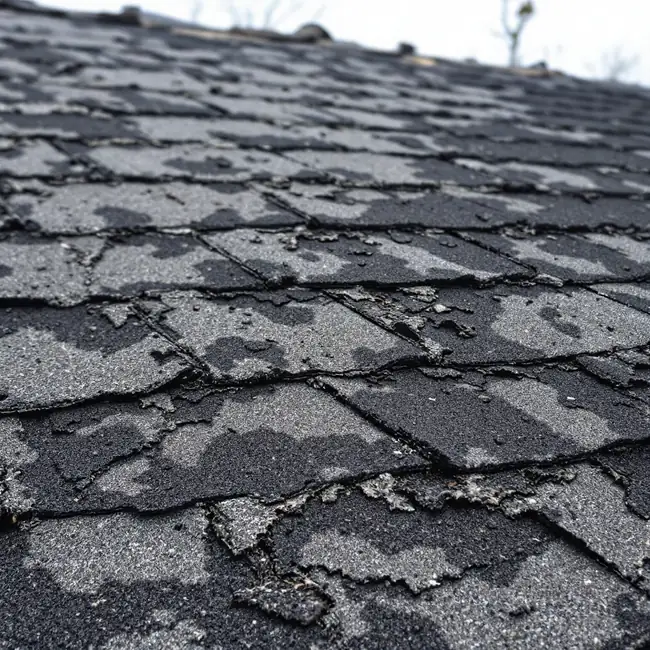
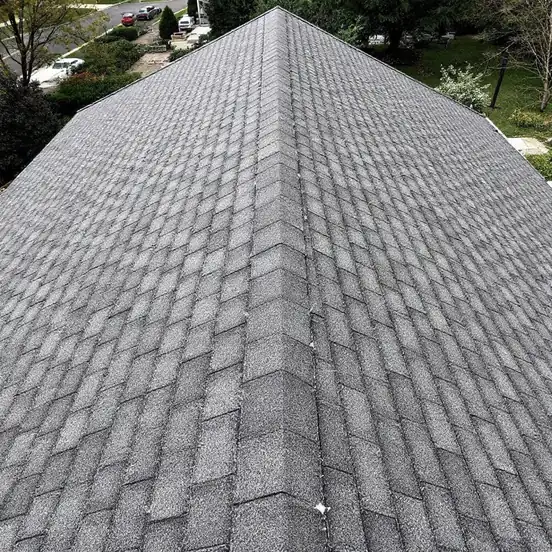
Signs that genuinely point at replacement
Widespread granule loss with the mat showing through across whole slopes rather than in patches. Shingles curling or cupping generally, not at one edge. Multiple leaks appearing in different places within a short period. Daylight through the decking in more than one spot. A roof past the service life of its covering that has also been through a significant storm. Any two of those together is a replacement conversation rather than a repair one.
Signs that do not
Algae streaking is growth, not damage, and is cosmetic. A single leak at a single penetration is a repair, usually a few hundred dollars, and the leak page sets out how to find it. Missing shingles after one storm are a repair unless the seal has failed generally. A roof that simply looks tired at fifteen years is not a roof that has failed.
The age question, answered properly
Age alone does not condemn a roof. A well-ventilated architectural asphalt roof at twenty-two years may have several years left; a poorly ventilated one at fifteen may not. The way to find out is a paid independent inspection rather than a free one from a company that earns its living replacing roofs, that is a conflict, not a conspiracy, but it is still a conflict.
When replacing early is the right call anyway
Three cases. You are selling and the roof is a known objection. Other work, solar, an extension, siding, means the access is being paid for regardless. Or the covering has a couple of years left and you would rather choose the timing than have a storm choose it for you. All three are legitimate, and none of them needs a failing roof to justify it.
The Other Half Of The Number
Ways people pay for it
We do not recommend lenders and we earn nothing from any of these. What follows is simply the set of options that exist, with the trade-off each one carries.
An insurance claim
Where a storm is genuinely involved, this is the one route where somebody else pays most of it. Check the county record and the deductible arithmetic first, because a claim below the deductible pays nothing and is still recorded.
Contractor financing
Convenient, and arranged in the same conversation as the quote, which is precisely the reason to compare its rate against something you arranged yourself. Promotional deferred-interest terms are common and worth reading to the end.
Home equity
Usually the cheapest money available to a homeowner with equity, and the slowest to arrange. Secured against the house, which is the trade-off and should be treated as one.
Paying in stages
A deposit and a balance on completion is normal. A demand for the full amount up front is not, and after a storm it is one of the recognized patterns worth walking away from.
Doing it in sections
Rarely offered, occasionally sensible: replacing the failing elevation now and the rest later. It costs more in total because mobilisation is paid twice, and it is a real option when the alternative is waiting with a leak.
Timing instead of borrowing
If the roof is sound, moving the work to the slow season and paying cash frequently beats any finance product on offer. Patience is the only interest-free option in the list.
Honestly
Where you can save, and where you should not
Some of the ways to reduce this bill are sensible. Some of them are the reason the roof fails early, and they look identical on a quote.
Worth doing: time it
Off-season, away from the weeks after a regional storm. Same work, genuinely lower price, and the only cost is patience.
Worth doing: get three quotes properly
Three quotes on the same written scope, not three numbers. Ask each for layer count, decking rate and whether flashing is new, and the spread usually explains itself.
Worth doing: bundle the access
Gutters, fascia, skylight seals and a chimney cap are all far cheaper while somebody is already up there with staging paid for.
False saving: going over the old roof
It saves real money and it means nobody inspects the decking. Two layers also hold more heat, which shortens the life of the new covering. Legal in most places, and a decision rather than a bargain.
False saving: reused flashing
Invisible at handover, and the reason a five-year-old roof leaks at the chimney. If a quote is materially cheaper, this is one of the first places to look.
False saving: the thinner shingle
“Architectural” covers a wide range of products. An entry laminate and a mid-range line are both architectural shingles and are not the same purchase, ask for the product line in writing.
How We Got These Numbers
Method, and what would make us change it
Two of the pages above this one in the results publish a methodology section. It is the right practice, so here is ours.
Where the ranges come from
The per-square-foot figures are national market pricing observed across published contractor pricing guides, cross-checked between independent sources and reported as ranges rather than point estimates. We do not commission pricing surveys and we do not quote work, so presenting a single national number would imply a precision we do not have.
How the house-size table is derived
Footprint from floor area and story count, then a pitch multiplier for a moderate slope, then the material range. It is arithmetic, not a survey, and we show the steps above so you can redo them with your own pitch. On a steep or complex roof the real area runs higher than our figure.
What we do not adjust for
Location. Labor rates are local and dominate the bill, so a national range is a starting point rather than a local answer. We publish geography-specific figures only where we have our own data behind them, which for storm records we do and for pricing we do not.
What would change these numbers
Material costs move with commodity prices, and labor with local demand, particularly after a regional storm, when both move at once. We revisit the figures rather than leaving them to age quietly, and the date at the foot of this page is when they were last checked rather than when the page first appeared.
Straight Answers
Roof replacement cost questions, answered
How much does it cost to replace a roof?
A complete tear-off and replacement runs roughly $5.50 to $10.50 per square foot of roof area, which for a typical 2,000 square foot roof means about $11,000 to $21,000. Architectural asphalt sits at the lower end and standing seam metal or tile at the upper. The figure moves most with roof complexity and with local labor rates, not with the material.
How much to replace a roof on a 1,500 square foot house?
It depends on how many stories the house has, which is why this question has two answers. A single-story 1,500 square foot house has roughly 1,800 square feet of roof and lands around $10,800 to $16,200 in architectural asphalt. A two-story house of the same floor area has roughly 950 square feet of roof and lands around $5,700 to $8,600. Most cost pages answer by roof area and never mention the difference.
What does tear-off cost?
Roughly $100 to $180 per roofing square, that is per 100 square feet of roof, including labor, debris removal and dump fees. A second layer roughly doubles it. On a 2,000 square foot roof that is broadly $2,000 to $3,600 of the total for a single layer.
Why are my three quotes so different?
Usually because they describe different work rather than different prices. The common divergences are layer count, whether decking replacement is allowed for and at what rate, whether flashing is new or reused, and which product line the word “architectural” refers to. Ask all three to state those four things and the spread generally explains itself.
Do I need a permit to replace a roof?
In most jurisdictions, yes, and it is normally the contractor who pulls it. Fees typically run $150 to $500; across 26 US cities the median is about $153, with real figures from $27 in San Antonio to $688 in Portland. It is a small line, but a quote that omits it is a quote that is not complete.
Can I put a new roof over the old one?
Often, subject to local limits on the number of layers, commonly two. It saves real money on tear-off and disposal. It also means nobody looks at the decking, and two layers hold more heat, which shortens the life of the new covering. It is a legitimate decision rather than a straightforward saving.
Will insurance pay for a new roof?
Only if the cause was sudden and accidental, a storm, hail, wind, a falling branch. Wear, age and lack of maintenance are excluded, so a roof that has simply reached the end of its life is a purchase rather than a claim. If a storm might be involved, check your county storm record and work out your deductible before filing, because in the hail belt that deductible is often a percentage of the sum insured.
Does a new roof lower home insurance?
Frequently yes, and an impact-rated covering can attract a further reduction, publicly reported in the region of 5 to 35 per cent, though not guaranteed and varying by state and carrier. Both are worth asking your own insurer about before you choose the covering rather than after it is installed.
Do you quote or install roofs?
No. We are a matching service. We publish research on roofing and storm damage, including our own aggregation of two decades of National Weather Service records, and we connect homeowners with independent licensed and insured roofing companies. Every figure on this page is market pricing, not an offer.
Where This Comes From
Sources
- Homeowner policy structure, sudden damage against wear, Texas Department of Insurance home insurance guide.
- County hail and wind records, our own aggregation of the NOAA NCEI Storm Events Database, 2006 to 2025.
- Hail size and behavior, NOAA National Severe Storms Laboratory.
- Damaging straight-line winds, NSSL severe weather primer.
- Contractor conduct after storms, Texas Department of Insurance and Utah Insurance Department.
- Moisture and mold after water intrusion, US EPA.
Cost figures are national market ranges observed across published contractor pricing guides and cross-checked between independent sources, not our estimate and not a quote; we are a referral service, not a roofing contractor. House-size figures are arithmetic from footprint and pitch, with the steps shown above. Last updated .
Before you call anyone
The independent match — we are paid for the introduction, not for the size of your job
Most roofing advice is written by the company that wants to do the work. That is not a failing of the people who read it; it is a defect in who is talking. The estimate, the diagnosis and the invoice come from one party, and no amount of care on your side fixes that.
We are built the other way round. We do not repair roofs and we do not sell materials, so the payment reaches us when you are connected to a licensed, insured roofing company — the same amount whether your roof needs an eight-hundred-dollar repair or a twenty-thousand-dollar replacement. Nobody here has a reason to talk you into the larger number. How we make money and how we research are both written down.
Waiting is the one thing that actually costs money. An insurance clock runs from the date of the damage rather than the date you noticed it, and damage that sits through a season stops reading as sudden and starts reading as wear — which is the exclusion that pays nothing. And if your roof is simply worn out, say so on the call. No claim will pay for age, we will tell you that plainly, and you will have lost nothing but the call.