Florida
How long does a roof last in Florida: the state gets half the hail the country does, and that changes the whole answer
Every page on this subject tells Floridians their roofs live hard lives. We counted. Using the federal storm archive for all 67 Florida counties across twenty years, the median county recorded 14 hail events of an inch or more, against 29 for the median American county. Florida is not a hail state. What it is instead, what that does to each roofing material, and why the thing that most often ends a Florida roof is not weather at all but a sentence in the insurance statute.
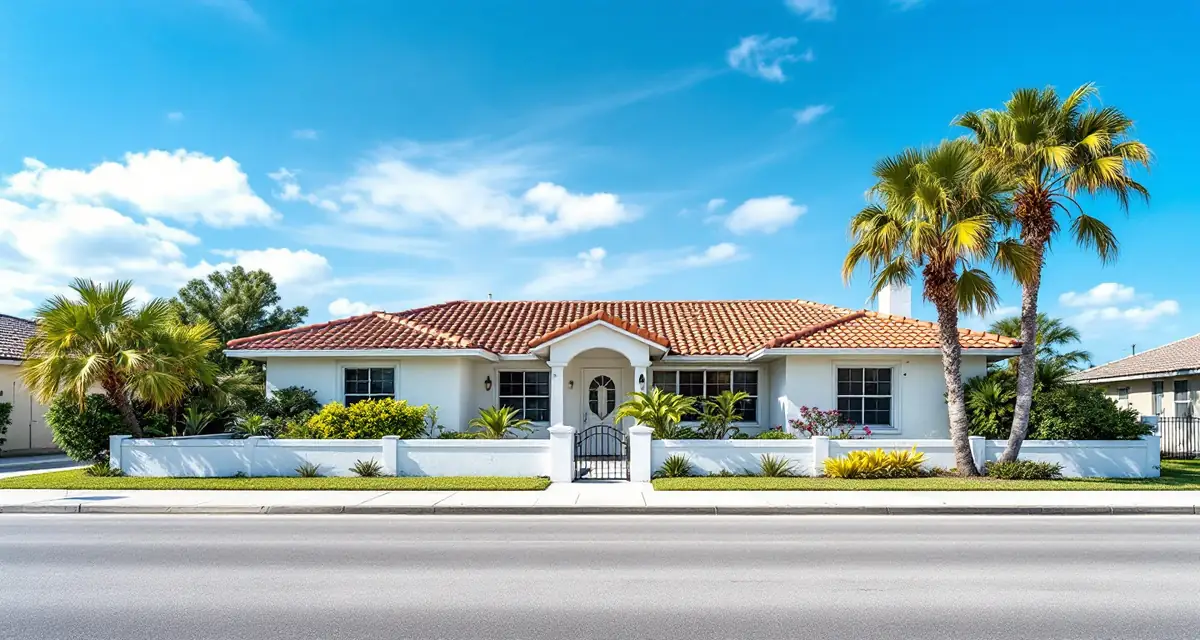
How long a roof lasts in Florida, and why the honest answer starts with a number nobody quotes
Ask how long a roof lasts in Florida and you will be given a range for each material, usually shorter than the national one, with the word harsh somewhere nearby. The ranges are not wrong. What is missing is the reason, and the reason is not the one almost everyone assumes.
A roof ends in one of three ways. Something hits it hard enough to break it. Something works it slowly until the material gives up. Or somebody decides it has to go. In Florida the first is rarer than the reputation suggests, the second is relentless, and the third has been written into state law twice. This page takes them in that order, because the order is what decides what you should do about your own roof.
Our Own Count
The count: Florida gets half the hail the country does
We read the federal storm archive for every Florida county over twenty years. The result runs against the reputation, and it runs against it by a factor of two.
What was counted
The National Oceanic and Atmospheric Administration publishes the Storm Events Database, filled in by local weather offices after something happens. We took every county-coded record for all 67 Florida counties across the twenty full years from 2006 to 2025 and counted hail events with a reported stone diameter of an inch or more, the distinct days those fell on, and thunderstorm wind events alongside them. The one-inch threshold is not ours: it is the National Weather Service definition of severe hail.
The table
| Per median county, 20 years | Florida | United States | Reads as |
|---|---|---|---|
| Hail events, one inch or more | 14 | 29 | half the national rate |
| Distinct hail days | 19 | 29 | about one day a year |
| Thunderstorm wind events | 94 | 80 | more than the country, not less |
| Of those, severe | 2 | 4 | frequent but rarely extreme |
| 90th percentile county, hail | 51 | 110 | even Florida's worst is ordinary |
| Highest single county, hail | 73 events on 75 separate days | 998 | Duval against El Paso, Colorado |
The part that changes what you do
Across the whole state, twenty years produced 1,425 hail events. 35 of the 67 counties, that is 52 percent sit at or below the state median, and one county recorded none at all. If you have been told your Florida roof needs replacing because of hail, that is a claim about your county and your address, and it is checkable. For most of the state it is not the story.
The comparison that matters is with the rest of the country, and it is on our national page on roof lifespan, where the median county sees twice the hail Florida does and the busiest tenth sees eight times.
The Other Half
Wind is the other half of the answer, and it reads the opposite way
Same archive, same counties, reversed result.
More events, fewer extremes
The median Florida county recorded 94 thunderstorm wind events against 80 thunderstorm wind events nationally, so wind events happen more often here than in the average American county. But the severe subset runs the other way: 2 against 4. Florida gets more wind and less of the violent kind.
Why frequency matters more than the record gust
A roof is not destroyed by average wind. It is loosened by it. Every gust lifts at the edges, works the fasteners a fraction, and lets go. A material that takes that treatment a hundred times a decade is in a different condition at year fifteen than the same material somewhere calm, even though neither has seen anything a report would call damage.
Hurricanes are a separate class, and they are not in this table
Named storms are logged as their own event types and are not part of the counts above. That is deliberate: a hurricane is a rare catastrophic event, and mixing it into an annual wear figure hides both. The National Hurricane Center's own climatology is the place to look at that risk; this page is about the other three hundred and sixty days.
The Real Clock
Sun, heat and the thing that actually ages a Florida roof
If it is not hail, and the wind is mostly moderate, what is doing the work.
Ultraviolet light
Sunlight breaks down the binders in almost every roofing material. On asphalt it hardens the bitumen and loosens the granules that shield it; on membranes it attacks the surface; on wood it grays and checks the fibre. Florida receives more of it, for more of the year, than almost anywhere else in the country, and unlike a storm it never stops.
Heat cycling
A dark roof surface in Florida can swing many tens of degrees between afternoon and dawn, every day, for decades. Materials expand and contract with that swing, and every joint, seam, fastener and sealant strip takes the movement. This is the mechanism that makes a roof brittle without anything ever hitting it. The federal work on cool roofs and heat islands exists because that surface temperature is high enough to matter to a whole city, never mind one roof deck.
Humidity, algae and salt
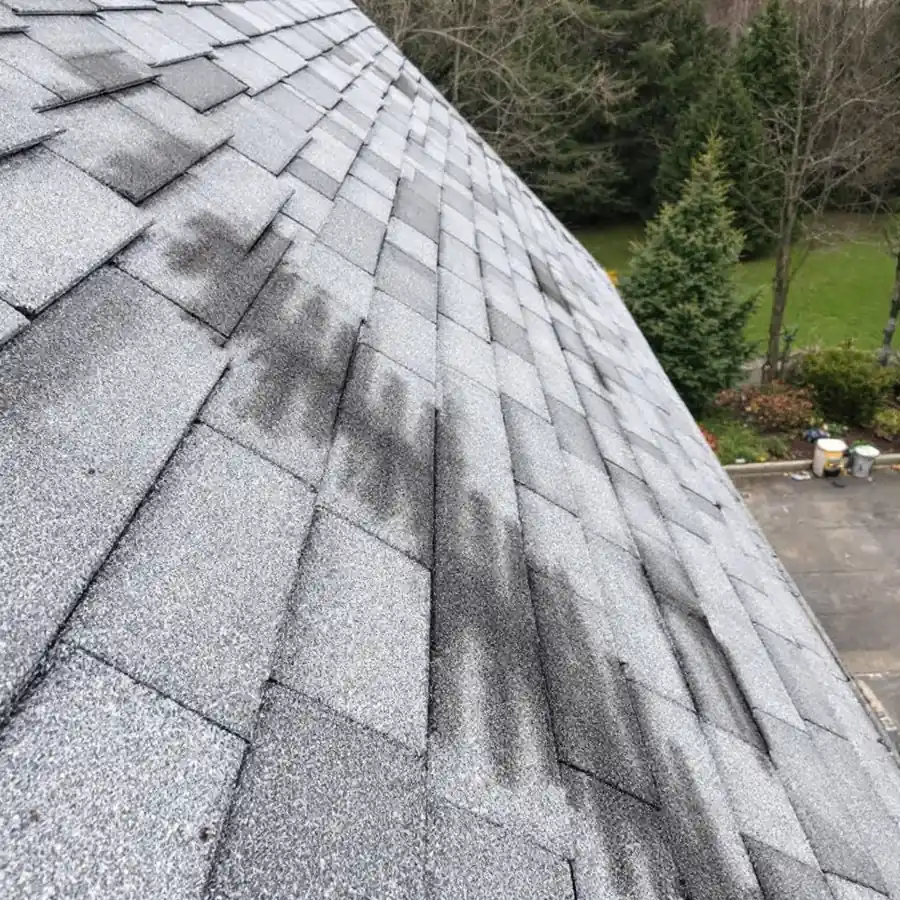
Constant humidity keeps organic growth alive on shaded slopes, and the black streaking on Florida shingles is algae rather than dirt. It is mostly cosmetic and it holds moisture against the surface. Near the coast there is a fourth agent: salt in the air accelerates corrosion at cut edges, fasteners and any point where two different metals meet.
What this means for the number you were given
Shorter Florida lifespans are real, and now they have a cause you can act on. Ventilation, colour and surface choice all push against heat. Nothing pushes against hail, which is convenient, because hail is not the problem here.
Material
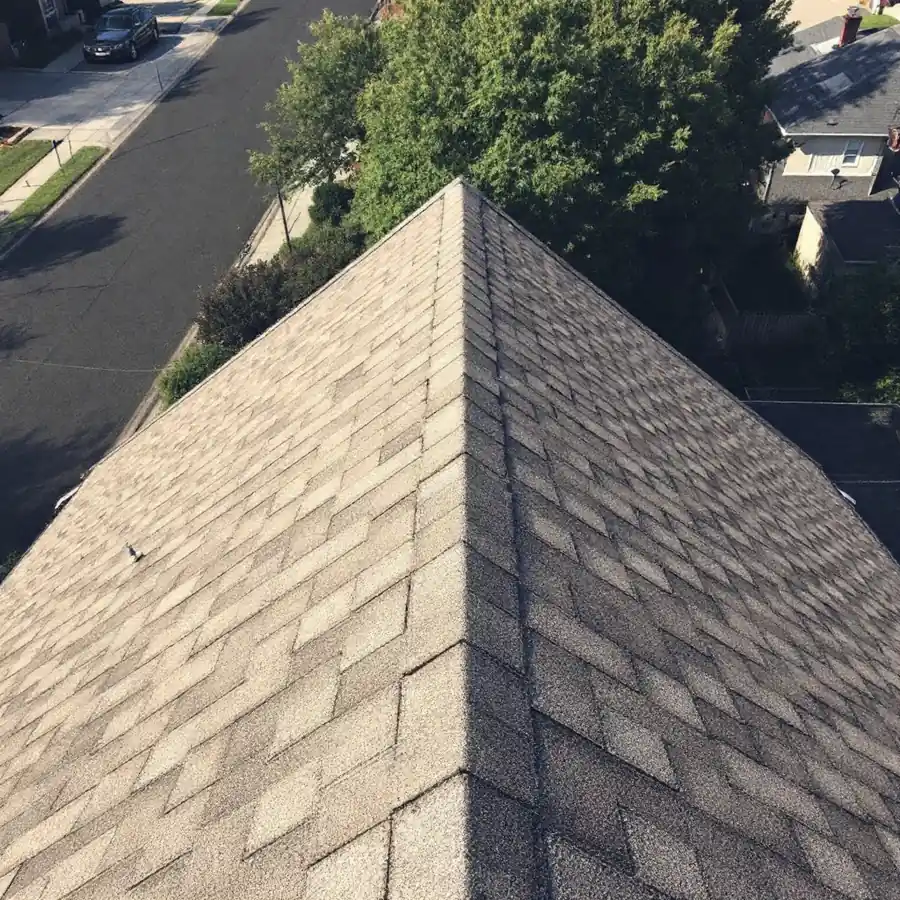
Asphalt shingles in Florida: what the years do
How long a shingle roof lasts in Florida, and how it tells you it is finishing.
Three stages you can see from the ground
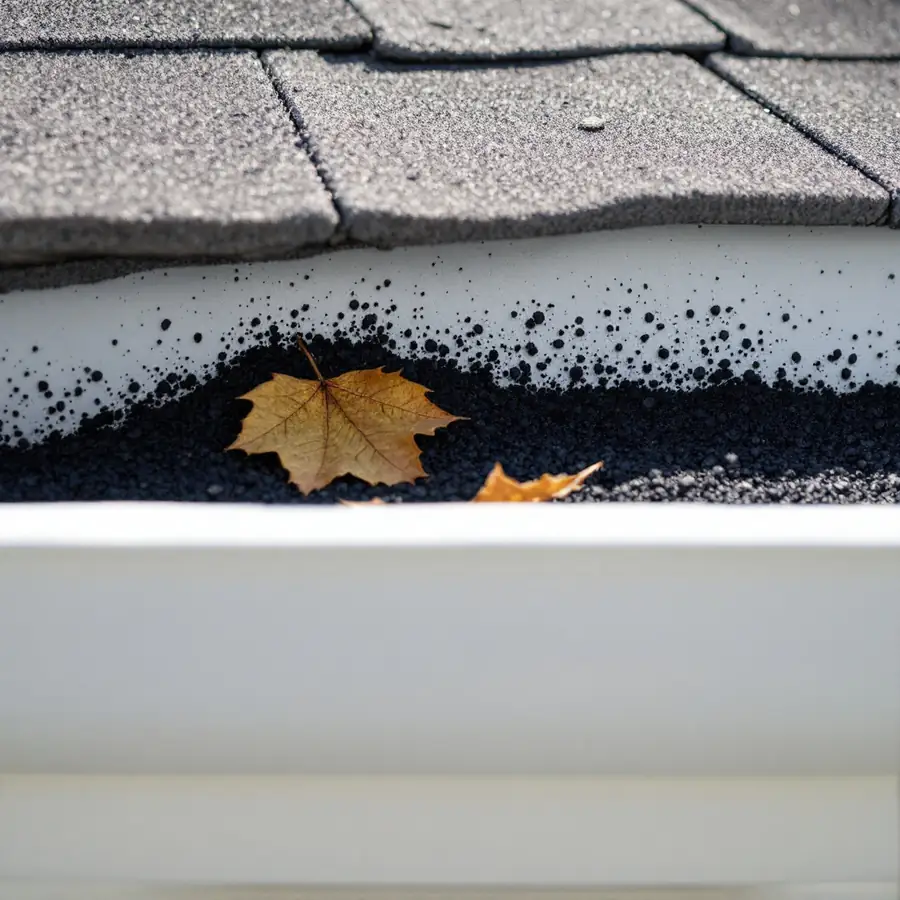
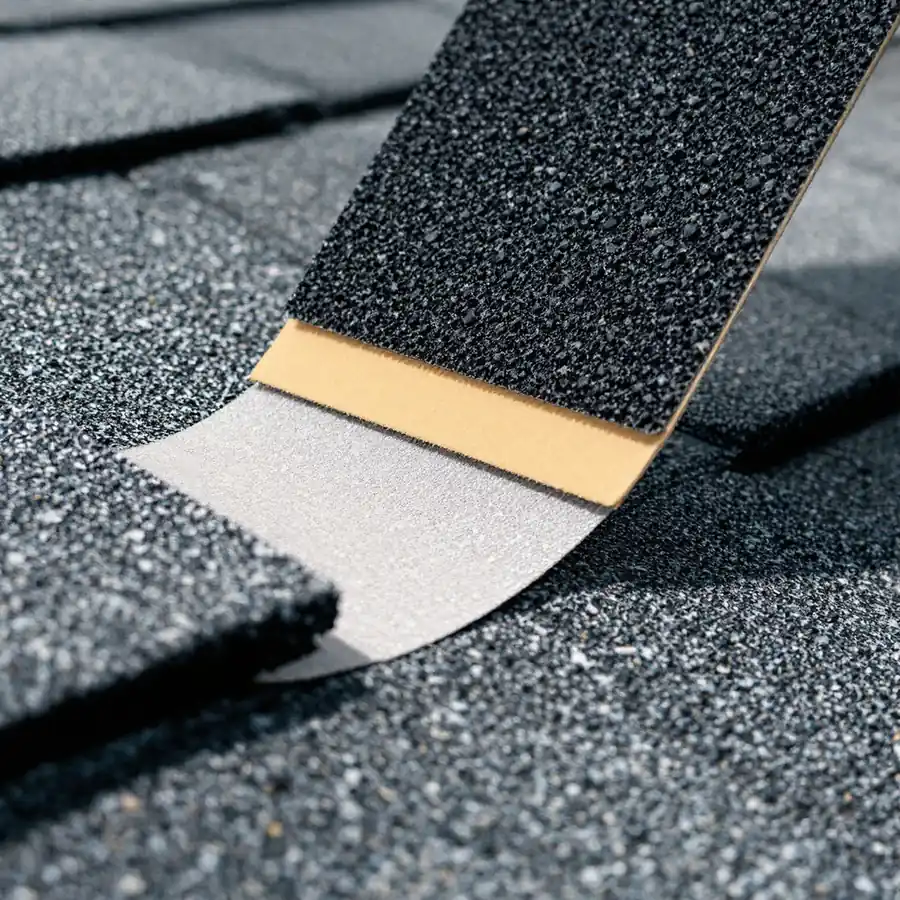
- Granules go first. The mineral surface is the sunscreen. Where it wears away, bare bitumen is exposed and ages several times faster than the surface around it. Gutters filling with grit is the roof telling you the rate.
- The seal lets go. Shingles are held down by an adhesive strip that softens in heat and bonds. After enough cycles it stops re-bonding, and tabs lift in ordinary wind. Nothing is missing and nothing is visible from the street.
- The mat turns brittle. Thousands of heat cycles later the shingle cracks instead of flexing. This is the stage at which an ordinary gust does what a severe one could not have done ten years earlier.
Why the south and west slopes fail first
They take the most sun. A roof that is visibly worse on one side is telling you the mechanism is exposure rather than age, and a contractor who cannot say which slope is worst has not looked closely.
How long should a shingle roof last in Florida
Shorter than the same product in a mild climate, and the honest version is that the range depends on colour, ventilation, slope orientation and installation quality far more than on the brand. Judge yours by the three stages above rather than by a number, and read the insurance sections below before you accept that age alone has ended it.
Material
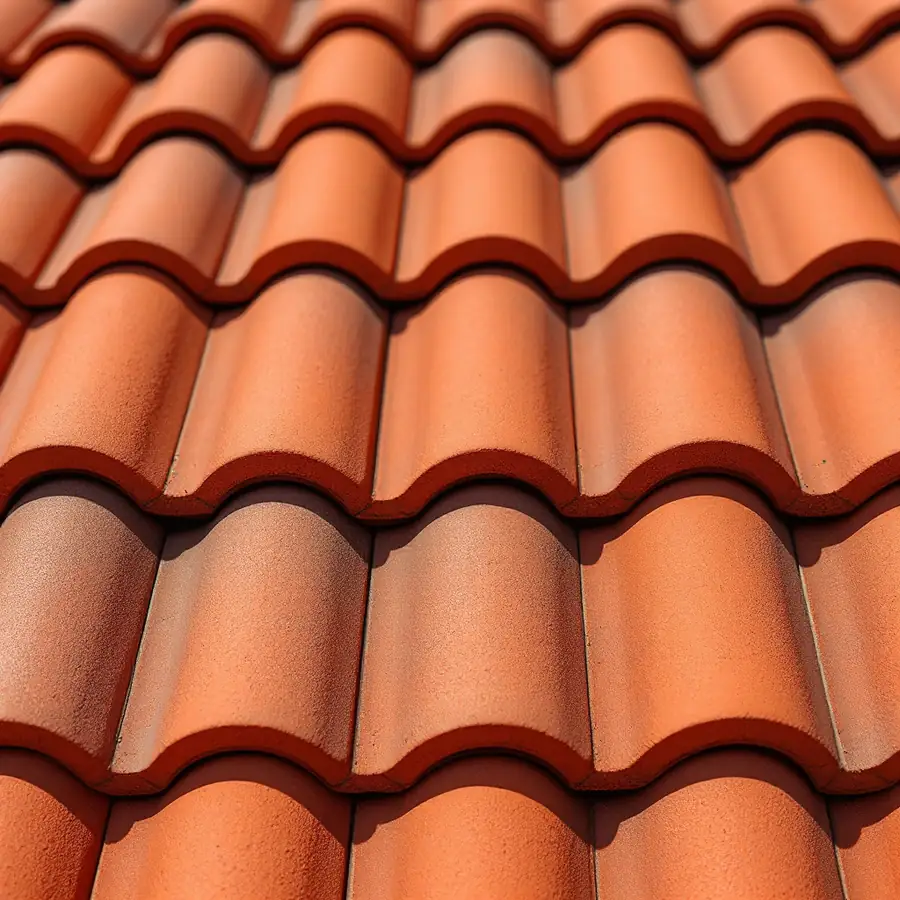
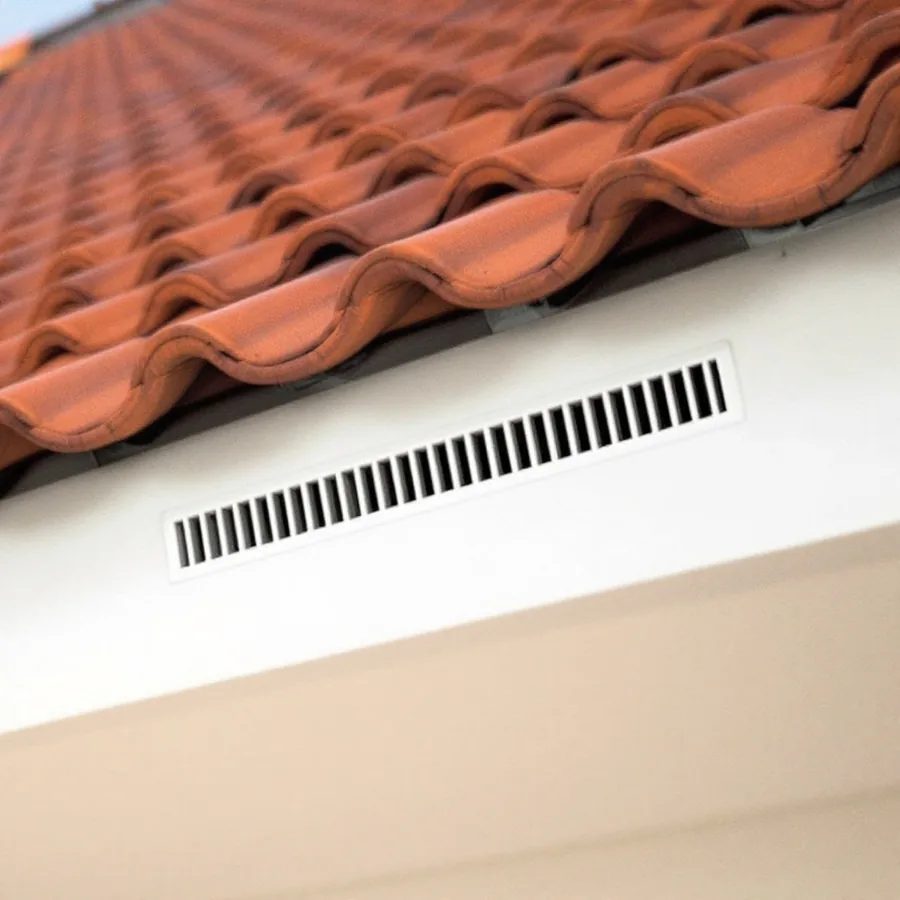
Tile: the part that outlives the roof and the part that does not
The most misunderstood roof in the state, because two different lifespans are sitting on top of each other.
The tile is not the roof
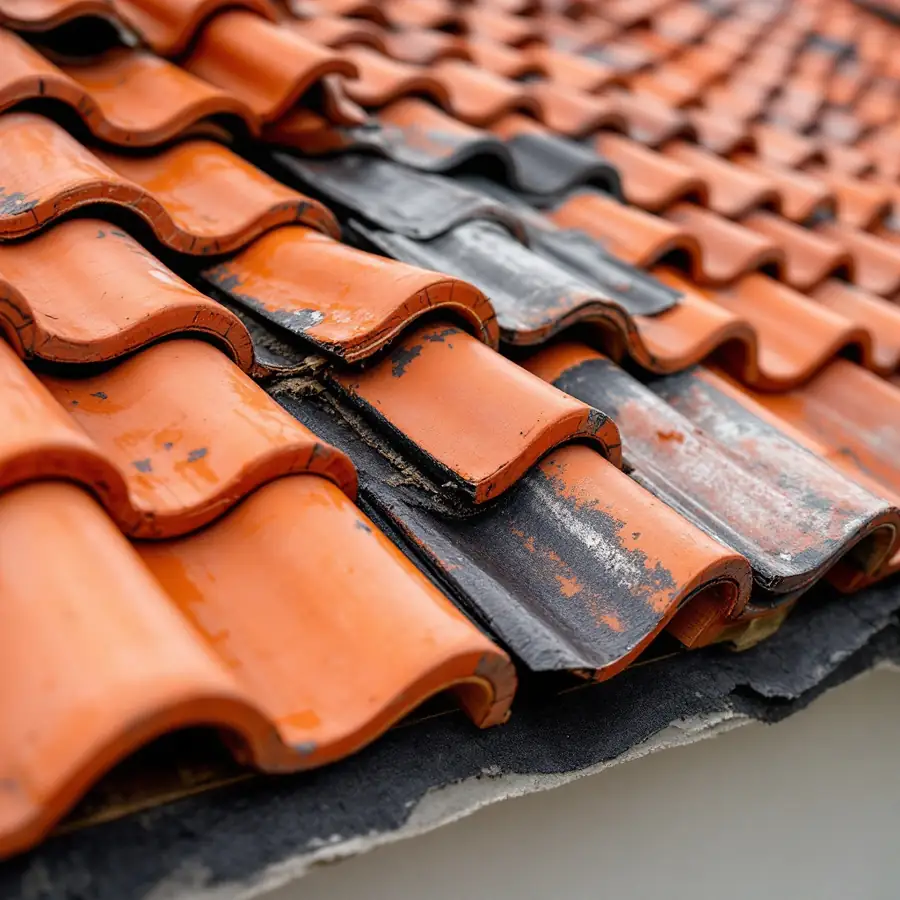
Clay and concrete tile can last most of a century. The underlayment beneath it, which is the layer that actually keeps water out, has an ordinary service life of a couple of decades. A Florida tile roof is therefore a long-lived surface over a short-lived membrane, and the membrane is the clock.
What that means for a quote
It is why re-lay work exists: sound tile is lifted, stacked, new underlayment goes down, and the same tile goes back. It is also why a tile roof can be thirty years old and entirely sound, or fifteen and failing, depending on what is underneath. How long a tile roof lasts in Florida is really two questions, and the answer to the one that matters is invisible from the ground.
Barrel tile, flat tile, clay and concrete
The profile changes how water moves and how the tiles are fastened; it does not change the underlayment clock. Barrel tile life expectancy in Florida is quoted in decades for the same reason clay is: the ceramic is nearly inert. Ask about the felt.
How long should a tile roof last in Florida
Ask the question in two parts. The tile, generally longer than you expect. The system, as long as the underlayment and the fasteners hold, which is the number a contractor should be quoting you and often is not.
Material
Metal: the longest life, and the fastener question
How long a metal roof lasts in Florida depends almost entirely on which of two systems you have.
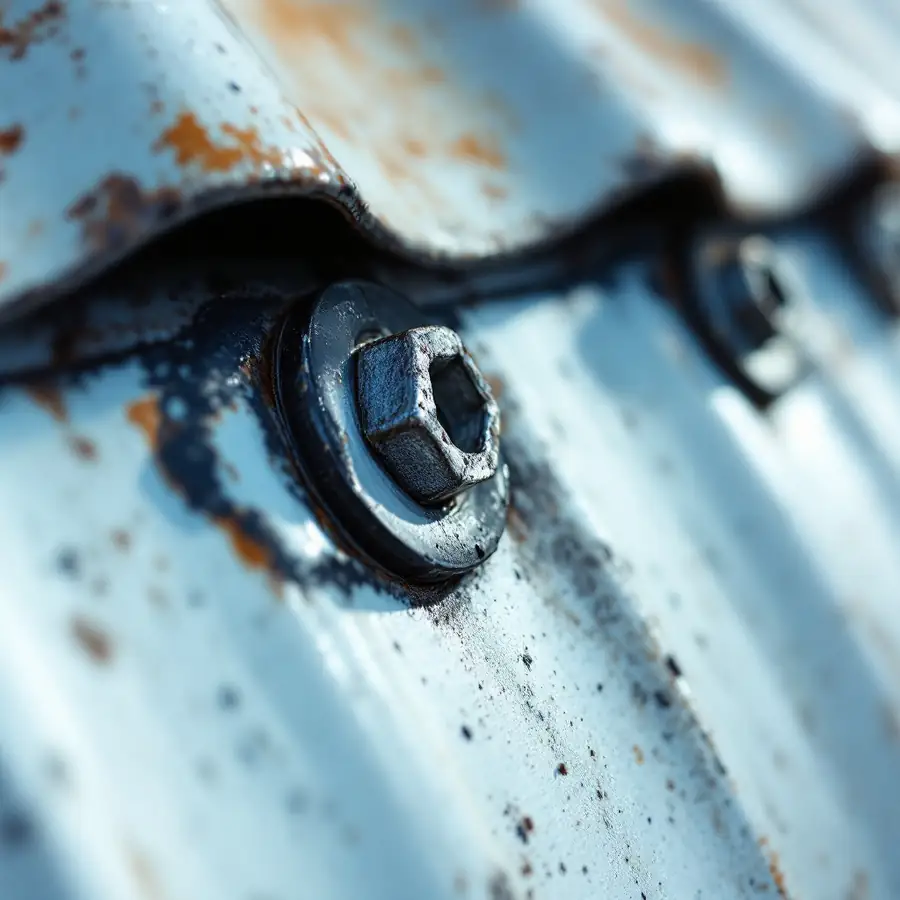
Exposed fastener
Panels are screwed through the face, and each screw has a rubber washer under its head. The panel will outlive you. The washers will not: they shrink and crack under heat and ultraviolet, and once they do, every hole weeps. An exposed-fastener roof is therefore a maintenance schedule rather than a fit-and-forget, and its life expectancy is really the washers' life expectancy multiplied by how often someone goes up to look.
Standing seam
Panels are joined at raised seams and fastened with concealed clips, so there are no penetrations through the face to fail. That single difference is why the two metal systems age so differently and why they are quoted so differently.
Salt air changes the answer
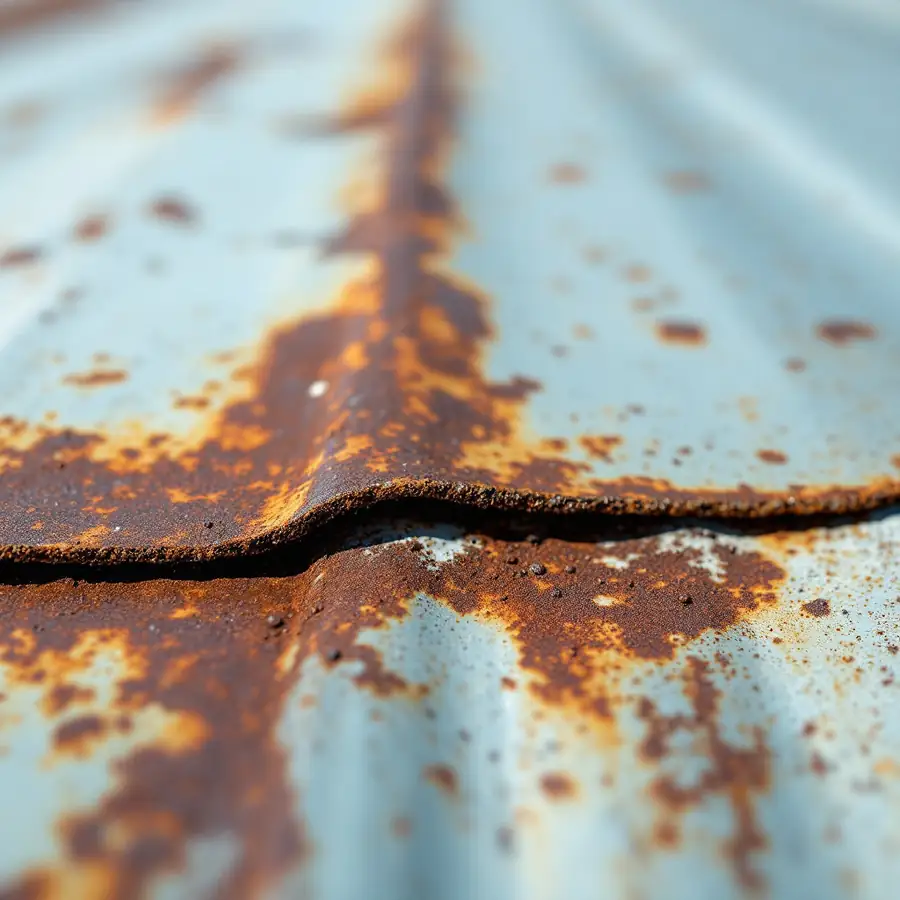
Near the coast, corrosion at cut edges, fasteners and points where dissimilar metals touch becomes the limiting factor rather than the coating. Distance from the water and the specified coating matter more than the age on paper, and a coastal house should be asking about both.
Does a metal roof lower your insurance in Florida
Not because it is metal. Florida policies price wind mitigation features that are verified and documented on an inspection form: roof deck attachment, roof-to-wall connection, roof covering compliance, opening protection and the roof's shape. A metal roof often scores well on some of those, which is a different sentence from the material earning a discount by name. Ask which specific features a mitigation inspection would credit on your house.
Material
Flat and low-slope roofs on Florida houses
A different failure mode, and one that shows itself two days after the rain rather than during it.
Heat works the seams
Membranes expand and contract like everything else, and the seams take it. In a climate with this much sun the seam and flashing detail is the whole roof, and a membrane brand argument is beside the point next to it.
Water that does not leave
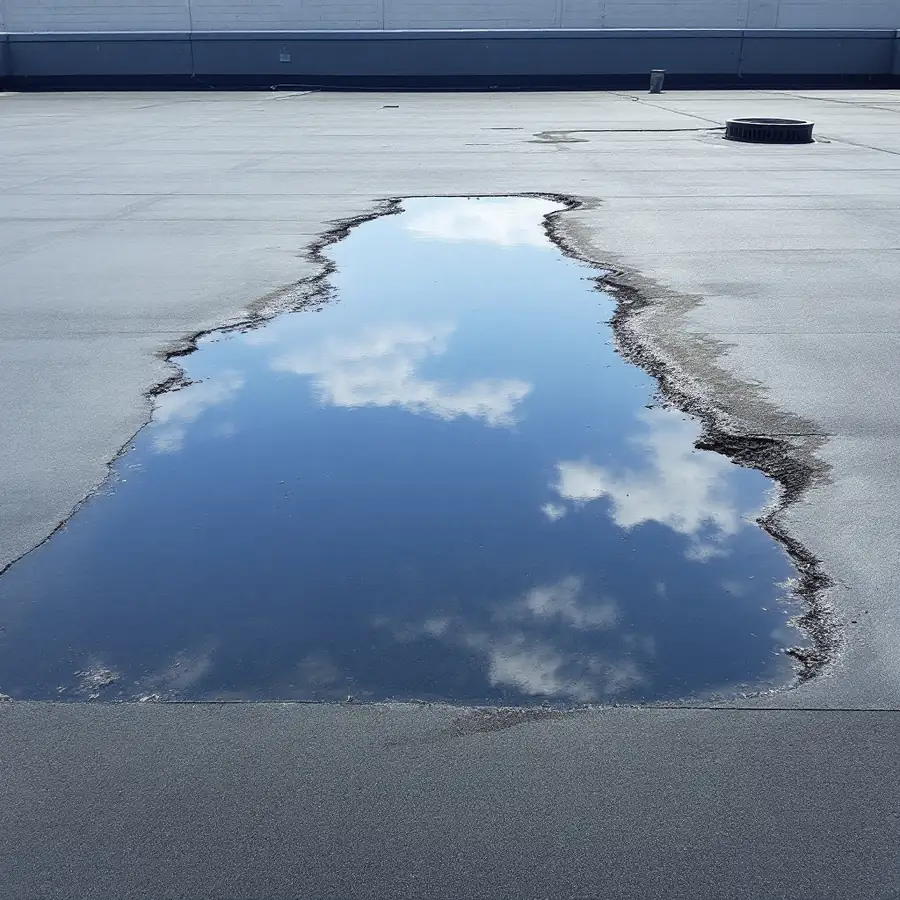
Standing water well after a storm is the strongest single predictor of an early membrane failure. In Florida the rain arrives fast and often, so a slope or drainage fault gets tested weekly rather than annually. If water is still sitting near a working drain, that is a slope problem rather than a rainfall problem.
How long does a flat roof last in Florida
Less than a pitched roof of comparable quality, and the spread between a well-drained example and a ponding one is wider than the spread between materials. Look at where the water goes before you look at anything else.
The Law, Quoted
The 15-year rule is not what most pages say it is
Almost everything written about Florida roof age describes this statute as a replacement rule. It is the opposite: it is a restriction on insurers.
What the statute actually says
Florida Statutes section 627.7011(5)(b), in its own words: “An insurer may not refuse to issue or refuse to renew a homeowner's policy insuring a residential structure with a roof that is less than 15 years old solely because of the age of the roof.”
Read that again, slowly
It does not say a roof must be replaced at fifteen years. It says an insurer may not refuse to write or renew over the age of a roof that is younger than that. The sentence exists to protect the homeowner, and it is routinely quoted as though it did the reverse.
What to do if age has been raised with you
Ask for the reason in writing, and ask what is being relied on other than age. If the roof is under fifteen and the answer is still age, that is the sentence above. Keep the reply.
The Law, Quoted
After 15 years you have a right to an inspection, in the statute's own words
The older roof is not out of options. It has a specific, statutory route.
The text
Section 627.7011(5)(c): “For a roof that is at least 15 years old, an insurer must allow a homeowner to have a roof inspection performed by an authorized inspector at the homeowner's expense before requiring the replacement of the roof of a residential structure as a condition of issuing or renewing a homeowner's insurance policy.” And the condition that follows it: the insurer may not refuse over roof age alone if an authorized inspector finds that “the roof has 5 years or more of useful life remaining”.
What an authorized inspector is looking at
The condition of the covering, the fastening and edge details, flashings at every penetration, and on a tile roof the underlayment beneath. The output is an opinion on remaining service life, which is exactly the thing the statute keys on.
Why this is usually worth doing
An inspection costs a small fraction of a roof, and the statute exists precisely so that an older roof gets a hearing rather than an automatic verdict. The cheapest moment to get one is before anybody is pressing you, because the report has a date on it and the date is worth something at renewal.
The Law, Quoted
The 25 percent rule is a building code rule, not an insurance rule
These two are confused constantly, including by people selling roofs.
The text
Florida Statutes section 553.844(5): “if an existing roofing system or roof section was built, repaired, or replaced in compliance with the requirements of the 2007 Florida Building Code, or any subsequent editions of the Florida Building Code, and 25 percent or more of such roofing system or roof section is being repaired, replaced, or recovered, only the repaired, replaced, or recovered portion is required to be constructed in accordance with the Florida Building Code in effect.”
What it does
It answers the question of which part of a roof has to be brought up to the code in effect when a quarter or more of a roofing system is worked on. Where the existing system was built to the 2007 Florida Building Code or later, the answer is the repaired, replaced or recovered portion, not the whole roof.
What it does not do
It does not oblige anyone to replace a roof, and it has nothing to do with whether an insurer will write a policy. If those two ideas have been presented to you as one rule, they are not one rule and they are not in the same chapter of Florida law.
Where the confusion is expensive
A quote that leans on the 25 percent threshold to justify a full replacement is using a code provision to make a commercial argument. The provision is about compliance scope. Ask which of the two statutes is being relied on, by number.
Work It Out
Work out what your roof faces
Three questions, nothing sent anywhere. What comes out is what to expect from your material in this climate, what an authorized inspector will actually look at, which of the two statutes applies to your situation, and the question to put to whoever is quoting you.
We are paid the same fixed fee for an introduction whether the visit ends in an inspection report or a new roof, which is why this tool has an answer that tells you to buy nothing.
Timing
When to replace a roof in Florida, and when not to
Age alone is not a reason, and Florida law is unusually explicit about that.
What an actual end of life looks like
- Shingle: bare bitumen showing across whole slopes, tabs that no longer seal, cracking rather than flexing.
- Tile: underlayment failing, which shows as leaks with intact tile above them.
- Metal: weeping fastener holes across the field, or corrosion that has moved from edges into the panel.
- Flat: seams opening, repeated repairs in the same areas, water standing days after rain.
What is not an end of life
A birthday. A few slipped tiles. Algae streaking. A single lifted shingle. An insurer's letter that names no defect. Each of those has an answer that is cheaper than a roof.
The order to do things in
Find out what the roof is actually doing before you find out what it costs. An inspection produces a document; a quote produces a number, and the number means nothing without the document. If you want a roofer to look, we connect homeowners with independent licensed and insured roofing companies, and we are paid a fixed fee for the introduction either way.
Honest Limits
What the storm archive can and cannot tell you
The table near the top is the strongest thing on this page, so its limits belong on the same page rather than in a footnote.
These are reported events
An event enters the archive when somebody observed it and a weather office logged it. Population density and local practice affect the count, so two neighbouring counties can differ for reasons that have nothing to do with weather. Read the numbers as an order of magnitude.
A county is not a house
Hail in your county does not mean hail over your roof. The table answers what is normal where you live, not what happened to you.
What the archive does not contain
Ultraviolet exposure, heat cycling, humidity and salt air are not storm events and are not counted anywhere in it. For Florida that is a large omission, and it is precisely why this page spends a section on them without a single number attached. Definitions of what does get logged are set out in the National Weather Service's own Storm Data preparation directive, and the one-inch hail threshold used here comes from the same place as the severe thunderstorm definition.
Hurricanes sit outside it
Named storms are logged under their own event types and are not in these counts, deliberately. Annual wear and catastrophic risk are different questions and averaging them together hides both.
Straight Answers
Questions Florida homeowners ask about roof age
How long does a roof last in Florida?
Shorter than the same material in a mild climate, and for a reason most pages get wrong. Our count of the federal storm archive puts the median Florida county at 14 hail events of an inch or more in twenty years against 29 nationally, so hail is not the cause. Ultraviolet light, daily heat cycling, constant humidity and frequent moderate wind are, and they work on a roof every day rather than on the days a storm is reported.
Does Florida law require a new roof at 15 years?
No. Section 627.7011(5)(b) says an insurer may not refuse to issue or renew a homeowner's policy on a structure with a roof less than 15 years old solely because of the roof's age. It restricts the insurer; it does not oblige the homeowner. For a roof of 15 years or more, subsection (5)(c) gives you the right to have an authorized inspector assess it at your expense before replacement can be required as a condition of coverage.
What is the 25 percent rule in Florida?
A building code provision, not an insurance rule. Section 553.844(5) says that where an existing roofing system built to the 2007 Florida Building Code or later has 25 percent or more repaired, replaced or recovered, only that portion must be constructed to the code in effect. It decides which part comes up to code. It does not require anyone to replace a roof, and it has nothing to do with whether a policy is written.
How long does a tile roof last in Florida?
Two answers, and the useful one is the second. The clay or concrete tile itself can last most of a century. The underlayment beneath it, which is the layer actually keeping water out, has an ordinary service life of a couple of decades. A tile roof can be thirty years old and sound or fifteen and failing depending on what is under the tile, which is why a re-lay is a real option and why the tile's age is a poor guide.
Is a metal roof worth it in Florida?
It is the longest-lived common choice, with one distinction that decides everything. On a standing seam roof the fasteners are concealed and there are no penetrations through the face. On an exposed-fastener roof the rubber washers under the screw heads are the clock, and once they shrink the holes weep. Near the coast, corrosion at cut edges and fasteners becomes the limiting factor for either system.
Can my insurer drop me because of my roof's age?
Not for age alone if the roof is under 15 years, under section 627.7011(5)(b). If it is 15 or older, the insurer must allow an inspection by an authorized inspector at your expense before requiring replacement, and may not refuse over age alone if that inspection finds the roof has five years or more of useful life remaining. Ask for any demand in writing and read it against those two subsections.
Does a metal roof lower your insurance in Florida?
Not by being metal. Florida wind mitigation credits attach to verified construction features documented on an inspection form: deck attachment, roof-to-wall connection, covering compliance, opening protection and roof shape. A metal roof often scores well on some of them, which is a different thing from a discount for the material. Ask which specific features an inspection would credit on your house.
Should I replace my Florida roof before hurricane season?
Only if it is genuinely at the end of its life, which the sections above describe. A sound roof does not become unsound because of the calendar, and a rushed replacement in the weeks everyone else is also rushing is the worst market to buy in. If the roof has real defects, they are worth fixing whatever the season.
Where This Comes From
Sources and method
- Our own count of hail and wind by county — aggregated from NOAA National Centers for Environmental Information, Storm Events Database, county-coded records only, all 67 Florida counties, 2006 to 2025, compared against all 3,199 US counties. Method and limitations in the file published beside this page.
- Insurer restrictions on roof age — Florida Statutes 627.7011, subsections (5)(b) and (5)(c), 2024 edition.
- The 25 percent threshold and the building code — Florida Statutes 553.844, subsection (5), windstorm loss mitigation.
- What counts as severe hail and how storm events are logged — National Weather Service Instruction 10-1605, Storm Data Preparation, and NWS Thunderstorm Safety.
- Hurricane climatology, kept separate from annual wear — NOAA National Hurricane Center, Tropical Cyclone Climatology.
- Roof surface temperature and why heat is the Florida clock — U.S. Environmental Protection Agency, Using Cool Roofs to Reduce Heat Islands.
Our editorial standards explain how we source and check what we publish. Both Florida statutes were read on the Legislature's own site on the day of publication and are quoted verbatim; nothing here is legal advice, and a policy is decided by its own wording. The county counts are our own aggregation of a federal archive, and their limits are stated in the section that presents them rather than hidden. We publish no price averages and no product rankings. We are a referral service rather than a roofing company. Last updated .
Before you call anyone
The independent match — we are paid for the introduction, not for the size of your job
Most roofing advice is written by the company that wants to do the work. That is not a failing of the people who read it; it is a defect in who is talking. The estimate, the diagnosis and the invoice come from one party, and no amount of care on your side fixes that.
We are built the other way round. We do not repair roofs and we do not sell materials, so the payment reaches us when you are connected to a licensed, insured roofing company — the same amount whether your roof needs an eight-hundred-dollar repair or a twenty-thousand-dollar replacement. Nobody here has a reason to talk you into the larger number. How we make money and how we research are both written down.
Waiting is the one thing that actually costs money. An insurance clock runs from the date of the damage rather than the date you noticed it, and damage that sits through a season stops reading as sudden and starts reading as wear — which is the exclusion that pays nothing. And if your roof is simply worn out, say so on the call. No claim will pay for age, we will tell you that plainly, and you will have lost nothing but the call.