Water Is Coming In
Roof leak repair, find it, price it, and know who pays
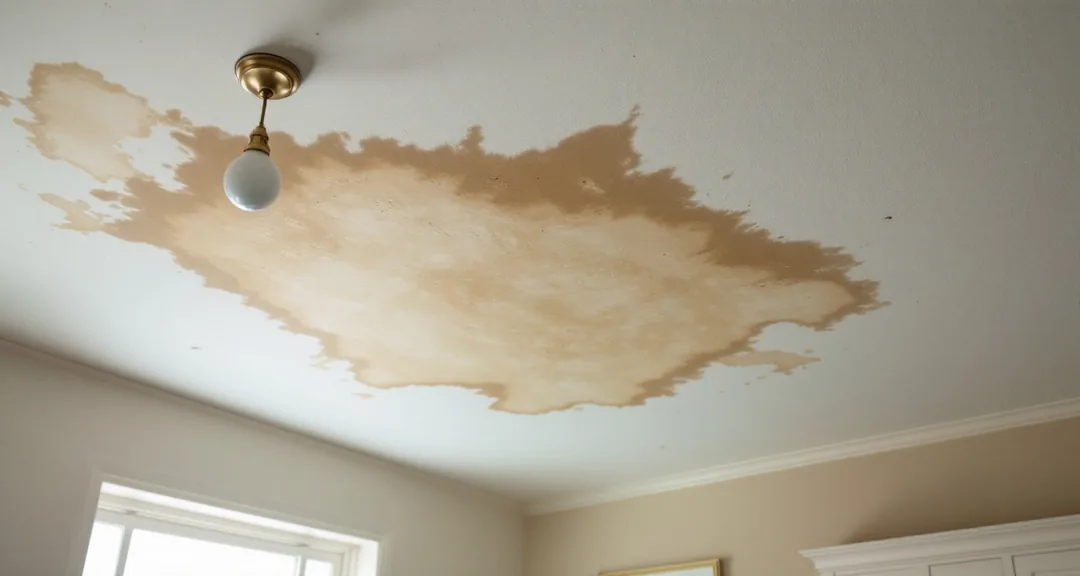
Before anything else, one question decides the next three weeks: is this actually the roof? A stain on a ceiling is produced just as readily by a bathroom above it, an air-conditioning line, or condensation in the roof space, and the company you call first determines whether you find out. We are a referral service rather than a roofing contractor, so we can start where a roofer cannot: with the possibility that the answer is no.
(844) 833-2185Toll-free and answered every day of the year. The call reaches an independent licensed and insured roofing company covering your area, we do not do the work ourselves, which is exactly why we can tell you when you do not need it.
Four things to establish, in this order
- Whether it is the roof at all. Condensation, plumbing and air-conditioning all produce ceiling stains, and each is a different trade with a different bill.
- Where the water enters. Almost never directly above the stain, water runs along framing and falls at the first low point it reaches.
- Sudden damage or gradual wear. This single distinction decides whether your policy pays anything, and it is decided by the adjuster, not by you.
- Repair or replace. On a roof near the end of its life a repair is often money spent twice.
The First Hour
What to do while it is still dripping
Nothing here is a repair. These are the steps that stop the damage getting worse and keep your options open, and they are all things you can do without going near the roof.

Get the water into a container, then relieve the ceiling
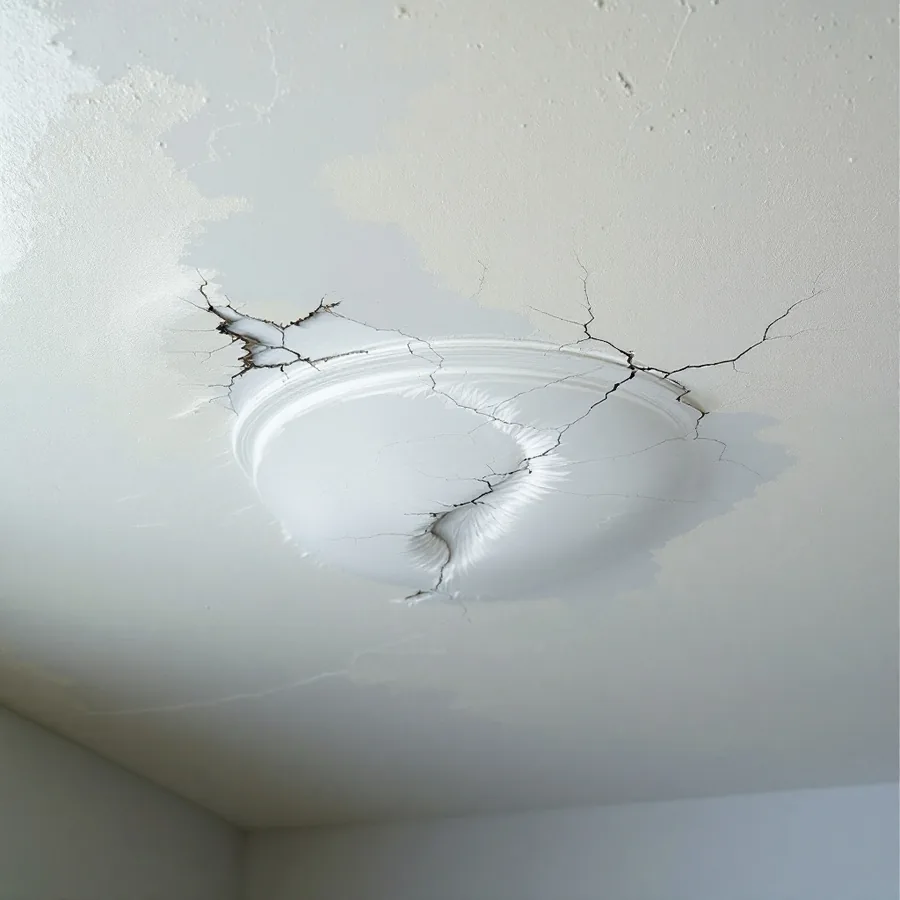
Put something under the drip first. Then, if the ceiling is bulging or sagging, pierce the low point of the bulge with a screwdriver and let it drain into a bucket. This feels wrong and it is right: a pocket of trapped water weighs a great deal and a ceiling that gives way all at once does far more damage, and is far more dangerous, than a hole you made deliberately.
Move what matters and cut the power if needed
Electronics, papers, anything absorbent. If water is anywhere near a light fitting, a ceiling fan or a socket, switch that circuit off at the panel and leave it off until someone has looked.
Photograph before you clean up
The stain, the drip, the container, the ceiling, the room. Timestamps matter later, and cleanup destroys the only evidence that existed of how bad it was.
Note the weather
Write down whether it is raining now, when it last rained, and how hard. A leak that only appears in driving rain, or only in winter, or regardless of weather, is three different problems, and this note is what tells them apart.
Do not climb up
A wet roof is dangerous, and foot traffic adds marks that complicate an insurance claim later. Everything worth seeing on day one is visible from the ground, from a window, or from inside the roof space.
Start drying immediately
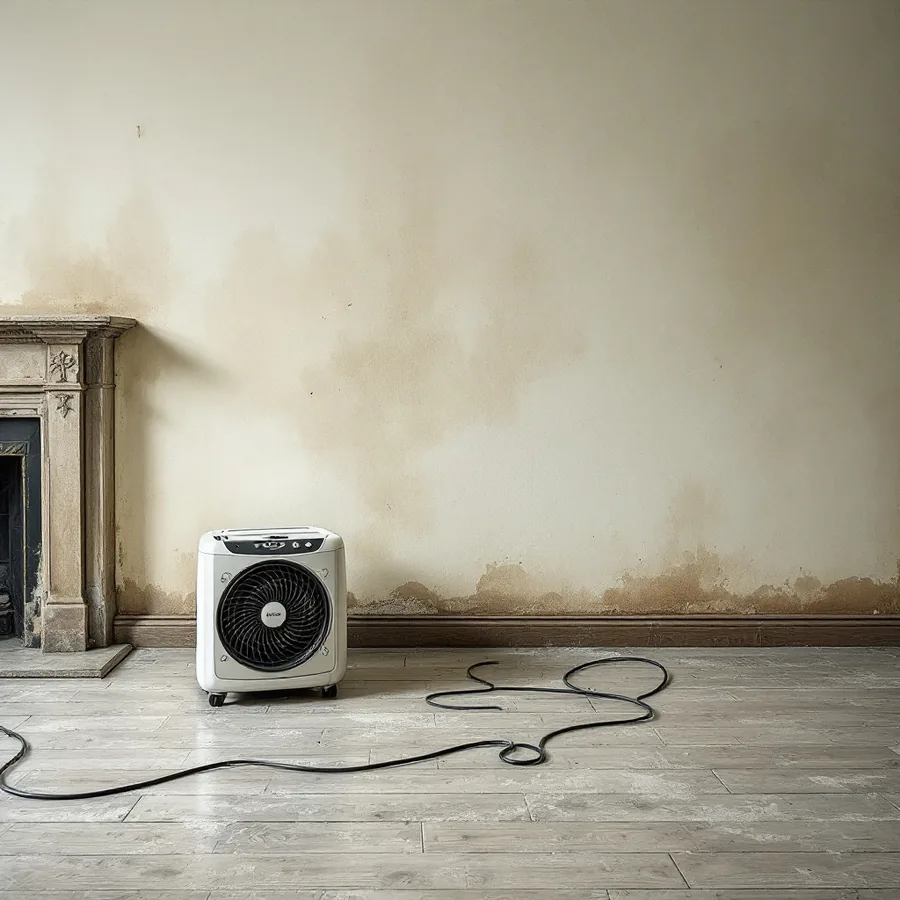
Air movement and dehumidification, straight away. What turns a leak into a much larger bill is not the water arriving, it is the water staying.
The Question Nobody In The Search Results Asks
Is it actually a roof leak?
A wet patch on a ceiling has at least six common causes and only one of them is a hole in the roof. Every page above this one in the results is published by somebody who repairs roofs, which is precisely why none of them starts here. Work through these before you call anyone, because calling the wrong trade costs a visit fee and a week.
| Cause | Tell-tale signs | Who to call |
|---|---|---|
| Roof leak | Appears during or shortly after rain and stops when it dries. Often worse in driving or wind-blown rain. Water may be discoloured from dust and rust picked up on the way | Roofer |
| Plumbing above | Ignores the weather entirely. Frequently follows use, a shower, a bath, a washing machine cycle. Water is usually clean | Plumber |
| Air conditioning | Appears in hot weather with the system running, near an indoor unit or along its drain line. Stops when the system is off | HVAC technician |
| Condensation | Cold weather, no rain. Widespread damp or droplets rather than a single drip, often across the whole roof space, sometimes with frost on nail points | Roofer or insulation contractor, it is a ventilation problem |
| Ice dam | Winter, after snow, often with icicles along the eaves. Water backs up under the shingles from melt refreezing at the cold edge, it leaks without any rain at all | Roofer, but the cause is insulation and ventilation |
| Wind-driven rain at a wall or window | Only in storms from one particular direction. Water enters at siding, a window head or the chimney rather than through the roof plane | Roofer or siding contractor, depending on where it enters |
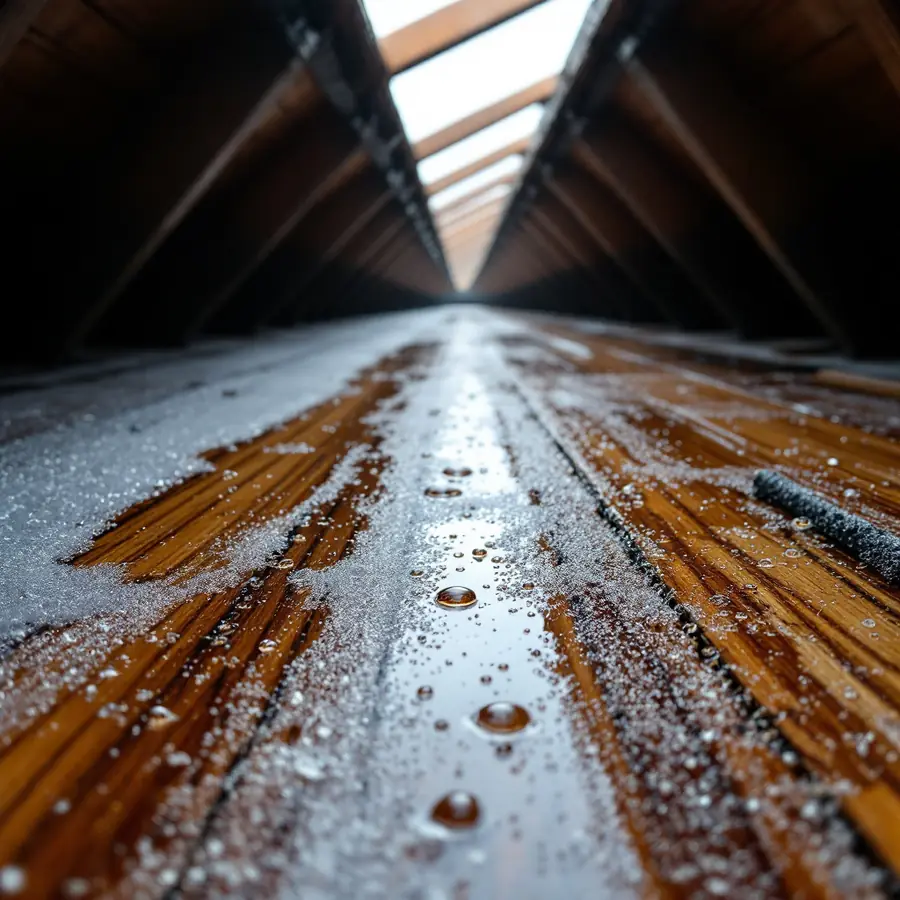
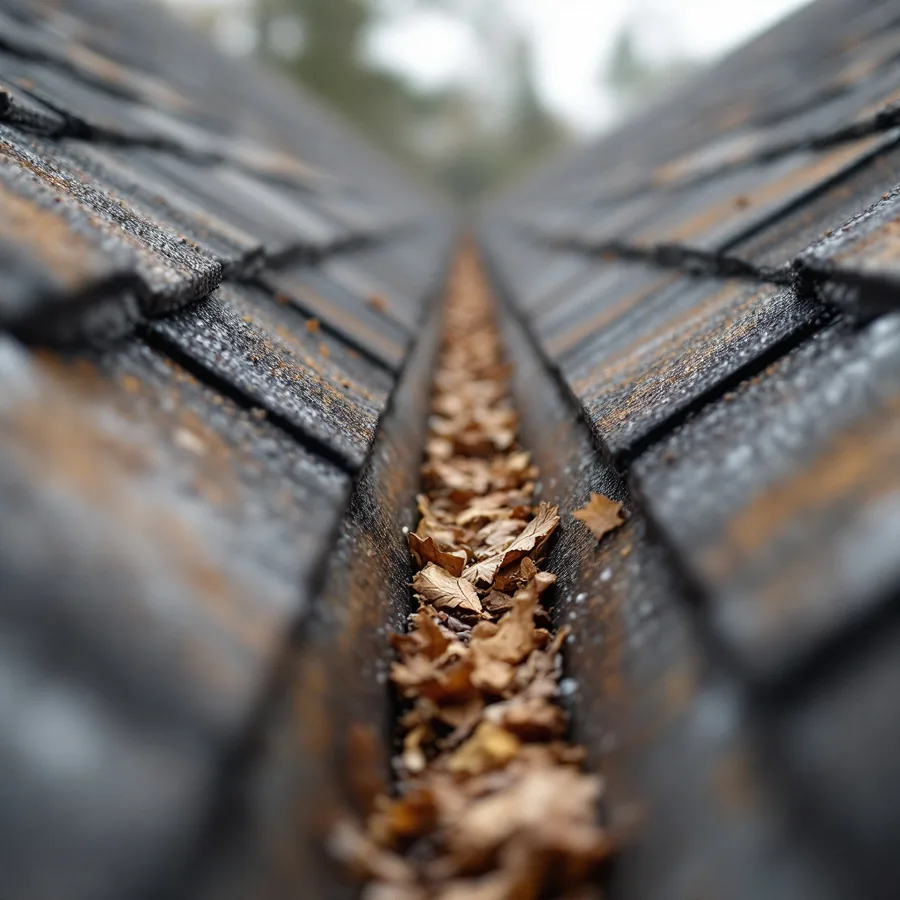
The single most useful test
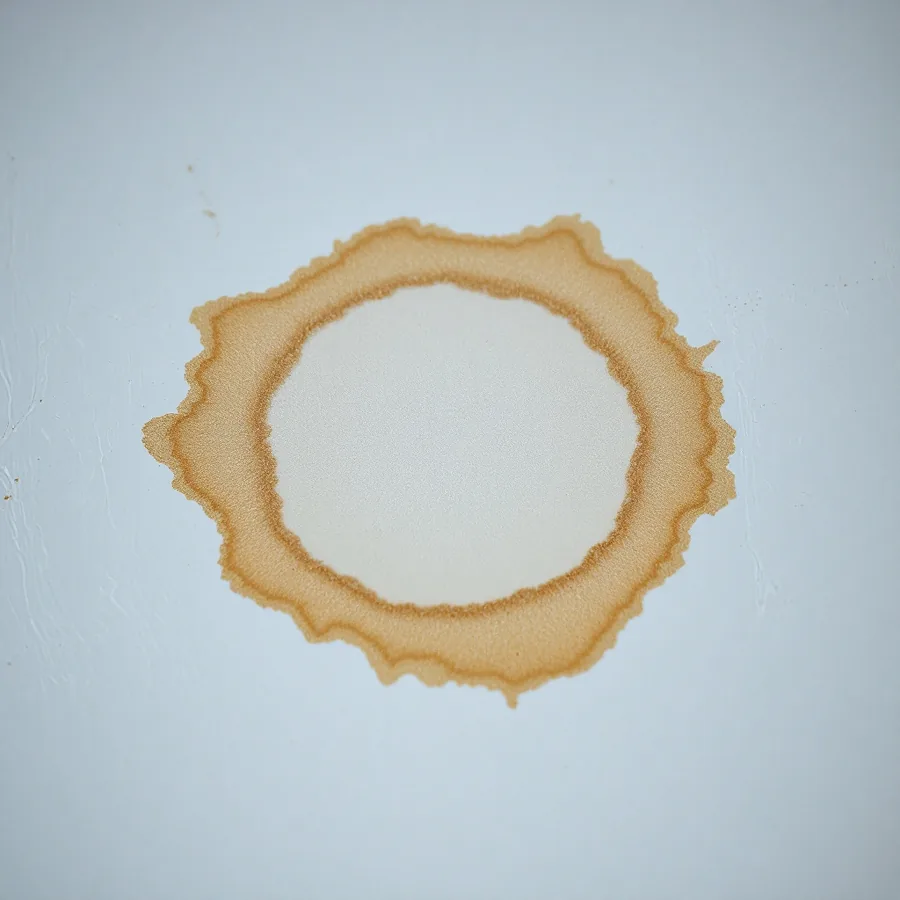
Does it track the rain? Note the date and time the stain appears or grows, and compare it against when it actually rained. A leak that arrives on a dry day is not coming from the sky. This one observation eliminates half the possibilities and costs nothing.
Where the stain is tells you a great deal
Directly below a bathroom, kitchen or laundry, suspect plumbing first regardless of weather. Near an interior wall on a top floor with no fixtures above, the roof becomes much more likely. Along an exterior wall, suspect the junction where roof meets wall, flashing rather than the roof covering itself.
Why this matters more than it sounds
Plumbing leaks and roof leaks are usually treated differently by an insurance policy, they are fixed by different trades at different prices, and the diagnosis affects both. Establishing which one you have is not a technicality; it is the fork in the road.
Counter-Intuitive And Important
The water does not come in where it comes out
The most common mistake in leak hunting is looking at the roof directly above the stain. Water almost never falls straight down once it is inside.
How water actually travels
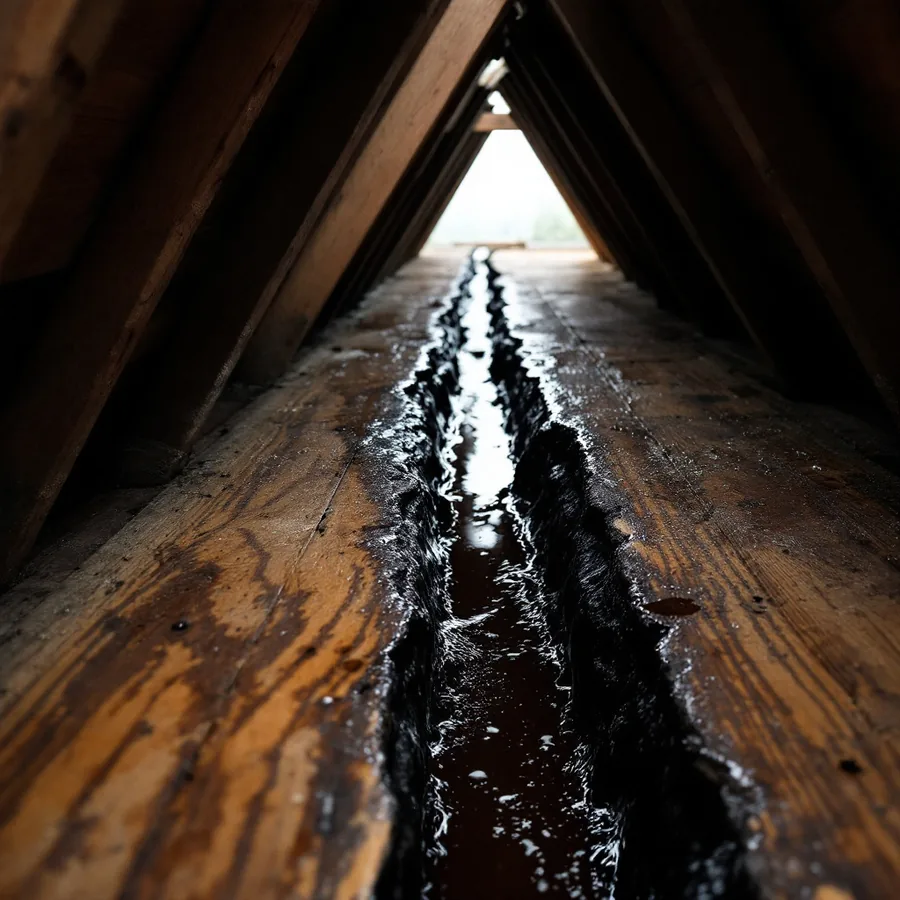
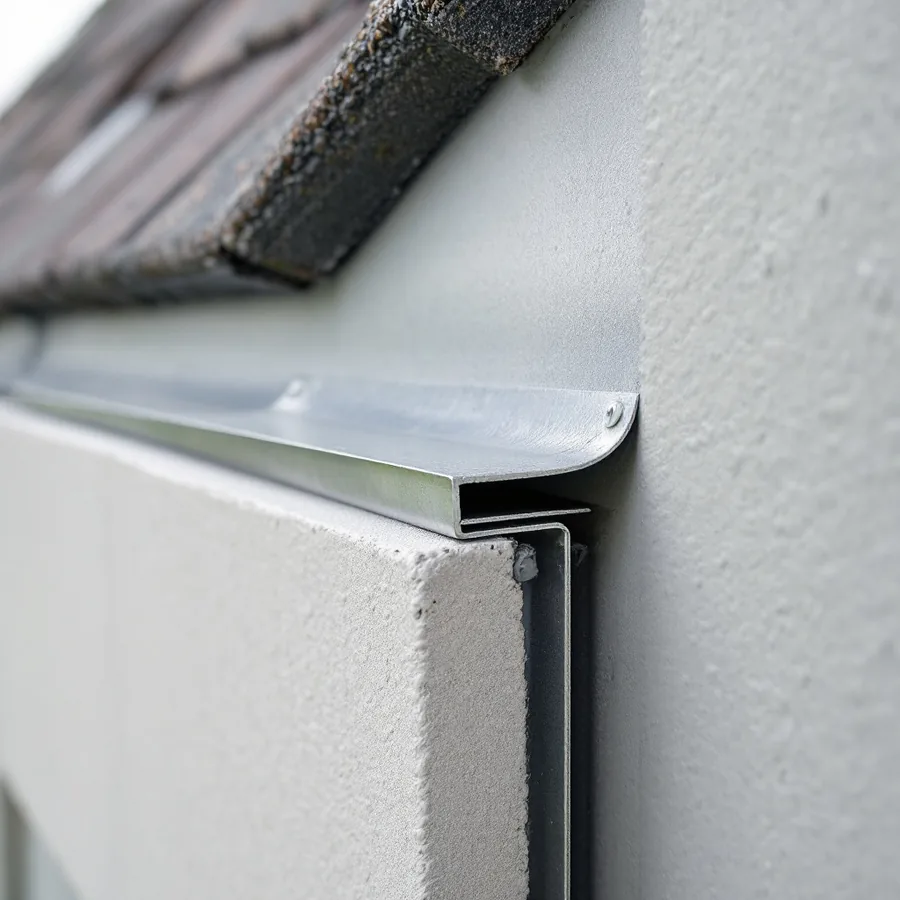
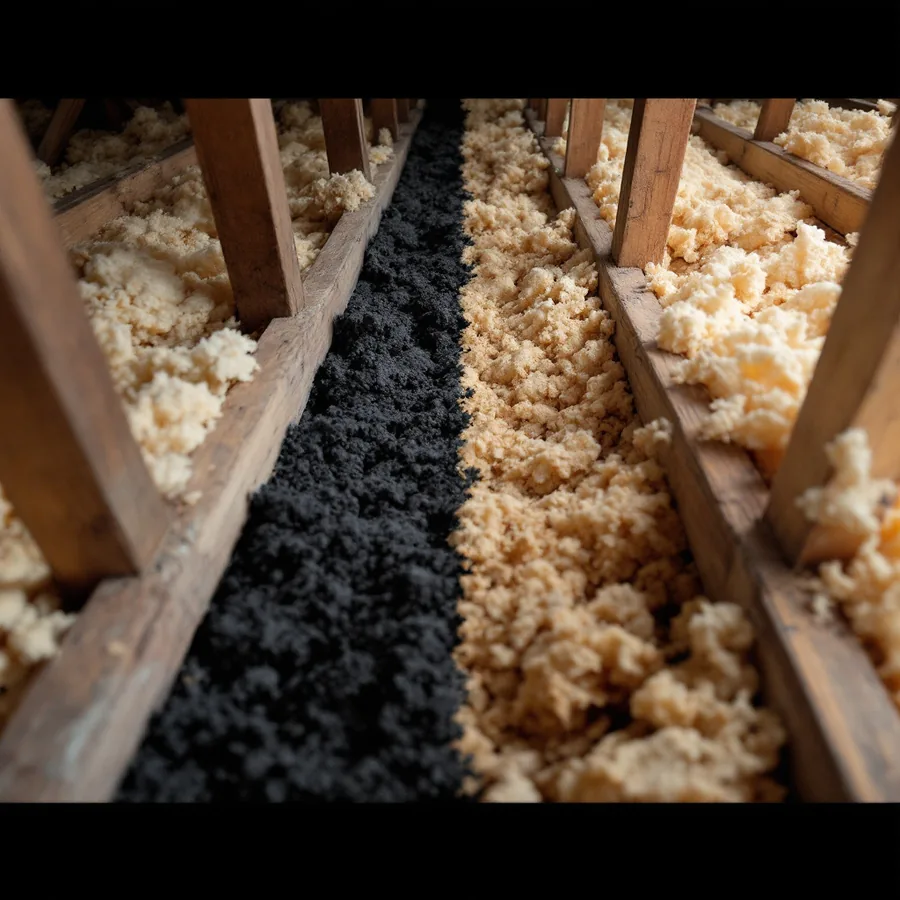
Water entering the roof runs down the underside of the decking, then along a rafter, then along anything else with a slope, a pipe, a wire, an insulation batt, until it reaches a low point and drips. That path can easily be several feet, and it is nearly always uphill of the stain rather than above it. So the search starts at the stain and works upslope, not vertically.
Where leaks actually begin
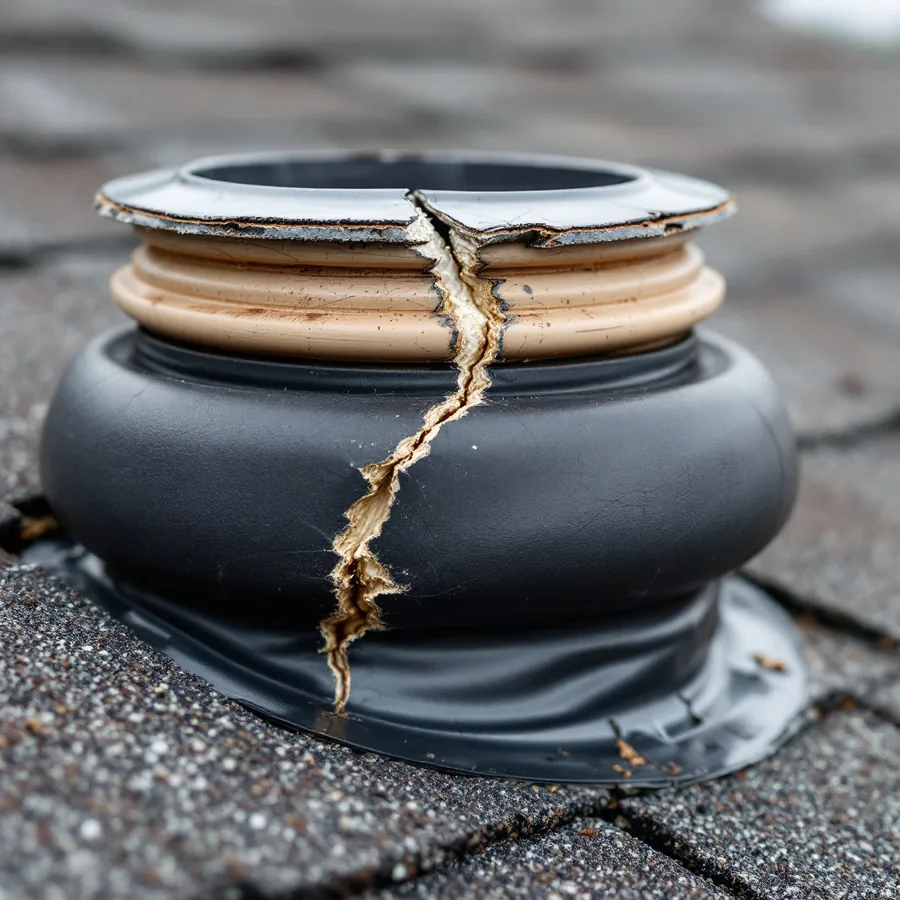
Overwhelmingly at penetrations and junctions rather than in the middle of a slope: the flashing where a roof meets a wall or chimney, valleys where two slopes join, vent pipes and their rubber boots, skylights, and the point where an addition or a dormer joins the main roof. Intact shingles in the middle of a slope are rarely the culprit.
Finding it from inside
Go into the roof space on a bright day with the lights off and look for daylight, then for staining and dark tracks on the underside of the decking. Follow the track uphill to its highest point, that is the entry, or directly beneath it. Mark it, and measure from something you can find again from outside, like a chimney or a vent, because from above the roof looks nothing like it does from below.
What professional roof leak detection actually involves
When the source will not reveal itself, there is a trade for it. Roof leak detection uses a moisture meter to map how far the wet area really extends behind the surface, infrared imaging to see temperature differences where water is held in the structure, and, the oldest and often the most decisive method, a controlled water test, where a hose is run over one small area of the roof at a time, from the bottom upward, with somebody watching inside. That last technique is why a diagnostic visit takes hours rather than minutes, and why a company that charges for it is frequently the one that finds the leak.
Flat and low-slope roofs are a different problem
Everything above assumes a sloped roof with shingles. A flat or low-slope roof sheds water by membrane rather than by gravity, so a leak there behaves differently: water can travel a long way between the membrane and the deck, ponding matters more than pitch, and the repair is a membrane repair rather than a shingle one. If your leak is over a flat section, an addition or a porch roof, say so when you call, it is a different specialism.
When it only leaks in certain rain
A leak that appears only in wind-driven rain usually means water is being pushed uphill under a lap or behind flashing rather than falling through a hole. A leak that appears only after a long soaking suggests water is getting past the covering and being held by something until it overflows. A leak that appears in winter without rain is very likely condensation or an ice dam rather than a leak at all.
Not All Roofs Leak Alike
Where leaks start on other coverings
Most of this page assumes asphalt shingles, because most American roofs are. On other coverings the weak points move.
Tile roof leak repair
Tile sheds water; the underlayment beneath it is what actually keeps the house dry. So a tile roof leak is usually an underlayment failure or a cracked tile letting water reach it, and the repair means lifting tile rather than patching the surface. Walking a tile roof breaks more tiles, which is why diagnosis is slower and more expensive here than anywhere else.
Metal roof leaking at an overlap
On exposed-fastener panels the usual culprit is the washers under the screws, which harden and shrink with age. On standing seam it is far more often a termination or a penetration than the seam itself. Copper and zinc leak at soldered joints that have fatigued from thermal movement. See metal roofing for how the systems differ.
Cedar shake
Splits, cupping and gaps that open as the wood dries and moves. A wood roof is expected to leak a little in extreme wind-driven rain and to close up again, the question is whether the underlayment beneath is still doing its job, and on an old shake roof it frequently is not.
Flat and low-slope
Membrane rather than gravity. Water travels between membrane and deck, sometimes a long way, so the wet spot inside can be nowhere near the failure. Ponding, seams and penetrations do the damage. It is a different specialism, and worth saying so when you call.
Mobile and manufactured homes
Usually a low-slope metal or membrane roof over a light structure, with seams and roof-mounted fittings as the weak points. Coatings are common here as a genuine repair rather than a bodge, but the roof has to be sound and dry underneath first.
A new roof that is leaking
Almost always an installation detail rather than a material failure: flashing reused, a penetration finished badly, or fasteners in the wrong place. It is also the one situation where the fix should cost you nothing, call the installer before anyone else, in writing, while the workmanship warranty is live.
Signs of a roof leak in the attic, before it reaches a ceiling
Water shows in the roof space long before it shows downstairs, and the space is easier to read than the roof. Look for dark tracks and staining on the underside of the decking, rust on nail points, insulation that is compressed or discoloured in patches, a musty smell that changes with the weather, and daylight. Early-stage mold on the decking or on the back of a ceiling looks like gray or black speckling rather than a spreading patch, and at that stage it is still a small job.
Tarping, honestly
Covering a damaged area with a tarp is a legitimate temporary measure and the cost is usually reimbursable under a claim. It is also work done on a wet roof, which is how people get hurt. If the roof is steep, high, or wet, this is a job to pay somebody to do the same day rather than to attempt, and most roofing companies will tarp before they will quote.
The Biggest Question People Ask
Does insurance cover a roof leak?
The most-searched question in this whole subject, and the answer turns on a single distinction that is worth understanding before you pick up the phone.
Sudden and accidental, or gradual and foreseeable
Homeowner policies are built to cover sudden, accidental events, a storm, hail, wind, a falling branch. They are built to exclude gradual deterioration, age and lack of maintenance. A leak caused by a specific event on a specific date is usually a claim. A leak caused by a covering that has reached the end of its life is usually not, because from the insurer’s position it was not an accident, it was inevitable.
What that means in practice
The adjuster is looking for a cause and a date. If the roof is twenty-eight years old and the shingles are curling and thin, a leak reads as the end of a service life. If there was hail three weeks ago and the soft metal is dented, it reads as an event. This is why the storm date, the photographs and the county storm record matter more than the size of the stain.
The interior damage is often treated separately
A useful thing to know: even where a policy declines to pay for the roof itself as a wear item, it may still pay for the resulting damage inside, ceiling, insulation, contents, if the leak was caused by a covered peril. Those are two different questions and it is worth asking them separately rather than accepting a single no.
Before you file
Two checks. First, find your deductible, in hail states it is frequently a percentage of the sum insured rather than a flat figure, which puts many leak repairs entirely below the line. We set the arithmetic out in full on the storm damage page. Second, if you are claiming a weather event, check whether one is actually on the record for your county: our county storm lookup covers every county in the United States over two decades.
Consumer guidance from a state regulator: Texas Department of Insurance home insurance guide. Coverage is set by your own policy and your own state, nothing here is a coverage determination.
Money
What roof leak repair costs
Market pricing, not our estimate, we do not quote work. The spread is wide because “a leak” covers everything from a cracked pipe boot to a section of rotten decking.
| Job | Typical range | What it is |
|---|---|---|
| Minor repair | $150–$600 | A pipe boot, a handful of shingles, a length of sealant at a flashing |
| Typical leak repair | $400–$1,900 | The band most homeowners land in; national average around $1,150 |
| Flashing rebuilt at a chimney or wall | Upper half of that band and above | Hand-formed metal and slow work, the commonest real cause of a leak |
| Decking replacement | $2–$5 per sq ft | Only known once the covering is off; ask for a per-sheet rate up front |
| Full replacement (for comparison) | $5–$7 per sq ft | See architectural shingles |
Why two quotes for the same leak differ so much
Because they are often quoting different work. One prices the symptom, sealant over the visible entry point. The other prices the cause, lifting the covering, replacing flashing, checking the decking underneath. The first is cheaper and sometimes correct; on a flashing failure it buys a year at most. Ask each quote to state what it believes the cause is, and the difference usually explains itself.
Why a twenty-minute job still costs hundreds
The commonest complaint about a leak repair bill is that somebody was on the roof for half an hour. The reason is structural rather than greedy: most companies apply a minimum service call in the region of $300 to $500, because mobilising a truck, a ladder and a licensed roofer costs the same whether the fix takes twenty minutes or three hours. Labor is typically 40 to 65 per cent of a repair bill at $45 to $75 an hour per roofer, and the part itself, a rubber pipe boot, say, can be a few dollars. That is also why small jobs are hard to get booked in a busy season, and why bundling two or three small items into one visit is the cheapest way to buy them.
The emergency premium, in numbers
Out-of-hours work is commonly billed at 1.3 to 1.5 times the standard rate, with an additional call-out fee of roughly $100 to $200. Emergency tarping runs about $1.00 to $2.80 per square foot of covered area. After a widespread storm prices rise generally, because every crew in the region is booked. If the water is contained and the forecast is dry, waiting two days for normal-rate work is a legitimate saving. If it is not contained, it is not, and tarping is cheap against what a second night of water costs.
What the cost calculators leave out
Every online estimate for a roof leak prices the roofer’s side of the job and stops there. The bill that actually arrives frequently includes several of the following, and none of them is a surprise to anybody except the homeowner: the diagnostic visit itself where the source is not obvious; repairing the ceiling and repainting; replacing insulation that got wet, which does not recover; decking at roughly $2 to $5 per square foot once the covering is off; underlayment; debris disposal; a permit where the work crosses the local threshold; and mold remediation if the water sat. Ask which of these the quote covers rather than assuming, because a repair number and a total cost are two different figures.
The tier everybody skips
Advice on this subject tends to jump straight from a few hundred dollars for a patch to a full replacement in five figures, as though nothing exists in between. There is a middle: replacing a section or an elevation, one slope, the area around a chimney, the run below a valley. On a roof with localised damage and life left elsewhere, that is often the right answer and it is rarely the answer you will be offered unless you ask for it by name.
What should be on the quote
The suspected cause, the specific work, whether decking is included and at what rate per sheet, whether flashing is new or reused, and what warranty covers the repair itself. A line saying “repair roof leak” with a number after it is a price, not a scope.
The Fork
Repair, or replace the roof
The honest version, including the case where paying for a repair is throwing money away.
Age decides more than damage
A leak on a roof at eight years old is an event to be fixed. The same leak at twenty-six is a symptom. Past the last few years of a covering’s service life, repairs buy months and then the next leak arrives somewhere else.
One leak or several
On an asphalt shingle roof, leak repair at a single penetration is a repair. Multiple leaks in different places at the same time means the covering, the fasteners or the underlayment are failing generally, and patching each one in turn is the expensive way to reach the same conclusion.
Matching, and the visible patch
Shingle lines are discontinued and colors drift between production runs. A repair on a weathered roof stays visible. That matters little at the back of a house and a great deal on the elevation that faces the street.
What a repair should always include
Not just the covering. The underlayment where it was breached, the flashing at every penetration in the affected area, and the decking if it is soft. A repair that skips the decking seals wet wood under a new surface.
When a repair is clearly right
A young roof, an identifiable single cause, and no history of other leaks. That is most leaks, and the answer is usually a few hundred dollars rather than a replacement.
When waiting is legitimate
Covering the roof cannot wait; the permanent repair sometimes can. Asphalt shingles bond by a self-sealing strip that activates with warmth and sun, so work done in freezing weather may not bond at all, which is why manufacturers specify hand-sealing with an approved adhesive in the cold. If the roof is tarped and the water is contained, asking whether the permanent fix should wait for a warmer day is a sensible question rather than a stalling tactic.
When to stop repairing
Third leak in two years, or a repair quote that is a meaningful fraction of a replacement. At that point money spent on repairs is money not spent on the roof you will buy anyway.
The Cost You Cannot See
Water that stays becomes a different problem
The leak is rarely the expensive part. What it leaves behind is, and the clock on that starts immediately.
What the “24 to 48 hours” figure actually is
The number circulates as a prediction, mold appears within two days, and that is not what it means. It is a drying standard: if a wet area is dried thoroughly within roughly 24 to 48 hours, mold growth is generally avoided. Read that way it is genuinely useful, because it tells you what to do rather than what to fear. Read the other way it produces panic on day two and complacency on day three, and neither helps. The EPA’s own guidance does not state a growth timescale at all; what it says is to fix the water problem as soon as possible and dry everything completely.
Dry it before you fix it
The federal guidance is blunt about the order: fix the water problem, then dry everything completely, and do it as soon as possible. Air movement and dehumidification in the affected space matter more in the first days than the roof repair does, because the repair stops more water arriving while the drying decides what the water already inside costs you.
The threshold that decides who does the cleanup
The US Environmental Protection Agency draws its line at about ten square feet, roughly a three-foot by three-foot patch. Below that, cleanup is generally a job a homeowner can handle. Above it, or where there has been significant water damage, professional remediation is what they advise. That is a specific, checkable number, and it is more useful than any of the timescales circulating online.
What has to come out
Insulation that has been wet stops insulating and does not recover. Wet drywall and ceiling board can rarely be dried in place. Framing usually can be, if it is dried quickly and properly. Deciding what to keep is a judgement made with a moisture meter, not by eye.
The part that affects the claim
Insurers distinguish between damage caused by the event and damage caused by leaving it. Documenting when you found the leak, what you did about it and when, protects the second half of that. Photographs with dates, and receipts for drying equipment, cost nothing and do real work later.
Federal guidance: US EPA, Mold Cleanup in Your Home · EPA mold resources. Note that the widely repeated “mold grows in 24 to 48 hours” figure does not appear in EPA guidance; what EPA says is to act quickly and dry completely.
The Practical Question
Who to call, and in what order
Fifteen of the questions people type into Google about ceiling leaks are simply “who do I call”. Here is the order that wastes the fewest visits.
If it tracks the rain
Roofer. Ask specifically for leak diagnosis rather than a replacement quote, and ask whether they charge for the diagnostic visit, a company that does is often the one that will actually find it.
If it ignores the weather
Plumber. A leak that follows showers, laundry or nothing at all is not coming from the sky, and a roofer will charge you to tell you that.
If it is hot and the system is running
HVAC technician. Condensate lines block and overflow, and the resulting stain looks exactly like a roof leak to everybody except the person who fitted the unit.
If it is cold and there is no rain
Ventilation, not repair. Condensation in a roof space is an airflow problem, and sealing the roof harder makes it worse rather than better.
If the answer decides money
Consider paying for an independent roof inspection rather than a free look. A company that earns its living replacing roofs is not the neutral party on the question of whether yours needs replacing.
If someone knocks on your door
Especially after a storm. Judge them on a verifiable local address, a license where the state issues one, and no pressure to sign today, the full list of tells is on our storm damage page.
Next Time
What actually prevents the next one
Leaks concentrate in a small number of places, and most of them are cheap to look after before they fail.
The penetrations, twice a year
Pipe boots, vent flashings, skylight seals and the flashing where the roof meets a wall or chimney. Rubber boots perish long before shingles do and are the single most common source of a leak on an otherwise sound roof. All of this is visible with binoculars from the ground.
Gutters, and what blocked ones actually do
Water backing up at a blocked gutter goes under the edge course and rots the fascia and deck edge from the outside in. Twice a year in most places, more often under trees, and it is the cheapest maintenance on this list.
Ventilation, because it causes the leaks that are not leaks
Balanced intake at the eaves and exhaust at the ridge. Under-ventilated roof spaces produce winter condensation that presents exactly like a leak, and they cook the covering from beneath in summer, shortening its life.
Photograph the roof while it is sound
A dated set of photographs of a roof in good condition is the evidence that settles an argument about pre-existing wear before it starts, and wear is the exact ground on which leak claims are declined.
Straight Answers
Roof leak questions, answered
Is a ceiling stain always a roof leak?
No, and this is the most expensive assumption in the subject. Plumbing above, an air-conditioning condensate line, and condensation in the roof space all produce the same stain. The quickest test is whether it tracks the rain: a stain that appears or grows on a dry day is not coming from the roof. A stain directly under a bathroom, or one that follows showers and laundry, points at plumbing regardless of weather.
Does homeowners insurance cover a roof leak?
It depends on cause rather than on damage. Policies are written to cover sudden accidental events, storm, hail, wind, a falling branch, and to exclude gradual wear, age and lack of maintenance. A leak with an identifiable event behind it is usually a claim; a leak on a covering at the end of its service life usually is not. Worth asking separately about interior damage, which is sometimes treated differently from the roof itself.
How do I find where a roof leak is coming from?
Start at the stain and work uphill, not straight up. Water runs along the underside of the decking and along framing before it drips, so the entry point is usually several feet upslope. Go into the roof space on a bright day with the lights off, look for daylight and for dark tracks on the decking, and follow the track to its highest point. Then measure from something visible outside, a chimney or a vent, because the roof looks nothing like that from above.
How much does it cost to repair a roof leak?
National market pricing puts most leak repairs between $400 and $1,900, with an average around $1,150. Minor work, a pipe boot, a few shingles, sealant at a flashing, is commonly $150 to $600. If decking has to be replaced, that is priced separately per square foot and cannot be known until the covering is off, which is why a quote with a stated per-sheet rate is a better document than one without.
My roof only leaks in heavy rain. Why?
Usually because water is being driven uphill under a lap or behind flashing rather than falling through a hole. Wind-driven rain gets past details that handle ordinary rain without difficulty. It points strongly at flashing and junctions rather than at the field of the roof, and it is one of the harder leaks to reproduce on a dry day, which is why the date and weather notes you take are worth keeping.
Should I repair or replace the roof?
Age decides it more than the damage does. A single identifiable failure on a roof with years left is a repair, and that describes most leaks. Multiple leaks in different places, or a roof in the last few years of its service life, means repairs buy months. A rough test: a third leak in two years, or a repair quote that is a meaningful fraction of a replacement, is the point to stop repairing.
Can I just seal it myself?
Temporary containment, yes, a bucket, relieving a bulging ceiling, drying the space. Sealant on a roof is a different matter: it is usually applied to the visible symptom rather than the actual entry point, it can trap water behind it, and on a warrantied roof it can void cover. We are not a contractor and do not publish repair instructions; what we will say is that a sealant repair without a diagnosis is a guess with a shelf life.
How quickly does a leak turn into mold?
Quickly enough that drying should start the same day. The commonly repeated “24 to 48 hours” figure is not something the EPA states in its own guidance, what it does say is to fix the water problem as soon as possible and dry everything completely. It also gives a useful practical line: cleanup of an area under about ten square feet is generally a homeowner job, and larger areas or significant water damage call for professional remediation.
Should I replace my roof if it is not leaking?
Not on principle, no. A roof that is not leaking and is not near the end of its service life is doing its job. The reasons to replace early are specific: a covering with only a year or two left where you want to choose the timing rather than have a storm choose it, a sale where the roof is a known objection, or a re-roof combined with work that has to happen anyway. Absent one of those, the money is usually better spent on the things that extend the roof you have, ventilation, gutters and the penetrations.
My new roof is leaking. What now?
Call the installer, in writing, before anyone else. A leak on a roof installed within the last few years is almost always an installation detail rather than a material failure, reused flashing, a penetration finished badly, fasteners in the wrong place, and it should be covered by the workmanship warranty. Put it in writing so the date exists, and do not let another contractor touch it first, because that hands the original installer an argument.
Do you repair roofs?
No. We are a matching service. We publish research on roofing and storm damage, including our own aggregation of two decades of National Weather Service records, and we connect homeowners with independent licensed and insured roofing companies. We do not repair, inspect, or adjust claims.
Where This Comes From
Sources
- Mold cleanup, drying and the ten-square-foot threshold, US EPA, Mold Cleanup in Your Home and EPA mold resources.
- Homeowner policy structure, sudden damage against wear, Texas Department of Insurance home insurance guide.
- County storm records, our own aggregation of the NOAA NCEI Storm Events Database, 2006 to 2025.
- Hail and damaging wind, NOAA National Severe Storms Laboratory.
- Contractor conduct after storms, Texas Department of Insurance and Utah Insurance Department.
- Storm preparedness, Ready.gov.
This page is written for single-family homeowners. Commercial and industrial roof leaks, membrane systems, large low-slope areas, building maintenance contracts, are a different trade with a different economics, and we do not cover them. Cost figures are national market ranges observed across published contractor pricing guides, not our estimate and not a quote; we are a referral service, not a roofing contractor. Nothing here is a coverage determination: what your policy pays depends on your policy and your state. Last updated .
Before you call anyone
The independent match — we are paid for the introduction, not for the size of your job
Most roofing advice is written by the company that wants to do the work. That is not a failing of the people who read it; it is a defect in who is talking. The estimate, the diagnosis and the invoice come from one party, and no amount of care on your side fixes that.
We are built the other way round. We do not repair roofs and we do not sell materials, so the payment reaches us when you are connected to a licensed, insured roofing company — the same amount whether your roof needs an eight-hundred-dollar repair or a twenty-thousand-dollar replacement. Nobody here has a reason to talk you into the larger number. How we make money and how we research are both written down.
Waiting is the one thing that actually costs money. An insurance clock runs from the date of the damage rather than the date you noticed it, and damage that sits through a season stops reading as sudden and starts reading as wear — which is the exclusion that pays nothing. And if your roof is simply worn out, say so on the call. No claim will pay for age, we will tell you that plainly, and you will have lost nothing but the call.