Michigan
New roof cost in Michigan: most of the number is settled before anyone climbs a ladder
How much does a new roof cost in Michigan, and how much does a roof cost in Michigan once the old one comes off, are two different questions, and the gap between them is where quotes go wrong. Three things decide most of it before a contractor measures anything: how many layers are already up there, what the deck under them is like, and the ice barrier your eaves are required to have. A fourth thing decides who pays, and that one splits the state in half. We counted it ourselves.
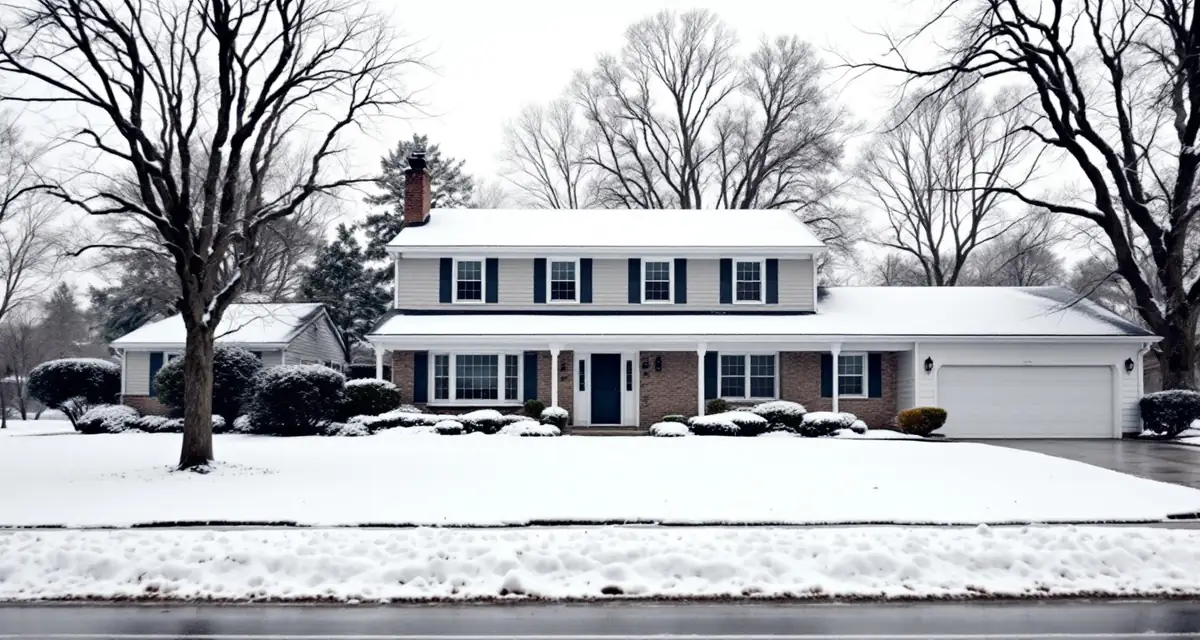
What actually decides the cost of a new roof in Michigan
Every page that answers this question answers it with a range, and the range is usually honest enough. What the range cannot tell you is where in it your own house sits, and that is the only part you actually needed. That position is not a mystery. Most of it is decided by facts about your roof that you can establish before a single contractor visits, and that a contractor cannot change.
There are three of them. How many layers of roofing are already on the house, because at a certain count the code stops allowing a new layer over the old. What condition the deck is in underneath, because that is the one line on the estimate nobody can price honestly until the tear-off starts. And how much ice barrier your eaves need, because Michigan requires a membrane at the eave that warmer states do not, and it is measured in feet of your roof edge rather than guessed.
A fourth thing decides something different: not what the work costs, but who is likely to be paying for it. That one depends on where in Michigan you live, and it divides the state more sharply than anything else on this page. We counted it from the federal storm archive, county by county, and the answer surprised us.
This page has no prices in it. That is deliberate and it is explained at the end, along with what we do instead.
Our Own Count
The Michigan average is an average of two different states
We read the federal storm archive for every Michigan county across twenty years. The state as a whole is quieter than the country. The half of it where most people live is not.
What was counted
The National Oceanic and Atmospheric Administration publishes the Storm Events Database, filled in by local weather offices after something happens. We took every county-coded record for all 83 Michigan counties across the twenty full years from 2006 to 2025 and counted hail events with a reported stone diameter of an inch or more, the distinct days those fell on, and thunderstorm wind events alongside them. The one-inch threshold is not ours: it is the National Severe Storms Laboratory definition of severe hail.
The table
| Per median county, 20 years | Michigan | United States | Reads as |
|---|---|---|---|
| Hail events, one inch or more | 13 | 29 | under half the national rate |
| Distinct hail days | 17 | 29 | fewer than one a year |
| Thunderstorm wind events | 46 | 80 | also well below the country |
| Of those, severe | 2 | 4 | half the national figure |
| Southeast Michigan, median county | 51 | 29 | well above the country |
| The other 74 counties, median | 12 | 29 | a different state entirely |
The part that changes what you do
Across the whole state, twenty years produced 1,624 hail events of an inch or more. Taken as one number, Michigan looks like a mild place for a roof: 13 severe hail events in the median county against 29 nationally, and fewer thunderstorm winds too. Taken county by county, the state pulls apart. The nine southeastern counties have a median of 51, which is above the national figure. The other 74 have a median of 12. That is a factor of 4.1 between two halves of the same state, and every statewide average you have been quoted sits somewhere in the empty space between them.
13 Michigan counties, or 16 percent of them, record more severe hail than the median American county. The rest record considerably less. If someone has told you that Michigan weather is why your roof needs replacing, that is a claim about your county, and it is checkable. For most of the state it is not the story, and for a few counties it very much is. The same archive read for a warm state gives an opposite-looking answer, which is why we also published the Florida count.
The national picture these numbers sit inside is on our page on how long a roof lasts, where the median county sees more than twice what the median Michigan county does.
The Hail Belt
Detroit and the southeast: how much does a new roof cost in Michigan's hail belt
Roof installation cost in Detroit MI sits on a different storm record from the rest of the state, and that changes the odds on who pays rather than the price of the work.
Which counties, and by how much
The nine counties are Genesee, Lapeer, Livingston, Macomb, Monroe, Oakland, St. Clair, Washtenaw, Wayne. Their median county recorded 51 severe hail events over the twenty years. The median for the rest of Michigan is 12. A roof estimate in Detroit MI and a roof cost calculator for Detroit MI are working from a county that has taken roughly four times the hail of a county in the north, even though both sit in the same state and read the same statewide averages.
Why this matters to the number rather than to the roof
Hail does not usually change what a replacement costs. Tear-off, deck, ice barrier and square footage decide that, and they cost the same in Marquette as in Macomb. What hail changes is whether a claim is a realistic path to a new roof, and that changes what you are actually shopping for. A homeowner in Oakland County with storm damage on the record is in a different conversation from a homeowner in Grand Traverse County whose roof has simply reached the end of its life. Michigan roof replacement costs split along that line more than along any geographic one.
The trap in the middle
The southeastern counties are also where most of the roofing contractors are, which means the marketing written for those counties is the marketing that reaches the whole state. Storm language aimed at Oakland County lands in front of homeowners in counties with a fifth of the hail. If a pitch leans on weather and you are outside the belt, ask which events it means and when they were.
The Biggest Line
What actually forces a tear-off, and what only sometimes does
Removing the old roof is the largest swing on a residential quote. Whether it is optional is not a matter of taste.
The conditions that stop a roof-over
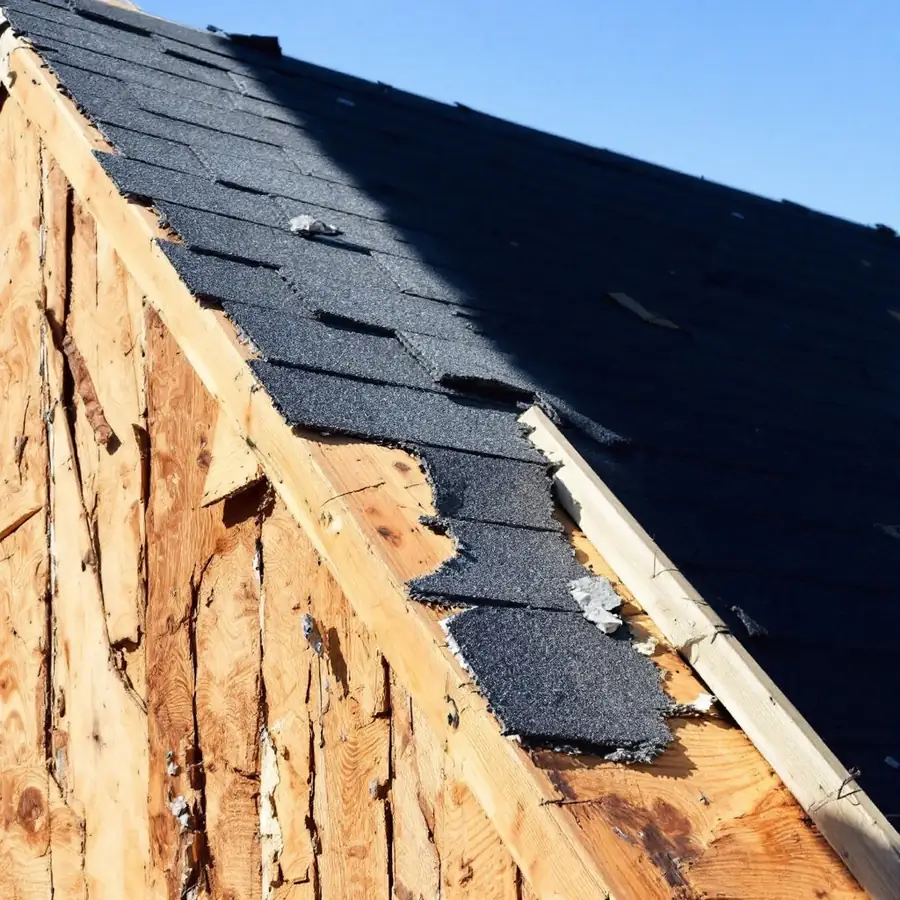
A roof recover, which is a new covering installed over the existing one, is not permitted where any of a short list of conditions occur. The existing roof or covering is water soaked, or has deteriorated to the point that it is not an adequate base for additional roofing. The existing covering is slate, clay, cement or asbestos-cement tile. Or the roof already has two or more applications of any type of covering.
The third of those is the one that catches most Michigan houses. A home that was re-roofed once in the nineteen nineties and once again in the two thousands is at two layers, and the next roof has to be a full tear-off whatever anyone would prefer.
What tear-off adds beyond the labour
- Disposal. The old material has to go somewhere, and it is heavy. This is a real line, priced by volume or weight, and it belongs on the estimate separately rather than folded into labour.
- Deck exposure. Once the covering is off, the deck is visible for the first time in decades. That is when the allowance discussed further down either holds or does not.
- Sequence risk. A tear-off opens the house. A roof-over does not. Michigan weather makes the exposure window a scheduling question as much as a price one.
How to tell what you have before anyone quotes
A roof inspection settles it, and you can usually count layers yourself from the ground at the rake edge, where the roof meets the gable end and the stack of courses is visible in profile. A gutter-level look at the eave edge shows the same thing. If you can see two distinct bands of material, you are at two layers and a tear-off is the job. Knowing that before the first visit changes the conversation, because a quote that assumes a roof-over on a two-layer house is not a cheaper quote, it is a wrong one.

Check This One
The hail rule two Michigan cities still print, and the one the model code has
This is the part of the tear-off question where Michigan documents disagree with each other, and it is worth a phone call before you assume anything.
The disagreement, stated plainly
The City of Grand Rapids publishes a roof assemblies extract of the Michigan Residential Code whose list of conditions has four items, the fourth being asphalt shingles on a building in an area subject to moderate or severe hail exposure. Muskegon publishes a re-roofing guide with the same fourth item. Both documents cite the older section numbering. Macomb Township's current permit sheet, revised in 2026, cites the newer numbering and lists the conditions without that item, as does the model code text those sections are drawn from.
We are not going to tell you which one governs your permit, because that is decided by your building department and not by a web page. What we can tell you is that the question exists and that it is worth asking, because it is the difference between a roof-over being legal on your house and not being legal on your house. That is the largest single line on the estimate.
What moderate and severe hail exposure actually mean
Where the older rule applies, the categories are defined by size rather than frequency. Moderate exposure means at least one hail day with stones larger than one and a half inches in a twenty-year period. Severe means at least one day with stones of two inches or more. Notice what that does: a county can take hail constantly and still fall outside both categories if the stones stayed small, and a county with almost no hail can land in the severe category on the strength of a single bad afternoon.
What our own record says about it
Our window is 2006 to 2025, which is a twenty-year window, so we can apply that definition to our own county tally as an independent check. By stone size alone, 58 counties of Michigan's 83 recorded at least one day at two inches or more, and another 17 counties recorded a day above one and a half inches without reaching two. That is 75 of the 83 counties, or about 90 percent, that would meet one of the two definitions on our numbers. Only 8 counties would not: Crawford, Eaton, Emmet, Grand Traverse, Iosco, Keweenaw, Livingston, Roscommon.
Livingston County is the instructive one. It recorded 28 severe hail events in twenty years, which is more than the Michigan median, and its largest reported stone was exactly one and a half inches, which does not clear a threshold written as larger than. Frequency and category are different questions, and the code asks the second one.
Two cautions on that paragraph. The categories for a permit are determined by the published exposure figure the code refers to, not by our tally, and the figure was drawn from a different period than ours. And a reported stone diameter is an estimate made by a human being at the time. Read our count as a check on the shape of the answer rather than as a ruling.
The Michigan Line
The ice barrier your eaves are required to have
This is the requirement that makes a Michigan roof a different product from the same roof in a warm state, and it is measurable in advance.
What the code says
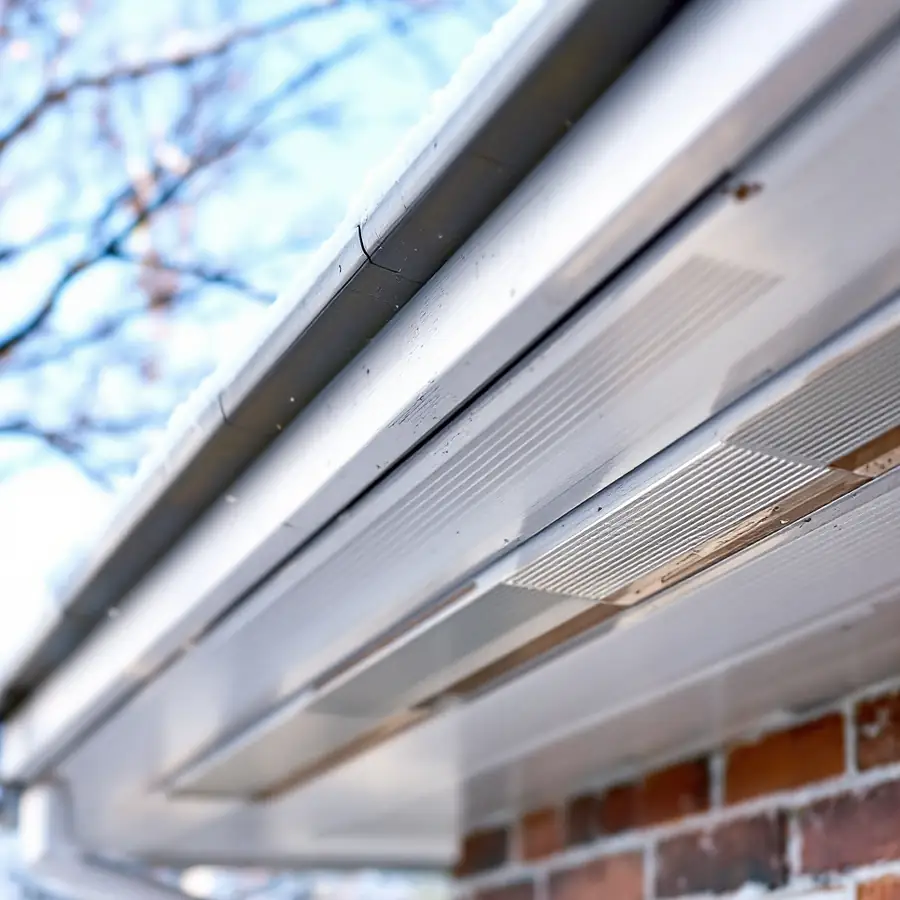
Section R905.1.2 of the Michigan Residential Code addresses it directly. In areas where there has been a history of ice forming along the eaves causing a backup of water, an ice barrier consisting of at least two layers of underlayment cemented together, or of a self-adhering polymer modified bitumen sheet, is used in place of normal underlayment and extends from the lowest edges of all roof surfaces to a point at least 24 inches inside the exterior wall line of the building. Detached accessory structures with no conditioned floor area are excepted.
Why the wall line and not the roof edge
The measurement is taken inside the exterior wall line rather than along the roof, and that detail is what makes it a quantity you can work out rather than a guess. On a house with wide overhangs, the membrane has to run further up the slope to reach a point twenty-four inches past the wall below. Two houses with the same roof area can need noticeably different amounts of ice barrier, and the one with the generous eaves needs more.
What it means on the estimate
Ice barrier is sold by the roll and installed by the linear foot of eave. It belongs on a Michigan quote as its own line with a footage on it. If it is not there, either it is buried in a lump sum or it is not being installed, and the second possibility is the one worth ruling out. Macomb Township's permit requirement sheet lists it alongside the drip edge, the minimum underlayment weight and the step flashing dimensions, which is a useful picture of what an inspector expects to find.
The exception that is not an exception
Where an existing adhered ice membrane is already on the deck, it is permitted to remain in place and be covered with an additional layer of ice barrier membrane. That saves removal work, not the new membrane.

Which Rulebook
Which code edition your Michigan permit is written against
A detail that quietly invalidates a lot of what is published about Michigan roofing right now.
The 2021 update did not take effect
Michigan was due to move to the 2021 residential code, with an effective date of 29 August 2025. It did not happen. On July 7, 2025, a stipulated order in the Michigan Court of Claims paused implementation while the challenge brought by the Home Builders Association of Michigan and the Michigan Manufactured Housing Association proceeds. The 2015 Michigan Residential Code remains the one in force.
Why this shows up in your quote
It shows up as confusion rather than as a line item. A contractor or a published guide working from the 2021 text will describe requirements your inspector is not applying, and an inspector applying the 2015 text will ask for things a 2021-based estimate did not include. Pages headed as a 2026 guide are not necessarily wrong about this, but a great many of them were written on the assumption that the update landed on schedule.
What to do with it
One question to whoever is quoting: which edition is this written against. An answer that names an edition is a good sign regardless of which one it names, because it means somebody checked. An answer that treats the question as pedantic is also informative.
The Arithmetic
Squares, pitch and waste: the quantity side of the estimate
Roof replacement cost per square foot in Michigan is a number that comes out of the arithmetic, not one that goes into it.
A square is not a square foot
Roofing is sold and quoted in squares, and a square is one hundred square feet of roof surface. The first mistake in reading a quote is to compare a per-square figure with a per-square-foot figure without noticing the factor of a hundred sitting between them.
Footprint is not roof area
The area of the roof is the area of the ground it covers multiplied by a factor for the slope. A roof that rises four inches for every twelve it runs has a multiplier a little over one and a tenth. At eight in twelve it is around one and two tenths. At twelve in twelve, a forty-five degree roof, it is about one and four tenths. A fifteen hundred square foot footprint is fifteen squares flat and closer to twenty-one squares at a steep pitch, and nothing about the house changed except the angle.
Waste, hips and valleys
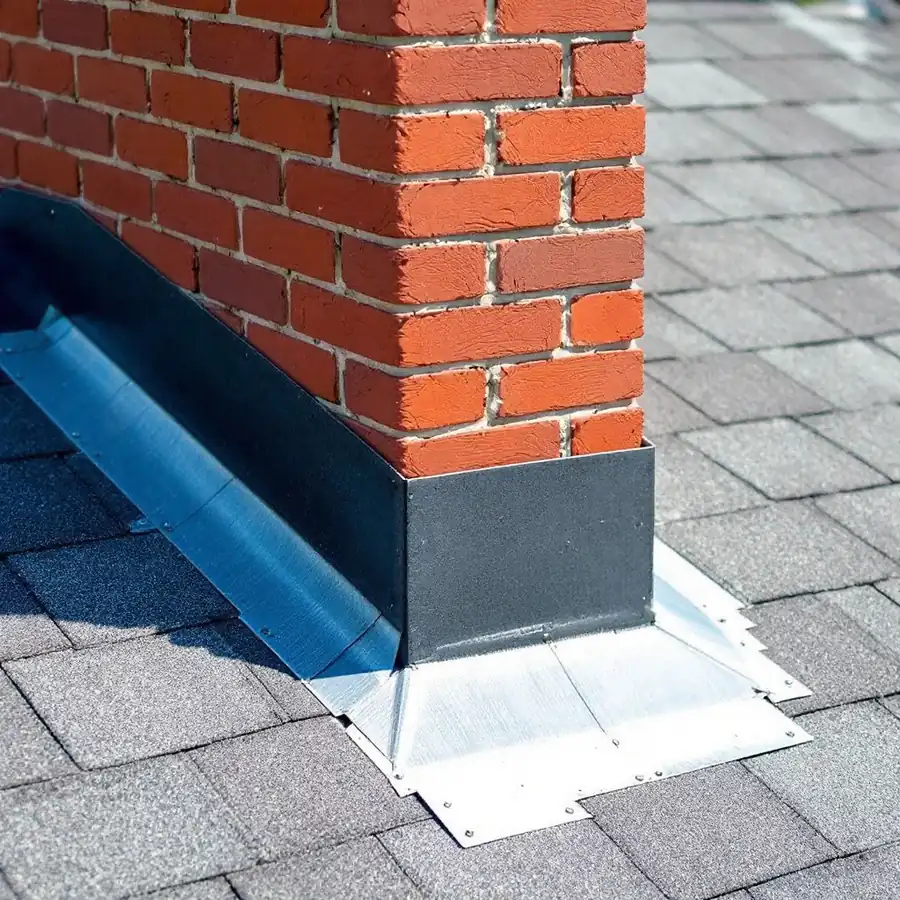
Material is cut, and cut material is lost. A simple gable roof wastes little. A roof with hips, valleys, dormers and a chimney wastes considerably more, because every one of those is a line where full shingles are cut down. A waste allowance in the region of one tenth on a simple roof and rather more on a complicated one is ordinary, and it should be visible on the quote rather than hidden inside the square count.
Pitch changes the labour too
Past a certain slope the work stops being walkable and starts requiring staging and fall protection. That threshold is usually somewhere around seven or eight in twelve. It is one of the few places where a single fact about your house moves both the material quantity and the labour rate at the same time, which is why a steep roof is not simply a slightly larger roof.
Read The Quote
What a Michigan roof estimate should itemize
We publish no price averages. What we can do is tell you what the lines are, so that a quote with three lines on it looks as strange to you as it should.
The lines
- Tear-off and disposal. Separately, with the number of layers coming off stated.
- Deck repair allowance. A rate per sheet and an assumed quantity, not a lump. See the next section.
- Ice barrier. With the linear footage of eave it covers.
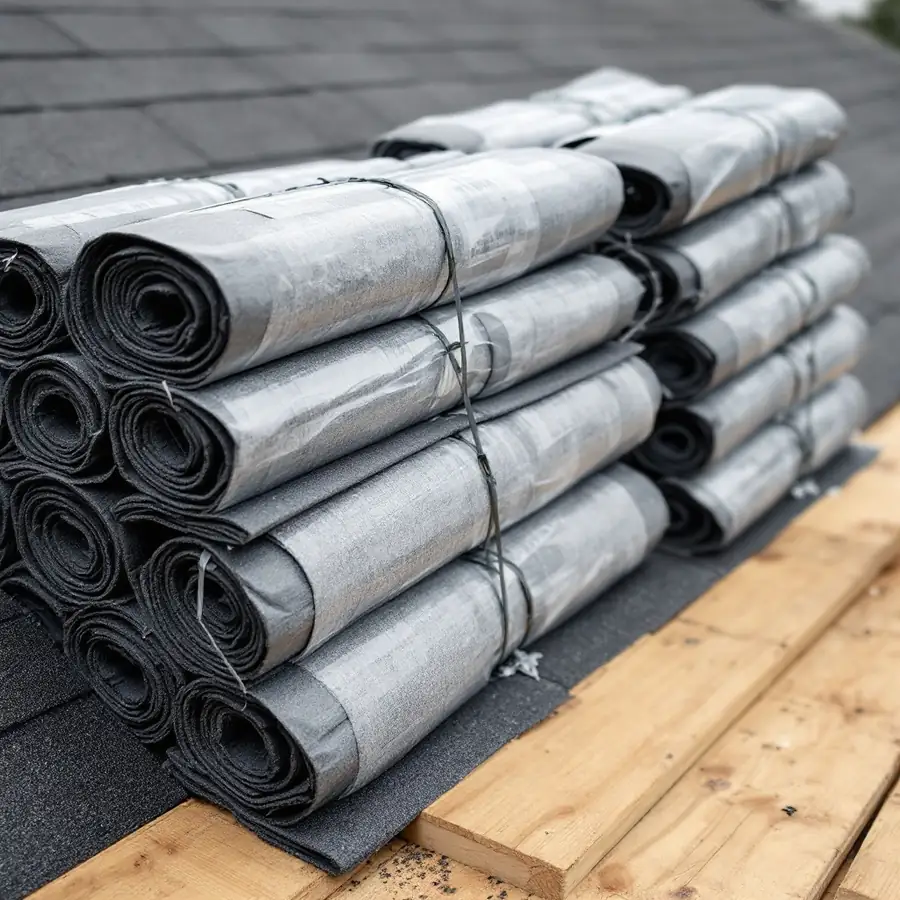
- Underlayment. With the weight or product named. A minimum of fifteen pound underlayment under asphalt shingles is a code requirement, not a preference.
- Drip edge. At eaves and rakes, with the order of installation understood: over the drip edge along eaves, under it along rakes.
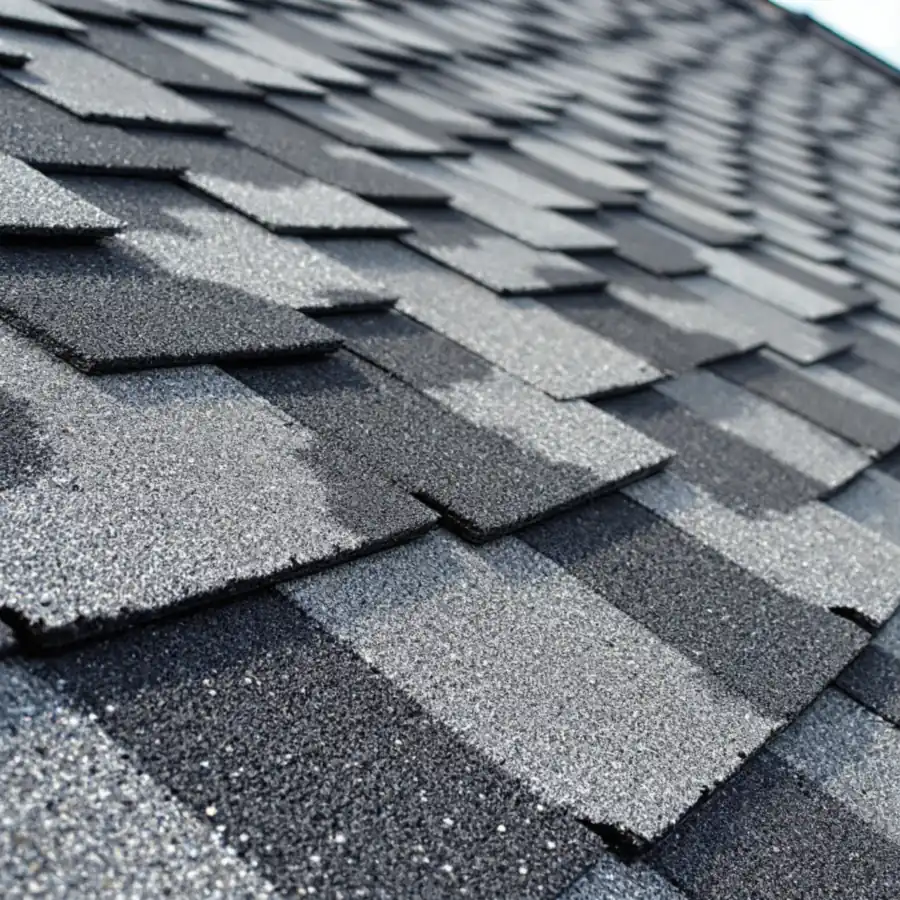
- Starter course and field shingles. With the square count that matches the arithmetic above. On most Michigan houses these are architectural shingles.
- Hip and ridge. Sold separately from field shingles and cut differently.
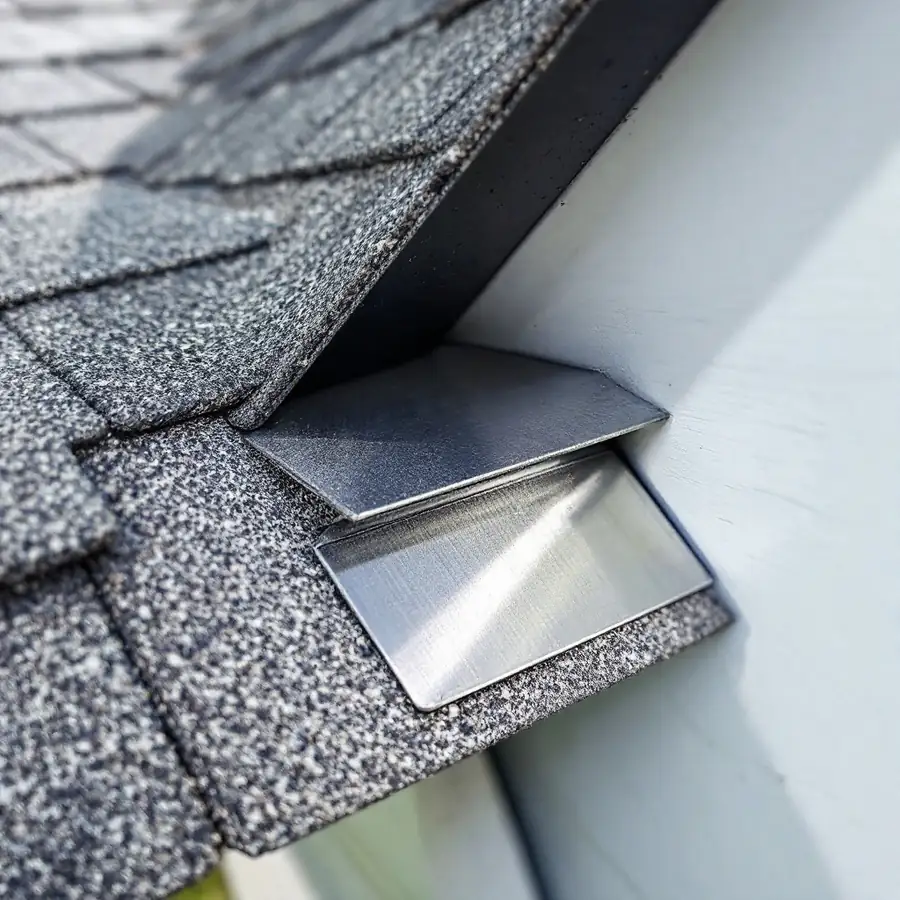
- Step flashing. Where the roof meets a sidewall. Not less than four inches in height and four in width.
- Ventilation. Intake and exhaust, with the net free area it provides.
- Permit. Pulled by the contractor, in their name, and shown as a cost.
What the absence of a line tells you
A quote that omits the ice barrier footage on a Michigan house is either incomplete or assuming something it has not said. A quote with no deck allowance is a quote that will change after the tear-off. Neither is dishonest on its own, and both are questions.
Comparing two quotes that are not comparable
Most quote comparisons fail because the two estimates assume different jobs. One assumes a roof-over and one a tear-off. One carries a deck allowance and one does not. One includes ventilation work and one leaves the existing vents. Before comparing numbers, line the assumptions up beside each other, and if one quote is missing an assumption the other states, that gap is the difference rather than the price.
Our page on what drives roof replacement cost works through the same anatomy without the Michigan-specific requirements.
The Unknown
Decking: the line that changes after the tear-off starts
The one part of the estimate nobody can price honestly in advance, and the part most arguments are about.
Why it cannot be known
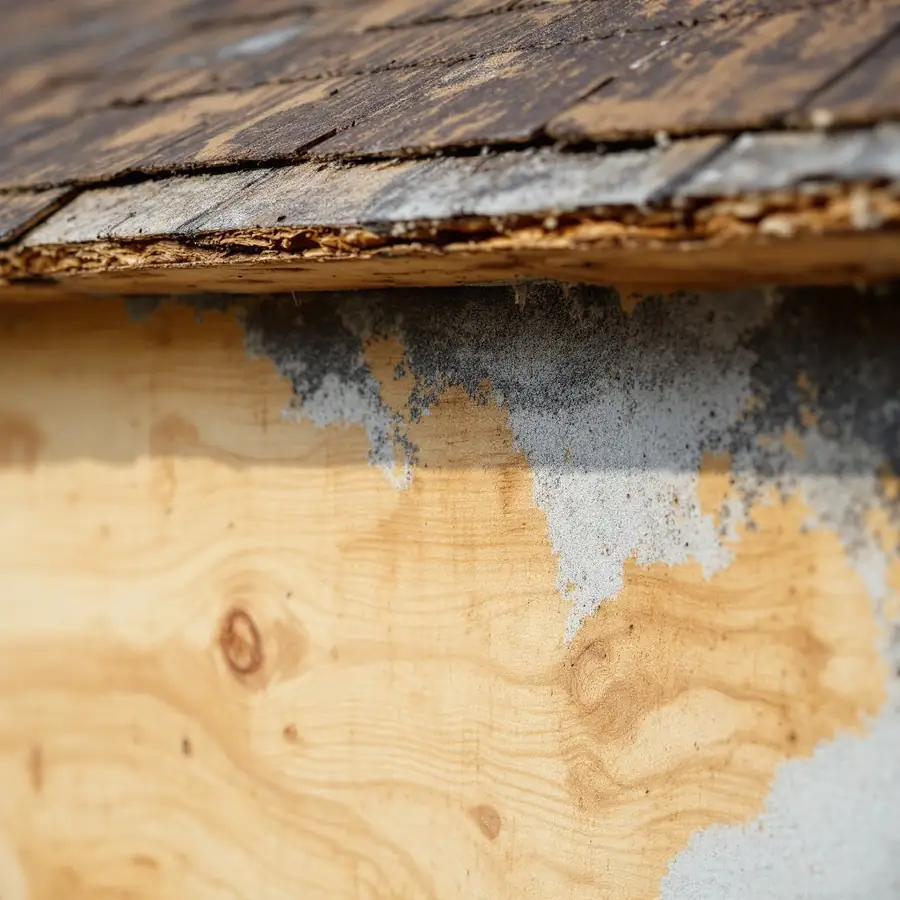
The deck is under the roof. Until the covering comes off, what is visible is an attic view of the underside, which shows staining and obvious rot but not soft sheathing or failed fastening. Anyone who quotes a fixed deck figure on a roof they have not opened is quoting a guess with a confident face on it.
What a fair allowance looks like
An allowance has three parts: a unit, a rate and an assumed quantity. So many sheets of replacement sheathing, at a stated rate per sheet, with anything beyond that billed at the same rate and anything below it credited back. The credit half is the part that distinguishes an allowance from a floor.
The Michigan-specific reason it matters
Ice dams put water where the roof did not intend it to go, which is backwards under the covering and into the deck at the eave. That is precisely the area the ice barrier is meant to protect, and on a house where the barrier was absent or short, the eave is the first place the deck goes. If your house has a history of ice at the eaves, expect the deck conversation to be about the lowest two feet of the roof.
The question to ask
Ask what happens if the deck is worse than assumed, in numbers, before work starts. A contractor who has an answer ready has done this before. A contractor who says it will be fine has told you what they think you want to hear.
The Loop
Ventilation and the ice dam loop
An ice dam is a heat problem before it is a roof problem, which is why ventilation work turns up on Michigan roofing quotes at all.
How the loop runs
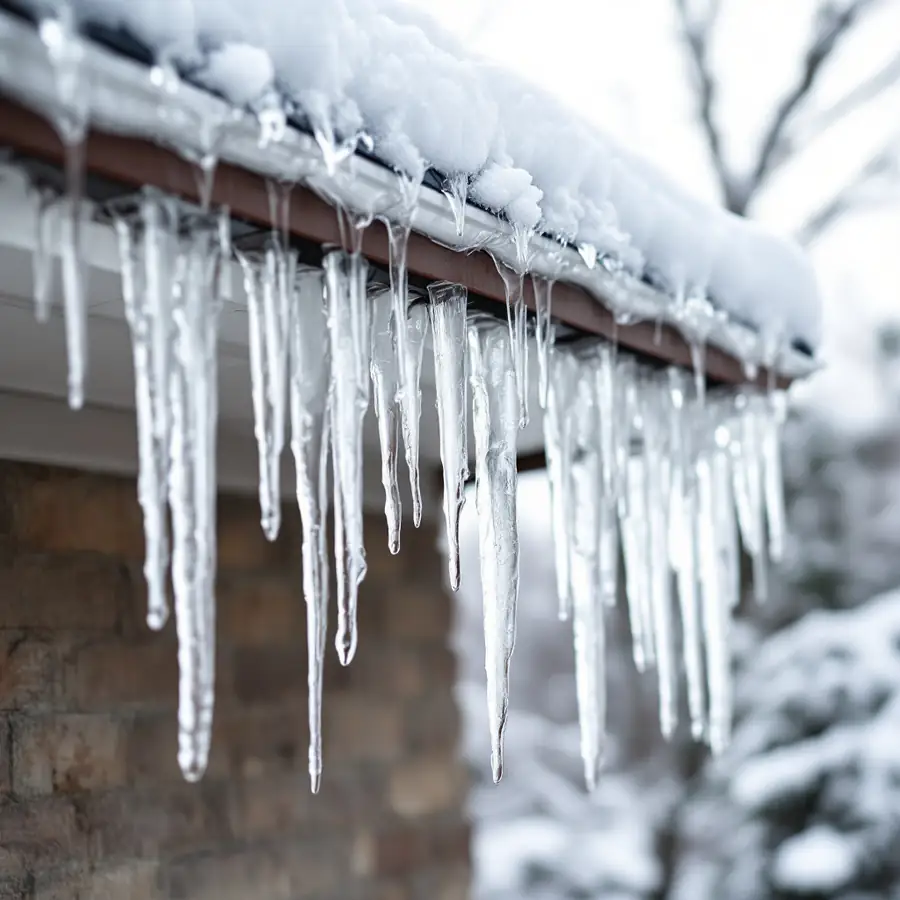
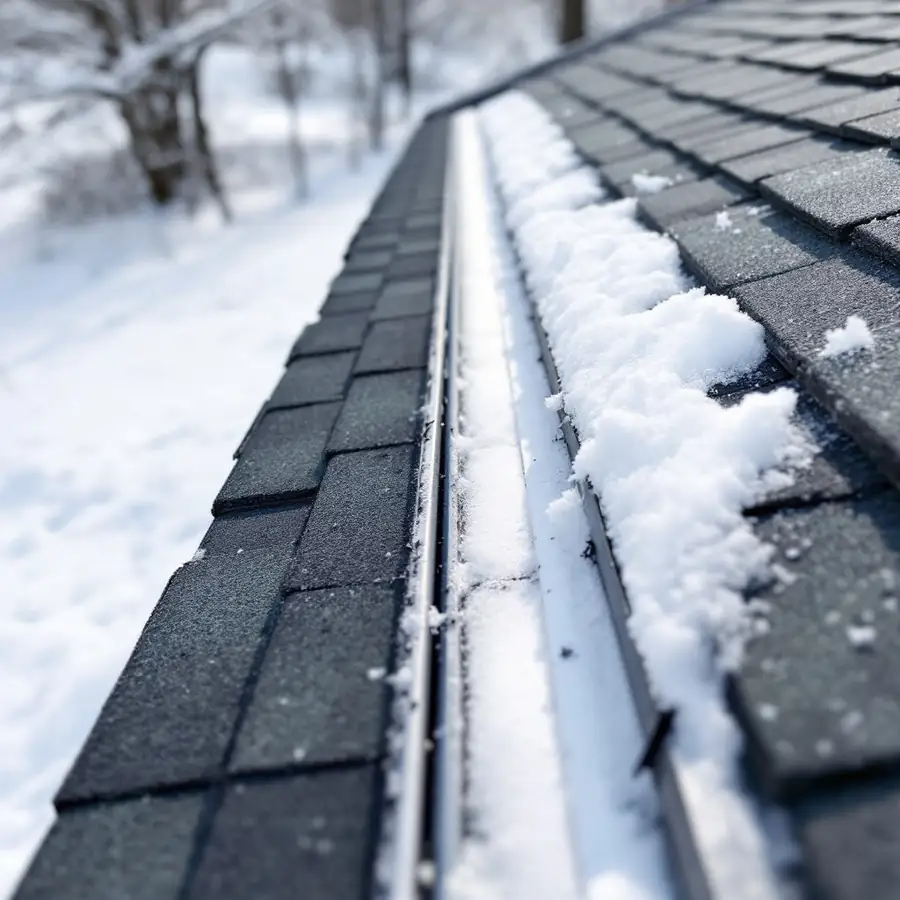
Warm air from the house reaches the underside of the deck. The snow above it melts from below. The water runs down the slope until it reaches the part of the roof hanging over open air at the eave, where there is no house underneath to warm it, and there it freezes. The ridge of ice that builds up holds the next meltwater behind it, and water sitting still on a roof finds its way under the shingles. The ice barrier exists because this happens, not because someone wanted an extra layer.
The ratio in the code
The minimum net free ventilation area is one part in a hundred and fifty of the space being vented. The ratio relaxes to one in three hundred where not less than forty and not more than fifty percent of the required ventilating area is provided by ventilators in the upper portion of the space, with the remainder provided by eave vents. In plain terms: you get the easier ratio by balancing intake at the eaves against exhaust near the ridge, which is the arrangement that actually moves air.
The mistake that survives a new roof
Exhaust vents installed without matching intake do not ventilate an attic. They pull air from wherever they can find it, which is often the house itself, which adds warmth to the deck rather than removing it. A roof replacement that adds ridge venting without opening the soffits can leave a house with the same ice dams and a newer roof.
Where insulation comes into it
Ventilation moves heat that has already arrived. Insulation and air sealing stop it arriving. On a house with recurring ice dams, the roofing quote is often the second half of the answer, and the attic is the first.
The Middle Option
Roof rejuvenation in Michigan: what it is and what it is not
A treatment sold as an alternative to replacement, which is sometimes exactly that and sometimes a deferral with a receipt.
What the product does
Shingle rejuvenation treatments are sprayed on and are intended to restore flexibility to asphalt shingles that have dried out. Asphalt shingles age partly by losing the lighter fractions of their bitumen, which leaves the mat brittle, and a treatment that softens the remaining binder can genuinely slow that particular process.
What it does not do
It does not add granules back, and granule loss is the commoner Michigan failure mode. It does not reseal tabs that have lifted, repair a deck, correct ventilation, or change how many layers are on the roof. A shingle that is cracked is still cracked. The cost of roof rejuvenation in Michigan buys time on a specific ageing mechanism, and only where that mechanism is what is actually happening.
How to tell whether your roof is a candidate
Roughly: a roof in the middle of its life, with its granules substantially intact, no cupping or cracking, sound flashings and a dry deck, is a plausible candidate. A roof with bare patches, lifted tabs, two layers or any deck question is not, and a treatment on that roof postpones nothing.
The question that settles it
Ask what the treatment is expected to change, in a sentence, and what the roof will look like in five years with it and without it. Then ask what happens to the warranty on the existing shingles. The answers are usually short and they usually decide the matter.
The Other Material
Metal roof cost in Michigan: what changes in the quantity
The average cost of a metal roof in Michigan moves on the same arithmetic plus two things the snow adds.
The lines that stay the same
Tear-off, deck, ice barrier, underlayment, permit and ventilation are the same conversation on a metal roof as on a shingle one. The ice barrier requirement does not care what goes on top of it, and the same is true on a low-slope roof over a porch or an addition.
The lines that change
Panel type and seam are the main ones. A standing seam roof conceals its fasteners and is fabricated to the run of the roof, which makes it a different job from a ribbed panel roof fastened through its face with exposed screws and rubber washers. The second is quicker to install and has a maintenance clock on the washers that the first does not.
The Michigan addition
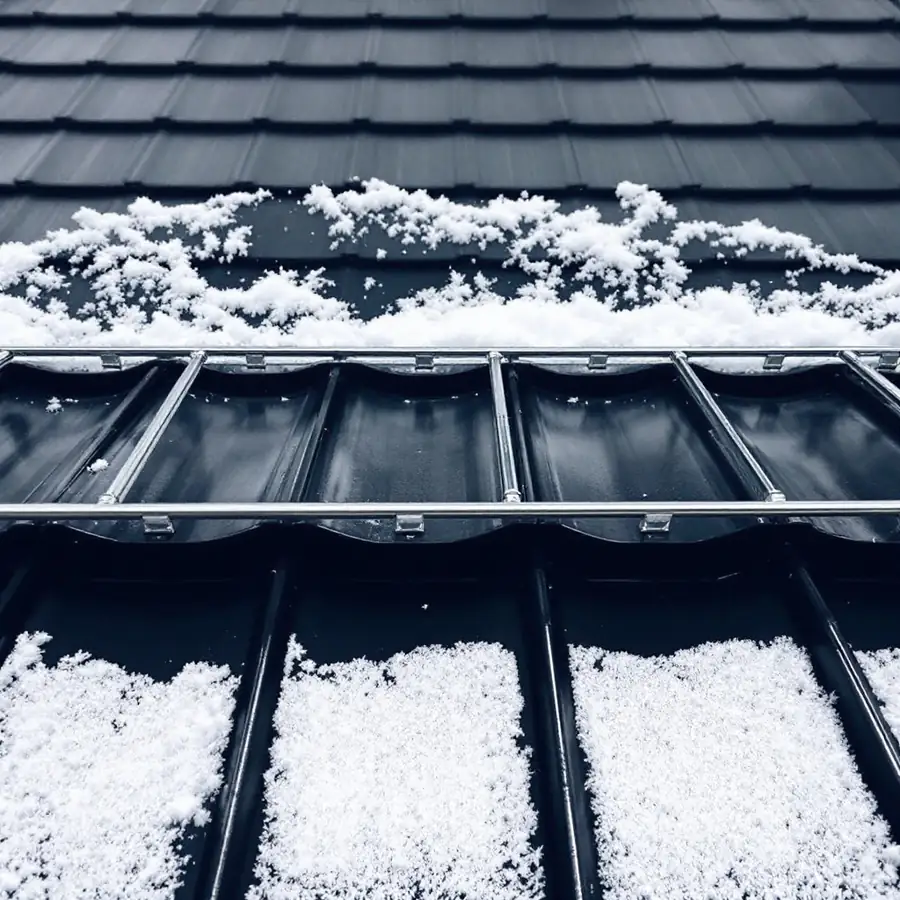
Snow retention. A metal roof sheds snow in slabs rather than letting it melt in place, and a slab of snow arriving on a walkway, a porch roof or a car is the reason snow guards exist. On a house where the roof discharges over anything anyone uses, retention is not an upgrade, it is part of the design, and it belongs on the quote with a layout rather than as an afterthought.
What we do not say about it
We publish no comparison of what metal costs against shingle, because that ratio depends on panel specification, roof complexity and who is installing it, and any single figure we printed would be wrong for most readers. Our page on metal roofing covers the systems themselves.
Who Pays
Insurance or out of pocket: what the storm record implies for who pays
The county numbers at the top of this page answer a question about money rather than about weather.
Two different purchases
A roof replaced after a storm and a roof replaced at the end of its life are the same work and a completely different transaction. In the first, a claim decides most of the number and the homeowner is choosing a contractor to execute a scope somebody else has agreed. In the second, the homeowner is buying a roof and every line above is theirs to negotiate.
What our numbers say about which one you are in
In the nine southeastern counties, with a median of 51 severe hail events in twenty years, a storm-damage claim is a realistic path for a meaningful share of houses. In the other 74 counties, at a median of 12, it is not the default expectation, and a roof that has reached thirty years there has usually simply reached thirty years.
Why this is worth knowing before the first visit
Because the two purchases attract different sales approaches. A homeowner outside the hail belt who is offered a free inspection framed around storm damage is being sold the first transaction while standing in the second. That is not necessarily bad faith, and it is a mismatch worth noticing.
Age alone
Neither our data nor the code says anything about when a policy may be affected by a roof's age. That is a matter of the policy wording and of state insurance regulation, and it is not something a page about cost should pretend to settle. Where a storm is genuinely involved, our page on the roof insurance claim process covers how the scope gets agreed, and storm damage roof repair covers the work itself.
Paperwork
Permits and inspections for a Michigan roof replacement
A small line on the estimate that carries more weight than its size suggests.
Who pulls it
A licensed contractor pulls the permit in their own name. A permit pulled by the homeowner on a contractor's job shifts responsibility for the work onto the homeowner, and a contractor who suggests it is telling you something about their licensing. In the City of Detroit the work goes through the Buildings, Safety Engineering and Environmental Department; elsewhere it is the township or city building department, and the requirement sheets differ in their detail while the code behind them does not. What the permit itself covers is set out on our page about the roof permit.
What the inspector looks at
Ice barrier at the eaves, underlayment, drip edge and its sequence, step flashing dimensions at sidewalls, ventilation area, and the deck where it was repaired. The Macomb sheet linked above is a plain-language list of these and reads as well for a homeowner as for a contractor.
The cost of skipping it
An unpermitted roof is a disclosure problem at sale and an argument at claim time. It is also the only part of this process that creates a durable record that the work met a standard, which is worth more than the fee.
Timing
The Michigan roofing season
Asphalt shingles are a product that finishes installing itself after the crew leaves, and in Michigan that has a date range on it.
What the sealant strip needs
Asphalt shingles carry a strip of adhesive that bonds each course to the one below once sun and warmth reach it. Until that happens the roof is fastened but not sealed, and a roof that is fastened but not sealed is more vulnerable to wind lift. In a cold installation the strip may not activate until the following spring.
What a winter install actually requires
It is done, routinely, and it is done properly by hand-sealing the courses that need it and by adjusting the fastening. Those are real extra steps and they belong on the quote. A winter price that is identical to a summer price with no mention of hand-sealing is worth a question.
The scheduling trade
Late spring through early autumn is the comfortable window and it is also the busy one. A leak that cannot wait for it is a repair question rather than a replacement one. A roof that can wait for the shoulder season often gets more attention than one installed in the middle of the rush, and a roof that cannot wait should not.
Work It Out
Work out the quantity and where your county sits
Three questions, nothing sent anywhere. What comes out is the roof area the arithmetic gives, the ice barrier footage to expect on the estimate, whether a tear-off is the likely job, and what our storm count says about your part of Michigan.
We are paid the same fixed fee for an introduction whether the visit ends in a repair, a rejuvenation or a full replacement, which is why this tool has answers that tell you to buy less.
The Short List
Questions that move the number on a Michigan quote
Each one ties to a section above, and each one has a short answer if the person quoting has done the work.
- How many layers are coming off, and is this quote a tear-off or a recover? The largest single swing, and the one a homeowner can usually verify from the ground.
- Which code edition is this written against? Any named edition is a better answer than none.
- How many linear feet of ice barrier, and how far inside the wall line does it run? A Michigan-specific line with a measurable answer.
- What is the deck allowance, at what rate per sheet, and what happens above and below it? The credit half of the answer is the informative half.
- What is the ventilation net free area now, and after? Exhaust without intake is not ventilation.
- Who pulls the permit? The contractor, in their name.
- If this is a winter install, what is being hand-sealed? A real extra step with a real cost.
- Which of these lines is an estimate and which is fixed? The honest answer is never all fixed.
Straight Answers
Questions Michigan homeowners ask about roof cost
How much does a new roof cost in Michigan?
We do not publish an average, and the reason is in the arithmetic rather than in coyness. The same house costs materially different amounts depending on how many layers come off, what the deck turns out to be, how much eave needs ice barrier and how steep the roof is, and those four things vary more between two houses on one street than the statewide average varies between years. What we publish instead is the list of lines an estimate should contain, so that you can read two quotes and see where they actually differ.
Why does my Michigan quote include something called an ice barrier?
Because the code requires it. Section R905.1.2 of the Michigan Residential Code calls for an ice barrier of at least two cemented layers of underlayment, or a self-adhering polymer modified bitumen sheet, running from the lowest edge of the roof to a point at least twenty-four inches inside the exterior wall line, in areas with a history of ice forming at the eaves. It should appear on your estimate as its own line with a footage.
Can I just put a new roof over the old one?
Sometimes, and it depends on facts rather than on preference. A recover is not permitted where the existing roof is water soaked or too deteriorated to be a base, where the covering is slate, clay, cement or asbestos-cement tile, or where there are already two or more applications of any covering. Some Michigan building departments also publish an older four-condition version that bars a recover on asphalt shingles in areas of moderate or severe hail exposure. Ask your building department which list they apply before assuming.
Is Michigan a hail state?
As a whole, no. Our count of the federal storm archive puts the median Michigan county at 13 severe hail events in twenty years against 29 nationally. But the state splits: the nine southeastern counties have a median of 51, above the national figure, while the other 74 counties sit at 12. Whether hail is part of your roof's story is a county question, not a state one.
What is roof cost per square foot in Michigan?
It is an output rather than an input, and comparing it between quotes is how people talk themselves into the wrong roof. Roofing is quoted in squares of one hundred square feet, the roof area is the footprint multiplied by a pitch factor, and waste depends on how many hips, valleys and dormers the roof has. Two quotes with the same per-square-foot figure can describe different jobs, and two quotes with different figures can describe the same one.
Does roof rejuvenation work?
On a specific ageing mechanism, in a specific window, yes. The treatments soften binder in shingles that have dried out, which is a real process. They do not replace granules, reseal lifted tabs, fix a deck, correct ventilation or change how many layers are on the roof. A mid-life roof with intact granules and no cracking is a plausible candidate; a roof with bare patches or two layers is not.
Which Michigan building code is in effect right now?
The 2015 Michigan Residential Code. The move to the 2021 edition was scheduled for 29 August 2025 and was paused by a stipulated order in the Michigan Court of Claims on July 7, 2025, in the case brought by the Home Builders Association of Michigan and the Michigan Manufactured Housing Association. Guides written on the assumption that the update took effect describe requirements your inspector is not currently applying.
Should I replace my roof in winter in Michigan?
It can be done properly and it needs extra steps. The adhesive strip on asphalt shingles bonds when sun and warmth reach it, so a cold install may not seal until spring, and the courses that need it should be hand-sealed with the fastening adjusted. Those steps belong on the quote. If a winter price matches a summer price with no mention of them, ask what is different about the installation.
Where This Comes From
Sources and method
- Our own count of hail and wind by county — aggregated from NOAA National Centers for Environmental Information, Storm Events Database, county-coded records only, all 83 Michigan counties, 2006 to 2025, compared against all 3,199 US counties. Method and limitations in the file published beside this page.
- The severe hail threshold — one inch, the definition used by the NOAA National Severe Storms Laboratory, not ours.
- Roof assembly code text — the City of Grand Rapids extract of Michigan Residential Code chapter 9, read in full on the day of publication. Its recover conditions use the older section numbering, which is discussed in its own section above rather than glossed over.
- Permit requirements and inspection points — Macomb Township residential re-roof permit requirements, revision of 1 April 2026, and the City of Detroit Buildings, Safety Engineering and Environmental Department.
- The code edition in force — the 2021 residential and energy code rule sets were stayed by stipulated order of the Michigan Court of Claims on July 7, 2025, before their 29 August 2025 effective date.
Our editorial standards explain how we source and check what we publish. The code sections on this page were read from the municipal documents linked above on the day of publication, and where two Michigan documents disagree we say so rather than pick one. Nothing here is legal advice, a permit is decided by your own building department, and a policy is decided by its own wording. The county counts are our own aggregation of a federal archive and their limits are stated where they are presented. We publish no price averages and no product rankings. We are a referral service rather than a roofing company. Last updated .
Before you call anyone
The independent match — we are paid for the introduction, not for the size of your job
Most roofing advice is written by the company that wants to do the work. That is not a failing of the people who read it; it is a defect in who is talking. The estimate, the diagnosis and the invoice come from one party, and no amount of care on your side fixes that.
We are built the other way round. We do not repair roofs and we do not sell materials, so the payment reaches us when you are connected to a licensed, insured roofing company — the same amount whether your roof needs an eight-hundred-dollar repair or a twenty-thousand-dollar replacement. Nobody here has a reason to talk you into the larger number. How we make money and how we research are both written down.
Waiting is the one thing that actually costs money. An insurance clock runs from the date of the damage rather than the date you noticed it, and damage that sits through a season stops reading as sudden and starts reading as wear — which is the exclusion that pays nothing. And if your roof is simply worn out, say so on the call. No claim will pay for age, we will tell you that plainly, and you will have lost nothing but the call.