After The Storm
Storm damage roof repair, what hit your roof, and what insurance pays
Two things decide how this goes, and neither is the size of the hole. The first is whether the damage is provable: hail bruising fades from the record long before it stops mattering. The second is arithmetic, across most of the hail belt the deductible on a wind or hail claim is a percentage of what your house is insured for, not a flat $1,000, and on a smaller loss that arithmetic can make a legitimate claim not worth filing.
(844) 833-2185Toll-free and answered every day of the year. The call reaches an independent licensed and insured roofing company covering your area, we do not do the work ourselves, which is exactly why we can tell you when you do not need it.
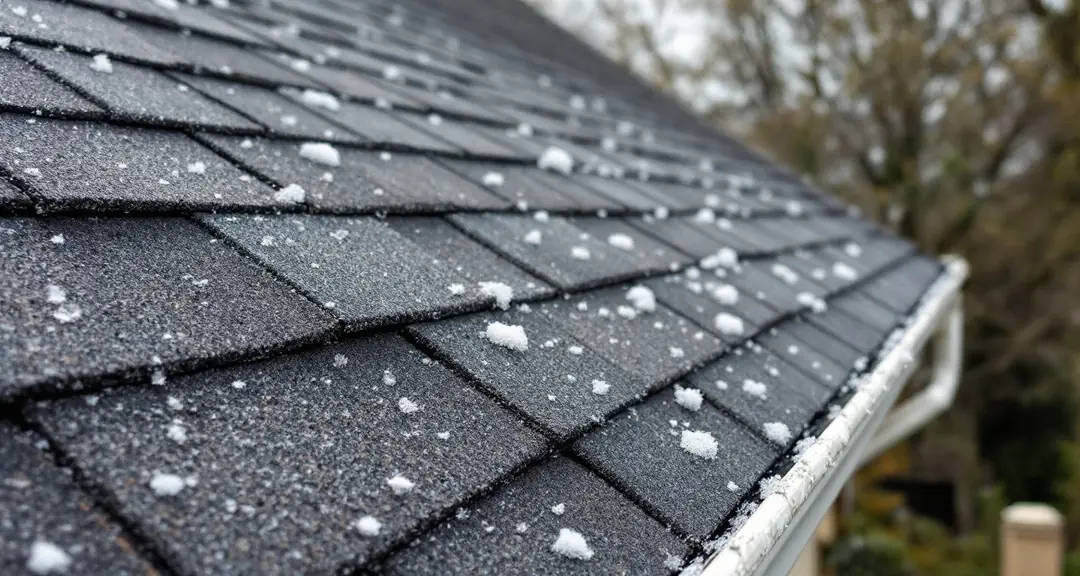
Four things decide how this goes
- Provability decays. Hail bruising and broken seals weather away; the argument shifts from whether damage exists to whether this storm caused it.
- The deductible is probably a percentage. Across the hail belt wind and hail claims carry 1–5% of what the house is insured for, not a flat figure.
- Two clocks are running. Prompt notice comes from your policy; the outer reporting limit often comes from state law.
- The free inspection is a sales visit. Legitimate, and useful, but it is not the same product as a report you pay for and keep.
Free Instant Tool
What has actually hit your county since 2006
Every roofing page in America tells you hail is common in your area. Almost none say how common, because saying so requires doing the work. We aggregated two decades of the National Weather Service storm log, every recorded hail and thunderstorm-wind event across 3,199 counties, so you can look up your own. This is the same public record an adjuster can pull, presented so you can read it first.
Damage figures are National Weather Service estimates recorded as reported, not audited losses and not insurance payouts. Many real events carry no damage figure at all, which is why a county with hundreds of storms can show none.
Data: NOAA NCEI Storm Events Database. Our aggregation covers 2006 to 2025 and counts only county-coded records. Of the 3,199 counties in the record, 3,122 have had at least one hail event. The busiest county in the country is Pennington County, South Dakota, with hail on 308 separate days, about fifteen a year.
From Our Aggregation
The ten counties that get hit most
Ranked by the number of separate days on which hail was recorded, which is a fairer measure than counting events: a single front generates dozens of reports in one county, so an event count mostly rewards having more people around to report it.
| County | Hail days | Events ≥ 1″ | Largest stone | Reported damage |
|---|---|---|---|---|
| Pennington County, South Dakota | 308 | 849 | 4.50″ | $67M |
| El Paso County, Colorado | 263 | 998 | 4.00″ | $343M |
| Custer County, South Dakota | 217 | 400 | 4.25″ | $5M |
| Meade County, South Dakota | 214 | 463 | 4.50″ | $4M |
| Cherry County, Nebraska | 209 | 490 | 5.00″ | $1M |
| Weld County, Colorado | 201 | 546 | 4.25″ | not reported |
| Lincoln County, Nebraska | 196 | 519 | 4.25″ | $46M |
| Yuma County, Colorado | 195 | 428 | 5.25″ | $6M |
| Kit Carson County, Colorado | 195 | 344 | 4.83″ | $2M |
| Laramie County, Wyoming | 192 | 614 | 4.25″ | $2M |
Why the damage column looks inconsistent
Weld County has more than five hundred severe hail events on record and no damage figure at all, while El Paso County shows $343 million. That gap is not a difference in weather. The damage field is filled in as reported, without audit, and for many events nobody files one, so the column is a floor on what happened, never a total. It is the single most misread number in this dataset, and it is why we publish the event counts alongside it rather than the money on its own.
What it does not tell you
Frequency is not the same as exposure. A county in the plains with two hundred hail days and few houses produces less damage than one storm over a metro area, which is why the ranking above and the damage column disagree so often. For your own risk, the row that matters is your county, not this list, and that is what the lookup above is for.
Identification
What storm damage looks like, by roof covering
Damage does not look the same on every roof, and the difference matters more than most homeowners expect. The marks that count as functional damage on one covering are cosmetic on another, and the covering decides which argument you are going to have.

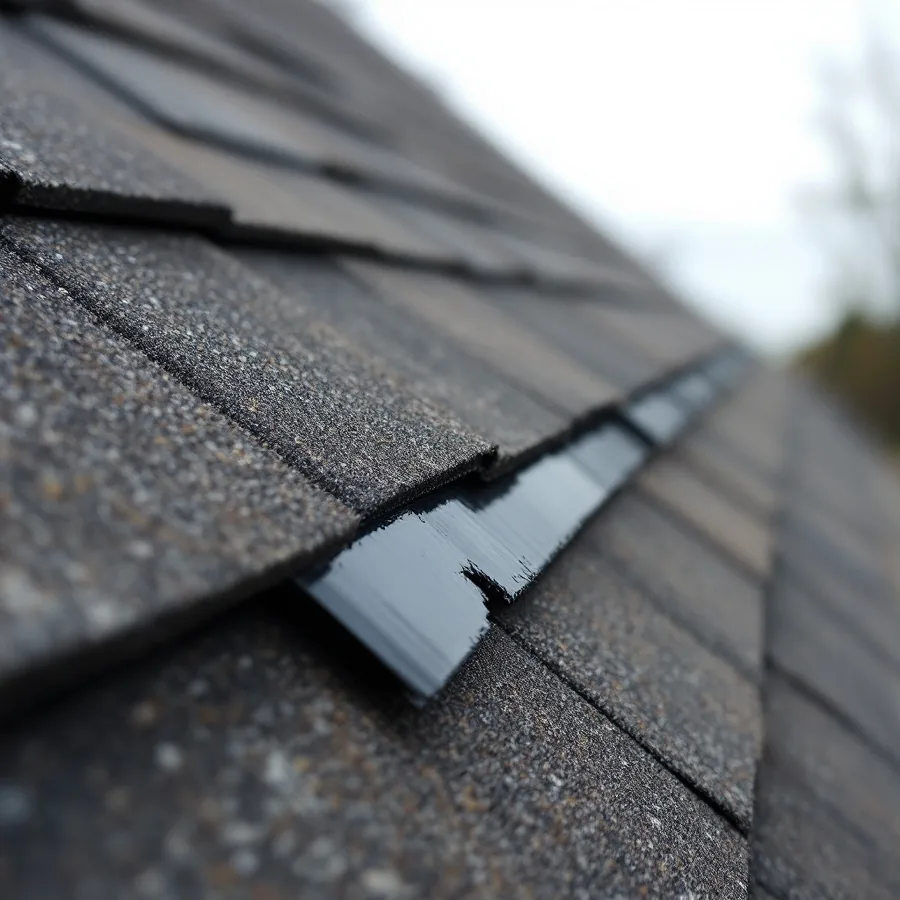
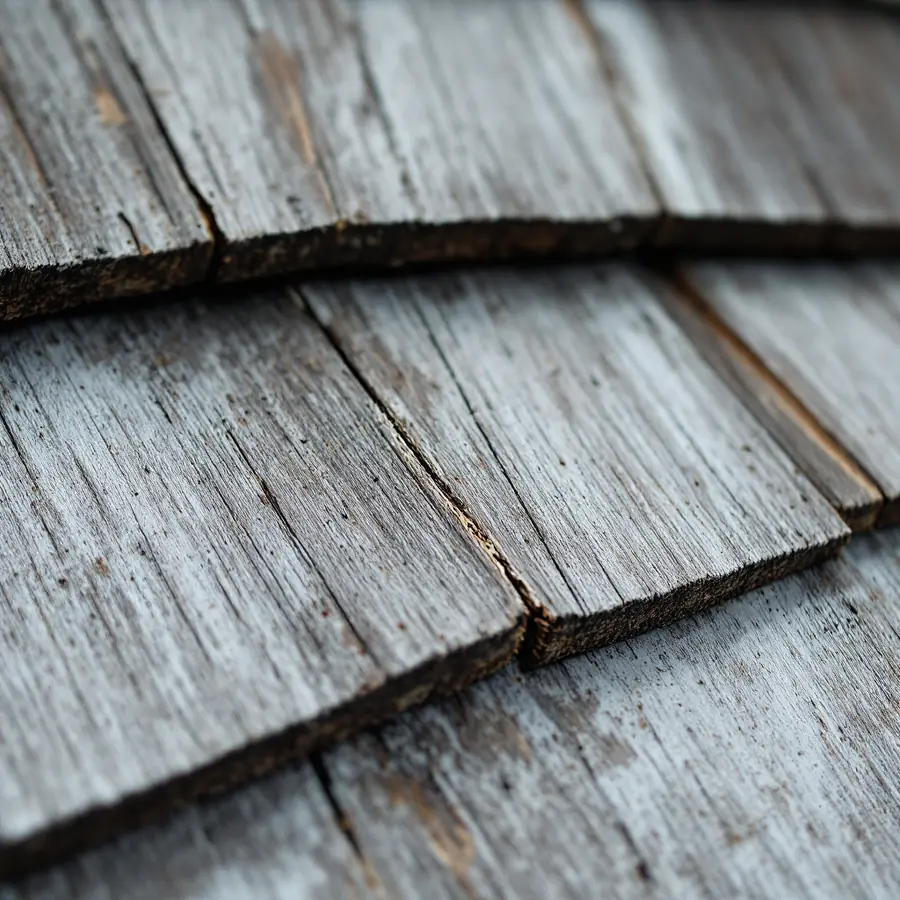
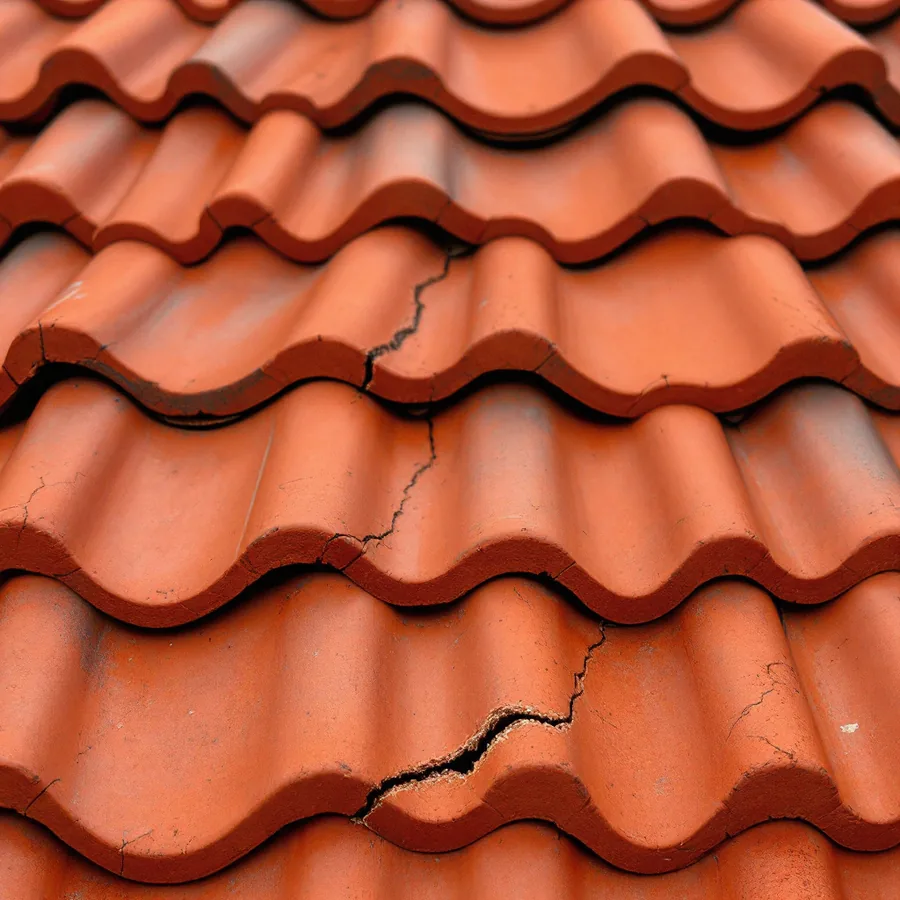

These pictures are illustrations of what each kind of damage looks like, not photographs of any particular property or claim. Use them to know what to look for, the finding on your own roof has to be made on your own roof.
Asphalt and composition shingles
Look for round dark spots where the granule coating has been knocked away, roughly coin-sized, with no pattern to their spacing, randomness is the signature of hail, and anything in neat rows was made by something other than weather. Press one. If the mat underneath gives softly, the fibreglass has fractured, and that is a bruise rather than cosmetic granule loss. Bruising is what decides claims, and it is precisely the part invisible from the ground. Below roughly an inch of stone, sound shingles usually shrug hail off; from an inch upward the impact carries enough energy to strip granules over a visible circle and, on a harder hit, to break the mat beneath. Older, drier shingles fail below that size, which is why roof age and hail size always get argued together.
Wood shakes and shingles
Hail splits wood instead of bruising it. Look for fresh splits with sharp, light-coloured edges, usually with an impact mark at one end, running with the grain. An old split has weathered grey the whole way through; a storm split has not had time to. Wood is one of the few coverings where the age of the damage is legible at a glance, which cuts both ways.
Metal panels and standing seam
Metal dents rather than fractures, and most dents are cosmetic, the roof carries on working. What matters is whether the coating has been broken, because a break in the finish starts corrosion, and whether a fastener line or seam has been disturbed. Many policies exclude cosmetic denting on metal by endorsement, so find that clause before assuming a dented roof is a covered roof.
Tile, slate and concrete
These break instead of bruising. A cracked or chipped tile is obvious once you find it, but the real failure is underneath: water reaches the underlayment through the break and works out of sight, sometimes for a year, before anything appears on a ceiling.
The parts that are not the roof covering
Soft metal is the evidence adjusters trust most, because unlike a shingle it cannot be blamed on age or foot traffic. Check gutters, downspouts, valleys, vent hoods, ridge vents, air-conditioner fins, mailboxes and metal fascia. Dents there date the storm and establish that stones of a damaging size actually fell on your property, which is exactly the point that gets disputed when the shingles are ambiguous.
Inside the house
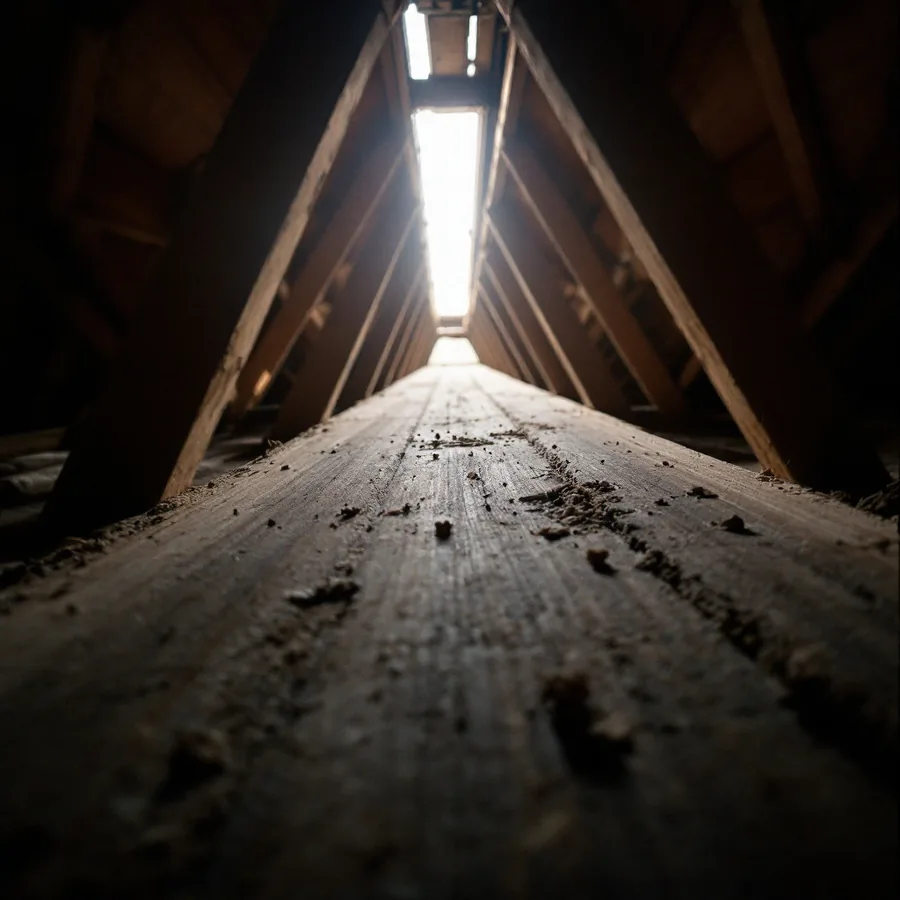
Go into the attic with a torch on a bright day and look for daylight through the decking, damp or darkened rafters, and insulation that is compressed or wet in patches. A ceiling stain is a late symptom; by the time it shows, water has usually been in the structure for weeks. Photograph the attic even if you find nothing, because a clean attic photographed today is useful evidence about condition later. The attic is also the half of a roof inspection that separates a real one from a look.
Reference
What size hail causes roof damage
Hail is reported by comparison to everyday objects, and those comparisons are a fixed scale rather than loose description. The line that matters for asphalt shingles sits at one inch, a quarter, which is also the point at which the National Weather Service classes a thunderstorm as severe.
| Reported as | Diameter | What it usually means for shingles |
|---|---|---|
| Pea | 0.25″ | No functional damage expected on sound shingles |
| Mothball | 0.50″ | Granule loss possible on an old or brittle roof |
| Penny | 0.75″ | Ageing roofs start to bruise; newer ones usually shed it |
| Nickel | 0.88″ | Below the severe threshold, but claims at this size are not unusual on worn roofs |
| Quarter | 1.00″ | The working threshold. Severe by NWS definition, and the size at which bruising becomes likely |
| Ping-pong ball | 1.50″ | Functional damage across exposed slopes is the expectation, not the exception |
| Golf ball | 1.75″ | Bruising and mat fracture; soft metal dents obviously |
| Tennis ball | 2.50″ | Damage is generally not in dispute at this size |
| Baseball | 2.75″ | Punctures and broken tiles as well as bruising |
| Softball | 4.00″ | Structural, not cosmetic, decking and skylights included |
Size scale: NOAA National Severe Storms Laboratory. The right-hand column is a general expectation for asphalt shingles, not a determination, age and condition move the line in both directions, and the finding is made by inspecting the roof rather than by reading the size off a report.
Two Different Problems
Hail damage and wind damage fail in opposite directions
They arrive in the same storm and go on the same claim, but they behave nothing alike. One is hard to see and gets disputed on cause; the other is easy to see and gets lost by waiting.
Hail is a visibility problem
The roof looks fine from the street. Granule loss and bruising are only legible up close, and both weather away, so the argument shifts from whether damage exists to whether this storm caused it. Across 2006 to 2025 the national storm log holds 151,411 hail events of an inch or larger.
Wind is a timing problem
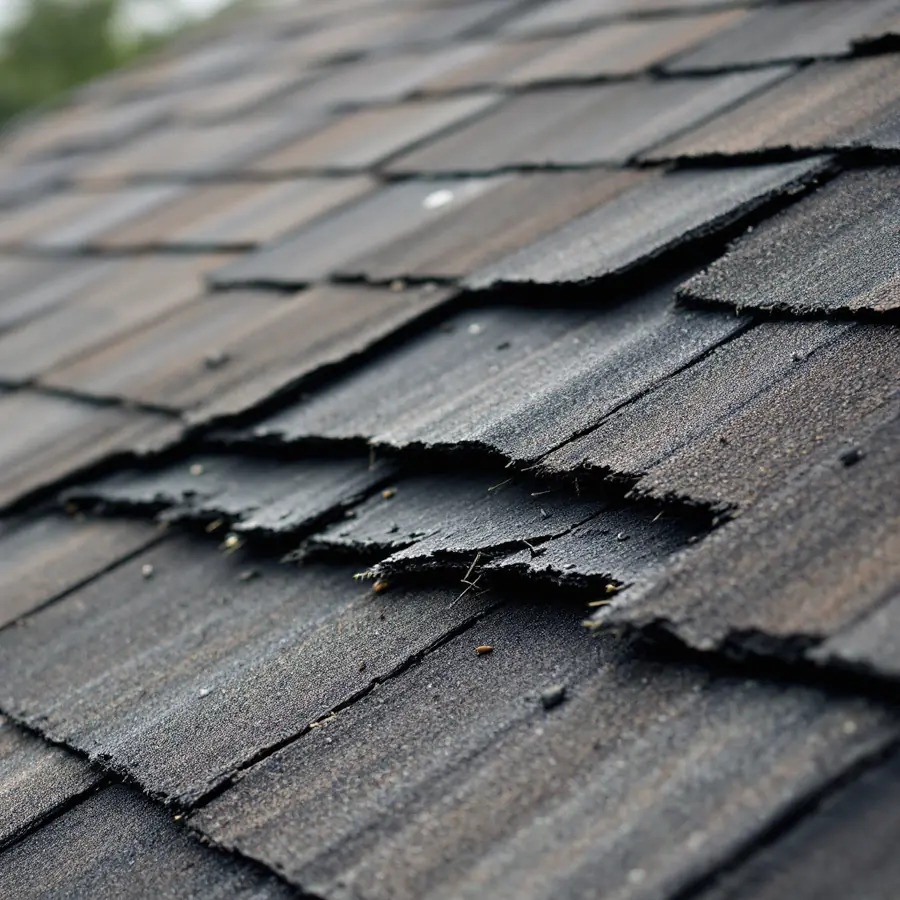
Wind rarely peels a whole roof. It breaks the seal strip bonding each shingle to the one below, leaving the shingle in place but no longer stuck down. The roof looks untouched and then leaks in the next ordinary rain, by which point the damage is no longer obviously the storm’s.
Where wind actually starts
Edges, ridges and corners, because that is where uplift concentrates. A roof that lost three shingles at a rake edge has almost certainly had seals broken across a much wider area than the missing pieces suggest.
How often it happens
The same two decades hold 334,157 thunderstorm-wind events, of which 23,170 carried a measured gust of 75 mph or more. Most roofs are rated well above that, but only while every shingle is still sealed.
The seal test
Lift a shingle tab by hand near the edge of the roof. A sealed shingle resists and would tear before it lifts; one that swings up freely is unsealed. Document it, but know that on its own it is the most contested finding on a wind claim, because insurers routinely argue that unsealing without creasing or tearing can come from installation, heat or age rather than from the storm. A crease across the tab is far harder to argue with.
Debris is its own category
A branch strike is a single point of impact with an obvious cause, usually the easiest thing in a storm claim to establish and the fastest to repair. Photograph the branch where it landed before anyone moves it.
Background: NOAA National Severe Storms Laboratory on hail · NSSL on damaging straight-line winds.
The Other Half
Marks that look like hail and are not
Half of learning to read a roof is learning what to discount. Every item below has been presented to an insurer as hail at some point, and every one of them is something else, which is why an adjuster who says no is not automatically wrong.

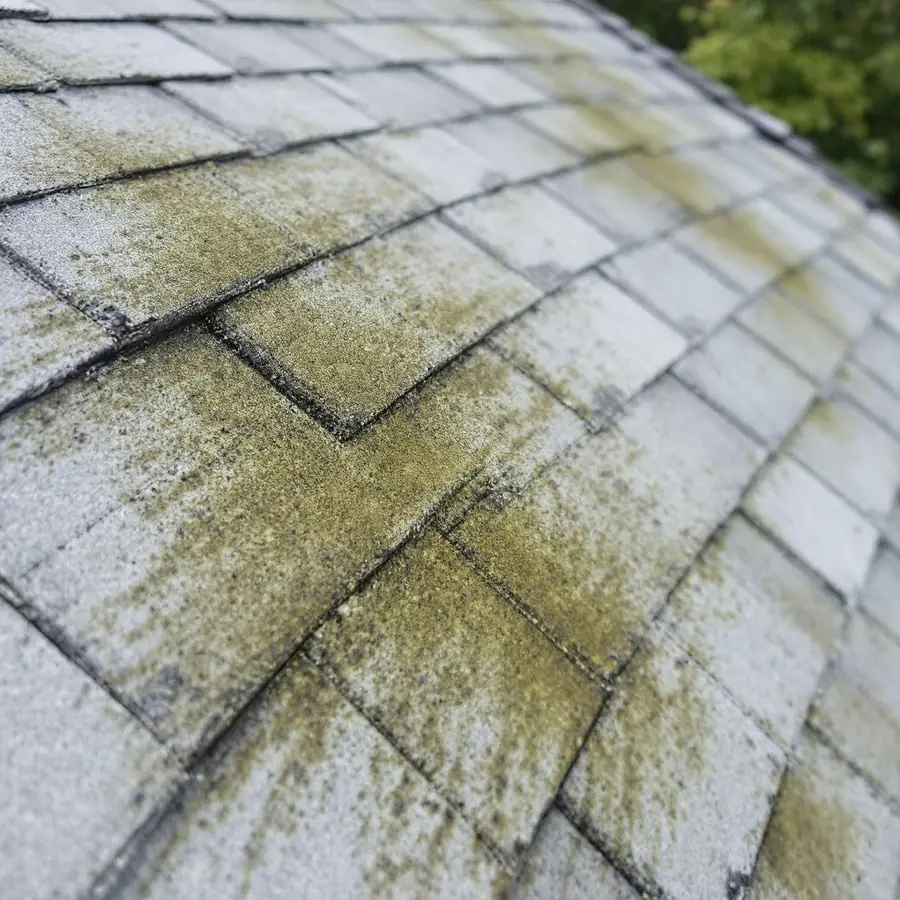
Blistering
Small round craters that look uncannily like impact marks. Blisters come from moisture or trapped gas in the asphalt and open upward, so the exposed area is usually cleaner and more sharply circular than a hail strike, and the edges are not fractured. Blistering is often a ventilation problem, which means fixing the roof without fixing the attic buys you the same failure again.
Foot traffic and mechanical marks
Scuffs in a line, granule loss along a walking path, or marks concentrated near a satellite dish or an air-conditioning unit. Hail lands randomly; people do not. Anything that traces a route across the roof was made by a person.
Manufacturing and installation defects
Cracking in a repeating pattern, granule loss in straight bands, or shingles failing uniformly across the whole roof at once. These belong to a manufacturer warranty claim, not a storm claim, and pursuing the wrong one wastes the deadline on the right one.
Ordinary ageing
Curled edges, brittle corners, general granule thinning that is heaviest on the sun-facing slope. Age produces gradients: the south and west slopes go first. Hail does not care which way a slope faces, so a roof that is uniformly worse on one aspect is telling you about the sun, not the sky.
Algae and lichen
Dark streaks running down-slope are algae, not damage, and the black patches that come off with a scrape are lichen. Neither is a covered loss, and both get mistaken for granule loss in photographs.
The First Week
What to do after a storm, in order
A storm damage roof checklist, in the order that actually protects the claim. Two of these steps are irreversible if skipped, documenting before cleanup, and reading your own deductible before anyone tells you what it is.
Stay off the roof
A wet or hail-scattered roof is genuinely dangerous, and walking it adds marks that will later be argued about. Everything worth seeing on day one is visible from the ground with a phone camera and a zoom, or from a window.
Photograph before touching
Dented gutters, downspouts, vent hoods, air-conditioner fins, the mailbox, and anything the storm moved. Wide shots to establish the property, then close-ups with something for scale, a coin against a dent does more work than any description.
Write down the date
Note the date and rough time of the storm while you still remember it. Every later step turns on which storm you are claiming, and if two systems pass through a fortnight apart, that detail becomes the whole argument.
Stop the water, keep the receipts
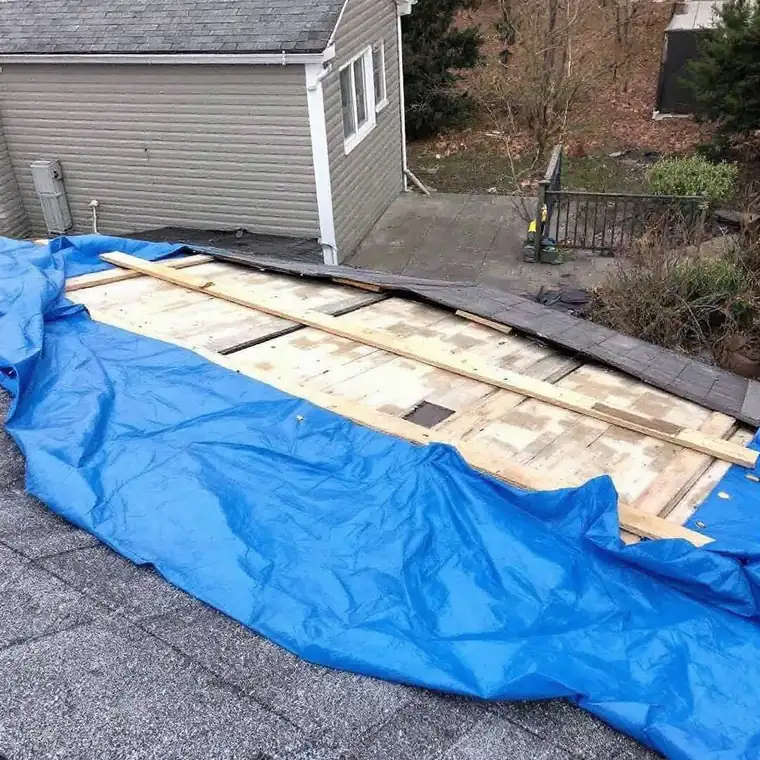
Tarping and temporary patching are your responsibility, not a favor to the insurer, and the cost is usually reimbursable. Do not throw away damaged material, and do not begin permanent repairs before the roof has been seen.
Read your own policy first
Find the wind and hail deductible, whether the roof settles at replacement cost or actual cash value, and whether a roof-age schedule applies. Ten minutes here changes what every later conversation is about.
Get the roof looked at
Independently if the answer decides money. A paid roof inspection produces a report you keep whether or not anyone does the work, which is a different product from a free look by a company that earns its living replacing roofs.
Give notice in writing
Report the loss to your insurer in writing, even if you called. A written notice is dated, it is what starts the clock on the insurer’s own obligations, and it is the version that exists if anyone disagrees later about when you told them.
Be there for the adjuster
Walk the roof with them if you safely can, bring your photographs, and ask what they found rather than waiting for the letter. A scope is far easier to add to on the day than to reopen afterwards.
Avoidable
What not to do
These are the errors that cost people money on claims that were otherwise perfectly good.
Do not clean up first
Hauling the branch away and sweeping the gutters removes the evidence that a storm happened here on that date. Photograph everything in place, then clear it.
Do not sign on the first visit
Nothing legitimate expires today. Real findings survive a night of thinking about them, and any document that has to be signed before the visitor leaves is the point of the visit.
Do not let anyone else notify the insurer
The claim is yours. A contractor who wants to “handle the insurance for you” is asking for control of the negotiation and, in some arrangements, of the payment.
Do not file reflexively
A claim below or barely above your deductible pays nothing and still gets recorded. Do the arithmetic in the next section before you pick up the phone.
Do not wait for a leak
Broken seals and bruised mats are damage now and unprovable later. Waiting until water comes through converts a straightforward storm claim into an argument about wear.
Do not start permanent repairs early
Temporary protection is expected of you. A finished replacement before the roof has been inspected destroys the thing the inspection was meant to examine.
How It Actually Works
How insurance treats a storm-damaged roof
Almost every homeowner policy covers sudden storm damage to a roof. The disagreements are never really about that. They are about four clauses that decide how much of the repair you fund yourself, and all four are in the policy you already have.
The wind and hail deductible is usually not your normal deductible
In hail-prone states, policies commonly carry a separate wind and hail deductible calculated as a percentage of the dwelling coverage, the amount the structure is insured for, rather than the flat figure that applies to a kitchen fire. Percentages typically run from 1% to 5%, and the practice is standard across Texas, Oklahoma, Kansas, Nebraska, Colorado and the plains states. On a house insured for $400,000 that is the difference between $1,000 and $8,000 out of pocket, on identical damage.
Replacement cost or actual cash value
Replacement cost settles what a new roof costs today. Actual cash value settles that figure minus depreciation for the age and condition of the roof you actually had, and on a fifteen-year-old covering the depreciation can exceed the deductible in size. Many policies have quietly moved roofs onto actual cash value while leaving the rest of the house on replacement cost, which is a change most people discover during a claim rather than at renewal.
Replacement cost usually arrives in two payments
This is the part that surprises people mid-claim. Even on a replacement cost policy the first check is normally the actual cash value, the depreciated figure, minus the deductible. The withheld amount, the recoverable depreciation, is released only after the work is done and the invoices are submitted. If the work is never done, that second payment never comes, which means a settlement can look adequate on paper and still leave you short if you were planning to keep the difference.
Roof-age schedules
Some policies attach a payment schedule that reduces the settlement by a fixed percentage for each year of roof age, regardless of condition. Under a schedule, a roof in good repair at eighteen years old settles the same as a worn one, because the schedule reads the calendar and not the roof.
Notice, and the deadline nobody quotes correctly
Two separate clocks run, and they come from different places. Prompt notice, report the loss as soon as you discover it, is a condition of the policy. The outer limit for reporting damage from a given storm often is not: in several storm-exposed states it is fixed by statute rather than by the contract, and those statutes have been shortened in recent years. That combination is why damage found during a spring roof check can already be outside the window for the storm that caused it. Neither clock is a single national number, so read your own policy and check your state insurance department rather than any article, including this one.
Consumer guidance from state regulators: Texas Department of Insurance home insurance guide.
The Machinery
How a storm claim actually moves
Knowing the sequence is most of the advantage, because almost every dispute is really an argument about a step that has already passed. Here is the whole chain, and where it usually goes wrong.
Notice, then an adjuster
You report the loss. The insurer assigns an adjuster, whose assessment of the roof turns into a scope, an itemised list of what they accept as damaged and what they will pay to put it right. The scope, not the phone call, is the document that matters. Ask for a copy of it, in full, including the line-item detail rather than a summary page.
The first payment is not the whole payment
On a replacement cost policy the first payment is the actual cash value less your deductible. The rest, the recoverable depreciation, is released when the work is finished and documented. On an actual cash value policy there is no second payment at all, which is why finding out which one you have belongs at the start rather than at the end.
Supplements are normal, not a fight
When the covering comes off and the decking underneath turns out to be wet, or code requires something the scope did not include, the contractor submits a supplement with photographs and documentation. Insurers expect this. A quote that promises to cover everything without a supplement, on a roof nobody has opened, is a quote from someone who has not opened many roofs.
If you disagree with the outcome
There are three escalations, in order of effort. Ask for a re-inspection, ideally with your own inspector present and the specific line items in dispute named. If that fails, most policies contain an appraisal clause: each side appoints an appraiser, the two select an umpire, and their decision on the amount binds both. And separately, your state insurance department accepts complaints about claim handling, a channel that costs nothing and creates a record.
If any figure on this page disagrees with what you find in your own documents, we would rather hear about it: our editorial standards set out how corrections are handled.
What sinks a claim in conversation
Adjusters are not adversaries, but everything you say becomes part of the file. Do not guess at a date, “I am not certain, and here is the storm record for the county” is stronger than a wrong guess that later looks like a contradiction. Do not volunteer an opinion about the roof’s condition before the storm; that is the exact question the whole claim turns on, and it is theirs to establish, not yours to concede. Do not describe repairs as already started unless they are. And do not accept “that is cosmetic” as a conclusion without asking which specific line items were classed that way and why.
Public adjusters, and when they earn their fee
A public adjuster works for you rather than the insurer and is paid a percentage of the settlement. On a large, contested or partly denied claim they can be worth it. On a straightforward claim comfortably above the deductible they are a percentage of money you were going to receive anyway. They are licensed by the state, check the license, because storm season attracts people who describe themselves that way without holding one.
Worked Example
The arithmetic that decides whether to file at all
This is the calculation almost no roofing page shows you, because most of them are written by people paid when you file. A percentage deductible scales with the value of your house, not with the size of the damage, so the more your home is worth, the larger the loss has to be before a claim returns anything.
| Dwelling coverage | 1% deductible | 2% deductible | 5% deductible |
|---|---|---|---|
| $200,000 | $2,000 | $4,000 | $10,000 |
| $300,000 | $3,000 | $6,000 | $15,000 |
| $400,000 | $4,000 | $8,000 | $20,000 |
| $500,000 | $5,000 | $10,000 | $25,000 |
| $750,000 | $7,500 | $15,000 | $37,500 |
How to read it
Before you do any of this, it is worth knowing whether a storm of the size you are claiming is even on the record where you live, that is what the county lookup above is for. Dwelling coverage is not your purchase price and not the market value, it is the rebuild figure on the declarations page, usually the first number listed under Coverage A. Find it, apply your own percentage, and you have the amount the insurer subtracts before paying anything.
Where the line falls in practice
Partial repairs, a slope of shingles, flashing, a handful of tabs, are commonly four-figure jobs. Full replacements on an ordinary house run into five figures; national market pricing for architectural asphalt sits in the region of $5 to $7 per square foot of roof area installed, which puts a typical 2,000 square foot roof between ten and fourteen thousand dollars, with wide regional variation. Set that against the table: a $300,000 home with a 2% deductible funds the first $6,000 itself, so a repair is often entirely below the line while a replacement is clearly above it.
Why filing anyway can still cost you
A claim that pays nothing is still a claim on your record. Insurers price on claim history, and in the hardest hail markets carriers have responded to frequency by raising percentages, moving roofs to actual cash value, or declining to renew. That is not a reason to skip a real claim, it is a reason not to file one that mathematically cannot pay.
When the arithmetic changes
Two situations flip it. If the damage spans several parts of the property, roof, siding, windows, fencing, outbuildings, the deductible applies once to the loss, not once per item, and the total climbs above the line quickly. A hail-damaged car does not join that total: vehicles sit under comprehensive auto coverage with a separate deductible of their own. The dents are still worth photographing, because they help establish that stones of a damaging size fell here. And if the roof is close to the end of its life, a covered storm is often the only occasion on which anyone else contributes to replacing it.
Read The Room
How to recognize a storm chaser
After a significant hail event, out-of-area crews arrive within days and work the neighborhood door to door. Some are competent companies expanding after a storm. Others will be unreachable by the time the roof leaks, and a few are running something the state has specifically legislated against. The tells are consistent enough to sort them at the door.
“We will cover your deductible”
This is the clearest single signal, and in a number of states it is not merely unethical but illegal, Texas, Colorado, Minnesota, Oklahoma and Florida among others explicitly prohibit a contractor paying, waiving or rebating a homeowner’s insurance deductible. The offer is only possible by inflating the claim to the insurer, which makes you a participant in it. Anyone who opens with it has told you what kind of company they are.
Urgency with no source
A discount that expires today, a crew that is “only in the area this week”, a slot that must be held now. Roofs do not develop deadlines. Real capacity constraints after a storm are described honestly and do not require your signature this evening.
A contract disguised as an inspection
Read what you are actually signing. A form headed “authorisation to inspect” can contain a contingency clause committing you to use that company for whatever the insurer approves, with a cancellation fee attached. If it names a percentage, it is a contract.
Wanting to deal with the insurer for you
Negotiating a claim on your behalf is adjusting, and in most states it requires a license that roofing contractors do not hold. A contractor can meet the adjuster and discuss scope; a contractor who wants the claim conversation to happen without you is after control of the money.
No fixed address you can find
Look for a local physical address, a state license number where the state issues them, and a company that existed before this storm. A magnetic sign, an out-of-state plate and a phone number that goes to voicemail are the three things a warranty cannot survive.
Damage that appears during the visit
Marks made with a tool look like what they are: consistent in size, evenly spaced, and often clustered where a person could comfortably reach. If you are handed photographs of damage you have not seen, ask to be shown it on the roof, or have someone independent look before anything is signed.
If you remember one line from this page, make it this one: an offer to cover, waive or rebate your deductible is prohibited outright in a number of states, including Texas, Colorado, Minnesota, Oklahoma and Florida.
It is not a discount. The only way the arithmetic works is by inflating the claim to the insurer, which makes the homeowner a participant, not a beneficiary.
State guidance: Texas Department of Insurance on roofing scams and deductible fraud · Utah Insurance Department consumer alert (PDF).
The Decision
Repair or replace
Three things decide it, and only one of them is how bad the damage looks.
How much of the roof is affected
Damage confined to one slope, one valley or one penetration is a repair. Hail bruising distributed across every elevation is not, because there is no undamaged area left to repair against. The usual dividing question an adjuster asks is whether a representative test square shows enough hits to call the slope damaged.
How old the covering is
Repairs to a roof in the last few years of its service life buy months and complicate the next claim. They also rarely match: shingle lines are discontinued, and a patch on a weathered roof stays visible. Past about fifteen years, partial repair after a significant storm is often the more expensive route.
Whether matching is possible
If the original shingle is no longer manufactured, some policies require replacement of a whole slope or elevation to achieve a reasonable match, and some explicitly do not. In a number of states the question is not left to the policy at all: the regulator requires a reasonable match regardless of what the contract says. So check the state rule first and the clause second, this decides a surprising number of claims, and it is worth locating before the conversation rather than during it.
What a repair should include either way
Not just the covering. Underlayment where it was breached, flashing at every penetration in the affected area, and the seal on shingles adjacent to the damage, because wind that broke one course usually loosened the next.
Money
What storm repair costs, and what moves the number
We do not quote work, we are not a contractor. What follows is what changes the figure, so that a quote you receive is legible rather than mysterious. If the answer turns out to be a full roof replacement, the same variables drive that number too.
Roof area, not house area
Roofing is priced by the square, meaning 100 square feet of roof surface. A steep roof has considerably more surface than the footprint of the house beneath it, which is why two identical-looking homes get different numbers.
Pitch and access
Above a certain steepness, work requires staging and moves more slowly. A roof that cannot be reached by a truck, or that sits over landscaping, costs more for reasons that have nothing to do with the roof.
Layers already up there
A second layer doubles the tear-off and the disposal, and in many jurisdictions a third layer is not permitted at all. This is one of the more common reasons a quote comes in above expectations.
What is underneath
Decking that has been wet is replaced by the sheet, and nobody knows how many sheets until the covering comes off. A quote with a per-sheet rate stated up front is a more honest document than one without.
Everything that is not shingle
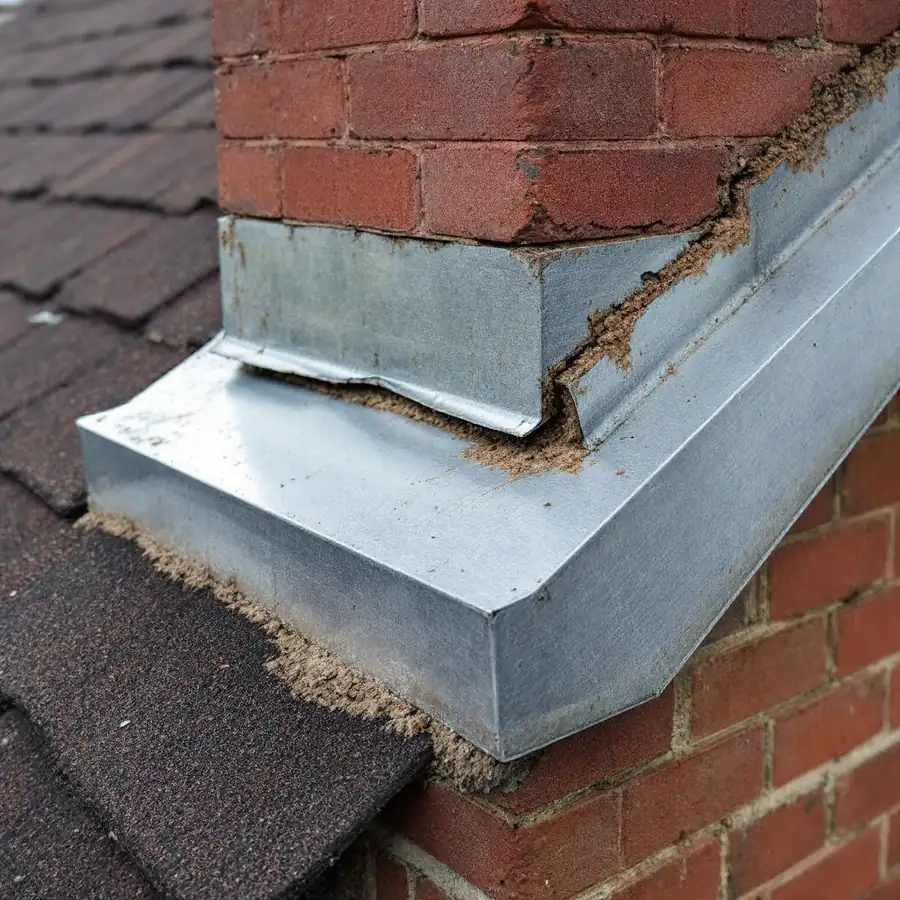
Flashing, drip edge, valley metal, boot seals, ridge vent. These are where roofs actually leak, and reusing old flashing on a new roof is the most common corner cut in the trade.
When the storm was
Prices rise in the weeks after a large hail event because every crew in the region is booked. Waiting for the queue to clear is reasonable; letting the claim deadline pass while you wait is not.
Next Time
Reducing what the next storm costs
You cannot make a roof hail-proof. You can change how much of the next event ends up as your problem.
Impact-resistant shingles
Roofing products are tested for impact resistance and graded, with Class 4 the highest rating in common use for asphalt shingles. They are not immune to hail, large stones still bruise them, but they take smaller impacts without functional damage. Many insurers offer a premium discount for a Class 4 roof, and in hail states that discount is often substantial enough to be worth asking about before choosing a shingle. If you are weighing a change of material rather than a like-for-like replacement, the metal roofing decision has its own arithmetic, including a clause about cosmetic denting that changes it considerably.
Ventilation, which quietly decides roof lifespan
A roof that cannot exhaust heat cooks its own shingles from underneath and ages years early, which shifts every future claim towards the wear argument. Intake at the eaves and exhaust at the ridge, in balance, is unglamorous and does more for roof life than the shingle brand.
Trees, gutters and the boring maintenance
Overhanging limbs are the debris category waiting to happen, and blocked gutters push water back under the edge course. Neither is expensive to deal with, and both are things an adjuster notices when deciding whether a roof was maintained.
Photograph the roof while it is undamaged
The single cheapest thing on this page. A dated set of photographs of a roof in good condition is the evidence that settles the argument about pre-existing wear before it starts. Do it on a clear day once a year and keep the files somewhere they will still exist in five years.
Storm preparedness guidance: Ready.gov on thunderstorms and lightning.
Straight Answers
Storm damage questions, answered
How do I know if hail damaged my roof if I cannot see anything?
Start with the soft metal rather than the shingles. Dents in gutters, downspouts, vent hoods and air-conditioner fins tell you whether stones of a damaging size fell on your property, and they cannot be attributed to age. If those are dented, the roof is worth having looked at properly even if it appears untouched from the ground.
What size hail damages a roof?
Around one inch is the usual working threshold for asphalt shingles, the point at which impacts reliably strip granules and can fracture the mat underneath. It is a guide, not a rule: older and drier shingles are damaged by smaller stones, and impact-rated products tolerate larger ones. The determination is made by inspecting the roof, not by the size reported in the news.
How long do I have to file a storm damage claim?
Your policy sets it, and it is usually shorter than people expect. Two separate requirements apply: prompt notice after you discover the loss, and an outer limit for reporting damage from a given storm. Neither is a single national number. Check the policy and your state insurance department, and give notice in writing as soon as you suspect damage rather than after you have confirmed it.
Should I file a claim for a small amount of damage?
Work out your deductible first. If it is a percentage of dwelling coverage, it is probably larger than you remember, and a claim below it pays nothing while still being recorded. If the damage crosses several parts of the property, add it together, the deductible applies to the loss, not to each item.
What is the average insurance payout for a hail-damaged roof?
There is no useful average, and any figure quoted as one is arithmetic on incomparable things. Four variables move the number more than the damage does: the deductible, which in the hail belt is a percentage of what the house is insured for rather than a flat sum; whether the roof settles at replacement cost or actual cash value; the size, pitch and covering of the roof; and regional labor pricing, which swings after a large storm. Two identical roofs with identical damage in the same city can settle thousands of dollars apart on policy wording alone. The number worth working out is not the average payout but your own deductible, because that is what decides whether a claim pays anything at all.
Will filing a claim raise my premium?
Frequently, yes, and in the hardest hail markets the response has extended to higher wind and hail percentages, roofs moved to actual cash value, and non-renewal. This is an argument for filing accurately rather than for not filing. A genuine large loss is what the policy is for.
Can I get a new roof if the damage is only on one side?
Sometimes, and it usually turns on matching rather than on damage. If the original shingle is discontinued and the policy requires a reasonable match, replacing an elevation or the whole roof can follow from damage to part of it. If the policy has no matching provision, it usually will not.
A roofer knocked on my door after the storm. Is that legitimate?
It can be. Canvassing after a storm is legal and normal. Judge it on specifics: a verifiable local address, a license where the state issues one, no pressure to sign anything today, and above all no suggestion that your deductible can be covered, that last one is prohibited outright in several states.
Do you repair roofs?
No. We are a matching service. We publish research on storm and hail damage, including our own aggregation of two decades of National Weather Service records, and we connect homeowners with independent licensed and insured roofing companies. We do not inspect, repair, or adjust claims.
Where This Comes From
Sources
- County hail and wind records, our own aggregation of the NOAA NCEI Storm Events Database, 2006 to 2025, county-coded records only.
- How hail forms and what sizes occur, NOAA National Severe Storms Laboratory.
- Damaging straight-line winds, NSSL severe weather primer.
- Deductible fraud and roofing scams, Texas Department of Insurance and Utah Insurance Department.
- Homeowner claim process, Texas Department of Insurance storm resource page.
- Storm preparedness, Ready.gov.
Cost ranges quoted are market pricing observed across published national contractor pricing guides, not our estimate and not a quote, we are a referral service, not a roofing contractor. Damage figures from the storm database are National Weather Service estimates recorded as reported, without audit. Last updated .
Before you call anyone
The independent match — we are paid for the introduction, not for the size of your job
Most roofing advice is written by the company that wants to do the work. That is not a failing of the people who read it; it is a defect in who is talking. The estimate, the diagnosis and the invoice come from one party, and no amount of care on your side fixes that.
We are built the other way round. We do not repair roofs and we do not sell materials, so the payment reaches us when you are connected to a licensed, insured roofing company — the same amount whether your roof needs an eight-hundred-dollar repair or a twenty-thousand-dollar replacement. Nobody here has a reason to talk you into the larger number. How we make money and how we research are both written down.
Waiting is the one thing that actually costs money. An insurance clock runs from the date of the damage rather than the date you noticed it, and damage that sits through a season stops reading as sudden and starts reading as wear — which is the exclusion that pays nothing. And if your roof is simply worn out, say so on the call. No claim will pay for age, we will tell you that plainly, and you will have lost nothing but the call.