Flat And Low-Slope
Flat roof materials, TPO, EPDM, and what each one costs
A flat roof is not flat. It is a low-slope roof that sheds water by membrane rather than by gravity, and that one difference changes everything: which materials work, why it fails, and what maintaining it actually involves. This page is written for the flat sections of ordinary houses, porches, additions, garages, mid-century homes, by a referral service that sells none of these systems.
(844) 833-2185Toll-free and answered every day of the year. The call reaches an independent licensed and insured roofing company covering your area, we do not do the work ourselves, which is exactly why we can tell you when you do not need it.
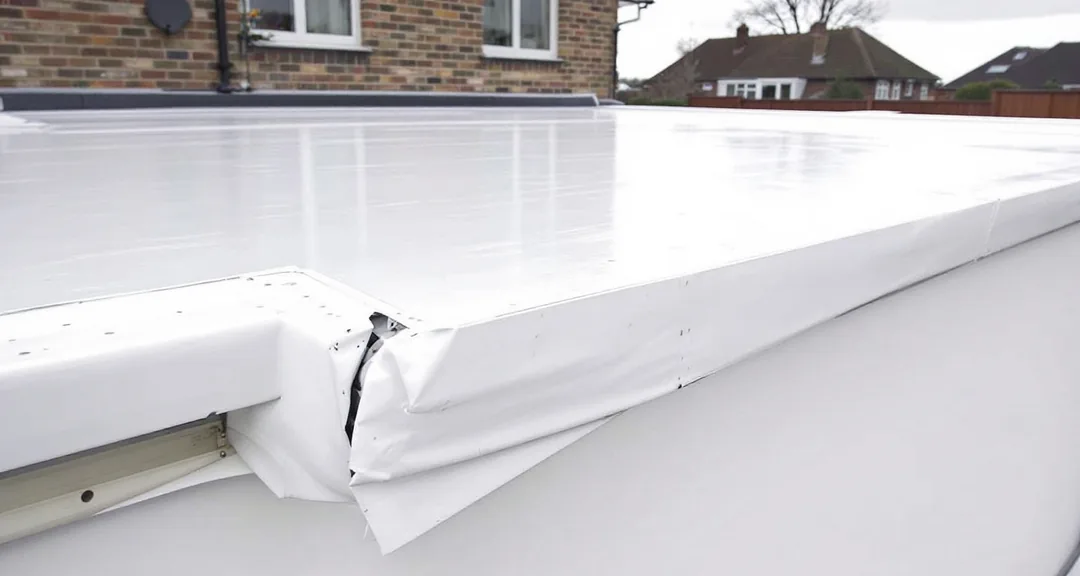
Four things that decide a flat roof
- Climate picks the material. Black EPDM where warmth and toughness matter; white TPO where reflecting heat matters. That is most of the decision, and it is rarely how it is sold.
- Slope and drainage outrank the membrane. Water standing more than two days is a fall problem, and no new membrane fixes it.
- Seams and edges are where it fails. Not the field. Which is why installation quality matters more here than on a pitched roof.
- Maintenance genuinely doubles the life. Clearing drains and an annual look is the cheapest thing on this page by a wide margin.
The Actual Choice
EPDM, TPO and modified bitumen compared
Three systems cover almost every residential flat roof in America. They are not interchangeable, and the right one depends more on your climate than on anybody’s brochure.
| System | Installed | Service life | What it is |
|---|---|---|---|
| EPDM | $5–$9 | 25–35 years | Black synthetic rubber sheet. The proven, forgiving default |
| Modified bitumen | $6–$11 | 15–25 years | Asphalt sheet in rolls, torched or self-adhered. Familiar to every roofer |
| TPO | $7–$12 | 20–30 years | White thermoplastic sheet, seams heat-welded. The modern choice in hot climates |
| PVC | $8–$14 | 20–30 years | Like TPO but chemically tougher, specified where grease or chemicals reach the roof |

EPDM, in plain terms
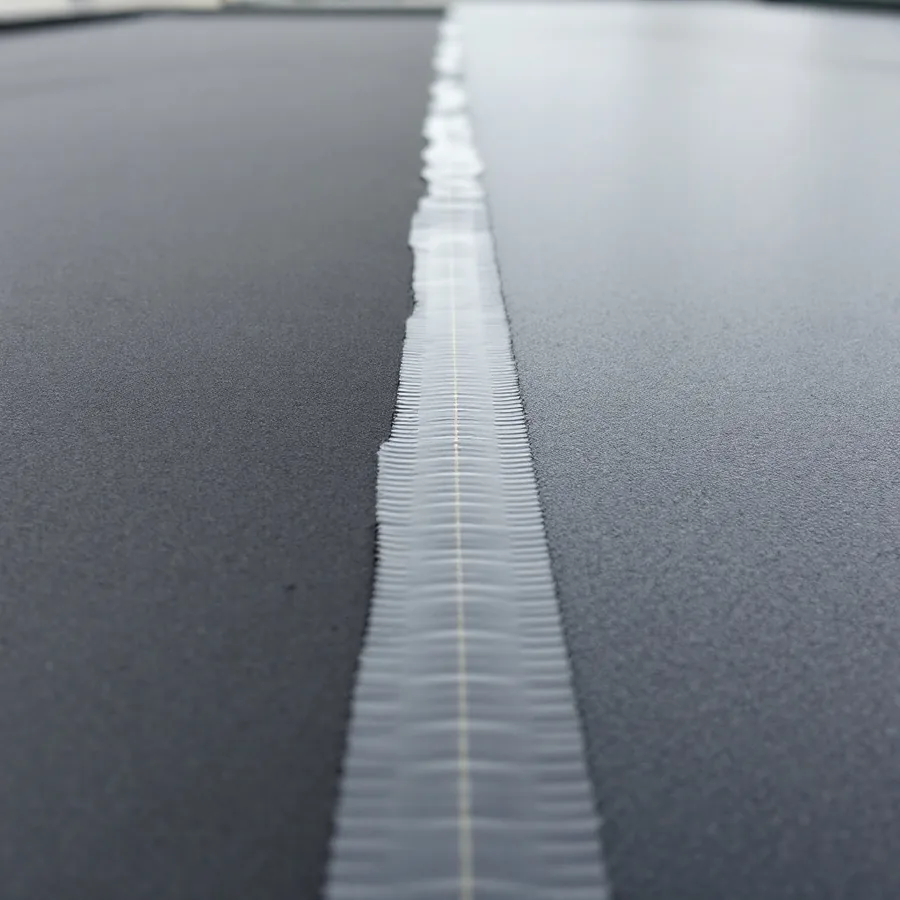
A single sheet of synthetic rubber, usually black, either loose-laid and ballasted, mechanically fastened, or fully adhered. It has been on roofs for half a century, every flat roofer knows it, and it tolerates movement and cold better than anything else in common use. Its seams are glued or taped rather than welded, which historically was its weak point, modern seam tapes have largely closed that gap. A fully adhered thicker membrane is the version that reaches the longest service lives.
TPO, in plain terms
A thermoplastic sheet, usually white, whose seams are welded with hot air into a bond as strong as the sheet itself. That welded seam is its real advantage. The white surface reflects solar heat, which matters in a hot climate and matters very little in a cold one. TPO is a younger product than EPDM and formulations have changed over the years, so its long-term record is shorter, which is a fact about the material rather than a criticism of it.
Modified bitumen, in plain terms
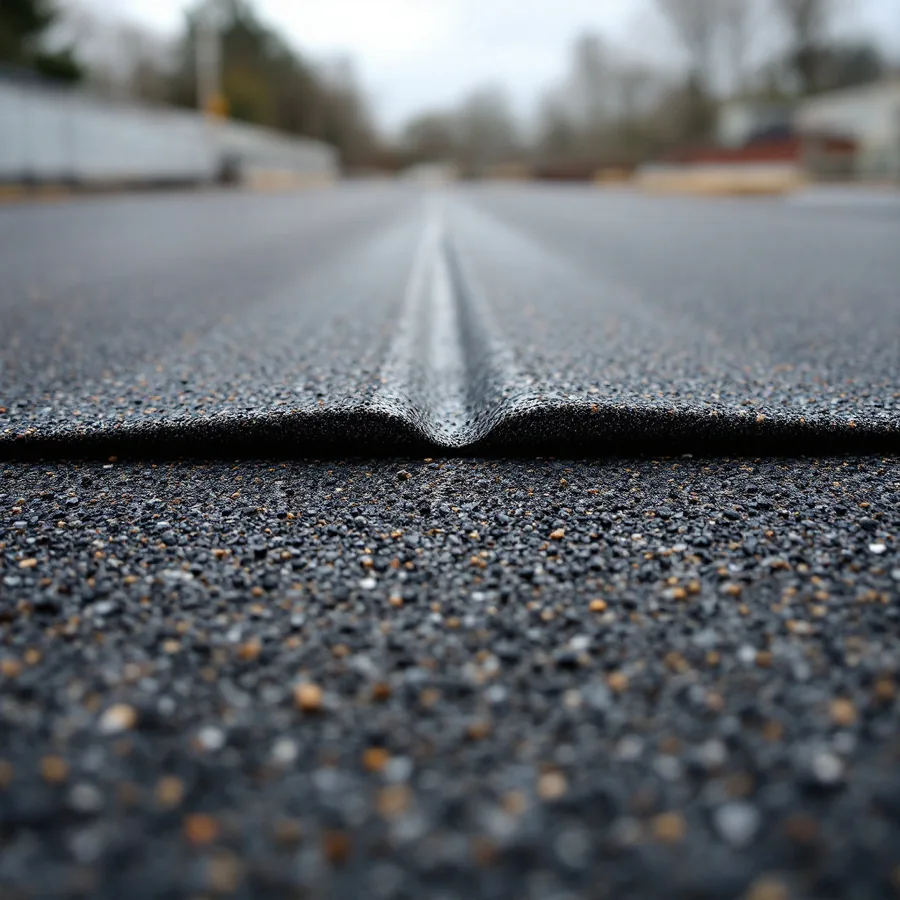
Asphalt reinforced with polymer, supplied in rolls and installed in layers, torched, hot-mopped or self-adhered. It is the closest thing to a traditional built-up roof still commonly fitted, it is repairable by any roofer with asphalt experience, and it carries the shortest service life of the three. On a small porch or garage roof where simplicity matters, it is often the practical answer.
What is actually wrong with EPDM
Every material page should be able to answer this, and most cannot. The honest list of EPDM disadvantages is short. Its seams are taped rather than heat-welded, which was the historic weak point and is the thing to inspect on an older roof. Black absorbs heat, which is an advantage in Minnesota and a cost in Arizona. A single-ply rubber sheet punctures if you drop tools on it or drag a ladder across it. And it comes in two colors, black and white, against the white, gray and tan that TPO makers stock, with more by special order.
White EPDM exists and has since 1987, but it is a marginal product: the common reinforced version is sold in one thickness only, sixty mil, against 45, 60 and 75 for the reinforced black. Its long-term ultraviolet performance is genuinely contested. Independent consultants argue the titanium dioxide that makes it white is a weaker ultraviolet screen than the carbon black it replaces; the manufacturer publishes xenon-arc exposure results at two and a half times the ASTM requirement. What is not contested is the structural oddity behind the dispute: the EPDM standard’s weathering test is run on black specimens, so the standard does not settle the question either way. As for price, the premium repeated online, variously fifty cents a foot, thirty percent, or nearly double, traces back to no source we could find. It costs more. By how much, nobody publishes.
EPDM roofing lifespan, and the number under the number
The service-life ranges at the top of this page, EPDM 25 to 35 years, TPO 20 to 30, modified bitumen 15 to 25, are market figures, and they assume a roof that drains. What decides where a given roof lands in its range is thickness and detail quality far more than brand. On EPDM the sheet is sold at 45, 60 and 90 mil unreinforced, 45, 60 and 75 reinforced; there is no 80-mil EPDM, whatever a quote says.
Thickness, and why sixty mil is the number that matters
TPO comes in 45, 60 and 80 mil, and the field evidence for choosing 60 as a floor is unusually good. The Western States Roofing Contractors Association ran a weathering farm for ten years: sixteen membranes from four manufacturers at four climate sites, blind-labeled so the testers could not favor a brand, with laboratory work by the National Research Council of Canada. Fifteen of the sixteen performed well and every roof stayed leak-free, and the study’s recommendation is white membrane at sixty mil minimum. A separate manufacturer-funded field study of twenty aged US roofs found 60-mil samples still passing cold-flex tests after twelve years while 45-mil samples cracked. A consultants’ survey found reported TPO problems concentrated in 45-mil mechanically attached membranes.
Two details worth knowing before comparing quotes. The standard permits a ten percent negative tolerance, so a sheet sold as sixty mil may legally measure fifty-four. And what actually weathers is not the nominal thickness but the coating above the reinforcing scrim, a minimum of 15 mils on 45-mil sheet and 18 on 60-mil, with real products usually carrying more. The dominant observed failure mode is that top layer eroding down toward the scrim, which is why the number over the scrim decides service life and the number on the invoice does not.
Why TPO’s service life is quoted with a caveat
TPO reached the US market around 1990, but its ASTM standard was not published until 2003, and the standard has been tightened repeatedly since: the ultraviolet weathering requirement was doubled in 2006, and the heat-aging requirement was raised roughly eightfold in 2011. The early failures that gave TPO its reputation were traced to fire retardants in the polymer blend, brominated compounds, replaced with magnesium hydroxide by 1994, and to weld parameters nobody had established yet. Current-generation sheet is a materially different product from what failed. That is the fair statement, and it is also why a twenty-to-thirty-year figure on TPO rests on a shorter field record than the same figure on EPDM. It is a fact about the material’s age, not a verdict on it.
The rule of thumb worth more than the brochures
In a cold or mixed climate, black EPDM is the safe default: it absorbs heat in winter, handles thermal movement, and any roofer can repair it. In a hot, sunny climate, white TPO earns its premium by reflecting solar gain and keeping the space beneath it cooler. On a small, simple, low-budget roof, modified bitumen is reasonable and honest. Everything else in the sales conversation is detail.
The Rest Of The Menu
The other flat roof types, and who each one is for
EPDM, TPO and modified bitumen cover most residential work, but they are not the whole list of low-slope roof options. Four more systems come up in quotes, and each has one situation where it is the right answer and several where it is not.
Built-up roofing, tar and gravel
The oldest system still fitted: alternating layers of asphalt and reinforcing felt, topped with gravel. Roughly $3.50 to $9 per square foot installed depending on the source you ask, with a 20 to 30 year service life. The gravel is not decoration, it shields the asphalt from ultraviolet light and adds fire resistance, and when it thins the asphalt beneath dries and cracks in the pattern roofers call alligatoring. Built-up is heavy, needs a structure that can carry it, and is now far more common on commercial buildings than on houses. Where it still earns its place on a home is a roof that takes abuse.
Spray polyurethane foam
Foam sprayed as a liquid that expands into a seamless layer, then coated. About $3.50 to $9.50 per square foot installed, and a maintained foam roof can run past 30 years, but only maintained. Bare foam is not a roof: it degrades under sunlight, which is why the coating is mandatory rather than cosmetic, and why the code gives it a window of no sooner than two hours and no later than 72 hours after the foam goes down. The coating is then re-applied periodically, every 10 to 20 years according to the RICOWI field guide published by IBHS, or every 5 to 15 years according to consumer pricing guides, at $1.50 to $4.50 per square foot each time. Read that as the honest description: foam is a roof with a maintenance contract attached, and it is recognized by the residential code in its own right.
PVC single-ply
The most expensive of the common membranes at $5 to $12 per square foot, with a 20 to 30 year life and heat-welded seams like TPO. Its advantage is chemical resistance: PVC is the default membrane over restaurant kitchen exhausts and anywhere grease lands on a roof. Its known weakness is the other side of its own chemistry. PVC needs added plasticizers to stay flexible, those plasticizers can migrate out over time, and the sheet shrinks and cracks when they do. On a house, PVC is worth its premium in specific circumstances rather than as a general upgrade.
Standing seam metal on a low slope
Metal can go on a low-slope roof, but which metal roof matters more than most articles admit. Code sets the minimum at a quarter unit in twelve for standing seam panel systems, and three in twelve for lapped, exposed-fastener panels without sealant, with a middle tier at half a unit in twelve for lapped panels with applied lap sealant. Manufacturer minimums are often stricter than code and depend on the metal: a two-inch mechanical seam is rated to half in twelve in steel but two in twelve in aluminum. The distinction that decides it is mechanical seaming. Double-lock mechanically seamed panels are the low-slope choice; snap-lock standing seam, which looks identical from the ground, generally wants three in twelve because the seam can disengage under thermal movement. If a flat section meets a pitched metal roof on your house, this transition is the detail to ask about, and our guide to standing seam metal roofing covers the panel systems themselves.
Is TPO a vinyl?
No, and the confusion is worth clearing up because “TPO vinyl roofing” is a phrase people search. PVC is the membrane commonly called vinyl: it is built from ethylene and chlorine. TPO is a polyolefin, its governing standard, ASTM D6878, defines the sheet as more than half ethylene and higher alpha-olefin polymers by weight, and it needs no plasticizers to stay flexible. What the two genuinely share is that both are thermoplastics with heat-welded seams, which is why they look interchangeable on a roof and why the names get mixed. They are different materials with different failure modes.
So what is the best flat roof material?
There is no answer to that question in the abstract, and any page that gives you one is selling something. There is an answer once three things are known: the climate, whether the roof drains, and how long you intend to own the house. Cold or mixed climate and a roof that drains, EPDM. Hot and sunny, TPO. Small porch or garage on a budget, modified bitumen. Grease or chemical exposure, PVC. An irregular deck with awkward penetrations and an owner who will maintain it, foam. A roof that ponds, none of them, until the fall is fixed.
The Part That Actually Kills Flat Roofs
Ponding water, and why a new membrane will not fix it
If you take one thing from this page, take this. Most flat roofs that fail early do not fail because the wrong membrane was chosen. They fail because water sits on them, and a replacement membrane installed over the same fall will sit under the same water.


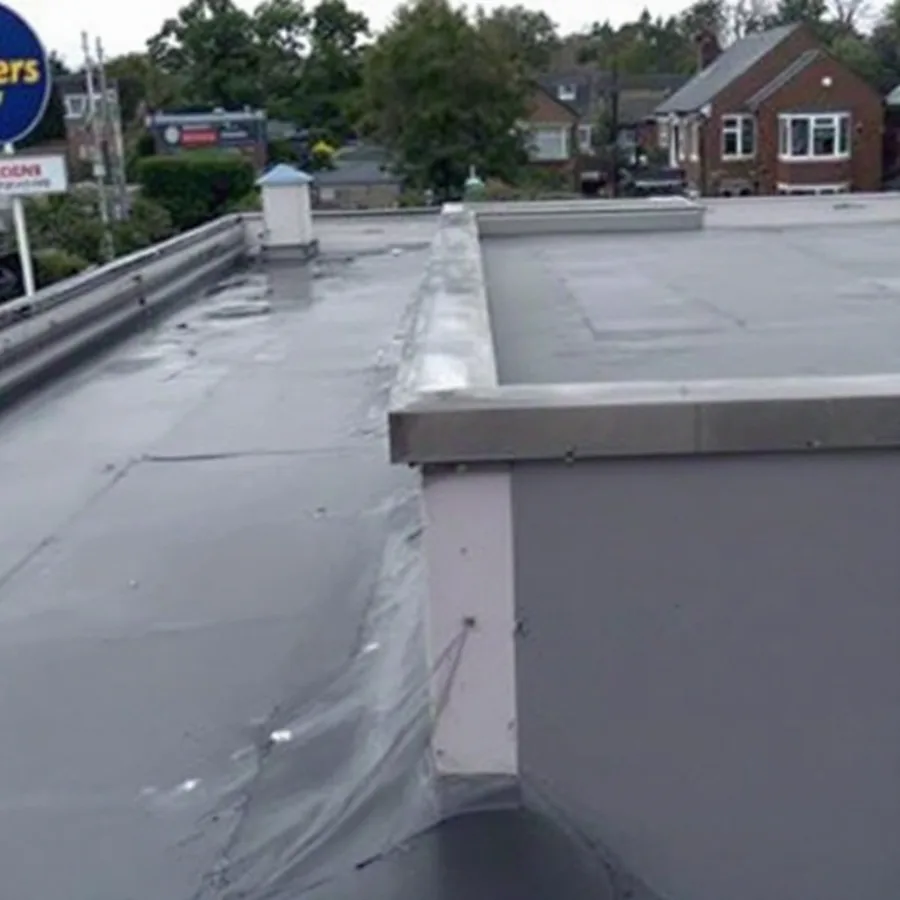
A flat roof is not flat
Every low-slope roof is built with a fall towards drains or scuppers, a slight, deliberate slope you cannot see from the ground. It is created either by the structure itself or by tapered insulation laid on top of it. When that fall is inadequate, has settled, or was never right, water stands.
The two-day rule
The working definition of ponding used across the trade is water still standing 48 hours after rain stops, in normal drying weather. Anything within that window is drainage doing its job. Anything beyond it is a defect, and it is a defect in the slope or the drains rather than in the surface.
What is considered a low slope roof, in numbers
The thresholds are not opinions, they are written down. The energy code defines a low-sloped roof as one with a slope of less than two units vertical in twelve horizontal, and the residential code makes the same line practical from the other side: asphalt shingles are permitted only at two in twelve or steeper. Between two and four in twelve, shingles are allowed but the code requires a doubled underlayment beneath them, a nineteen-inch starter strip and thirty-six-inch sheets lapped nineteen inches, so that every point of the roof has two plies under it. Above four in twelve, one layer lapped two inches is enough. The industry line sits slightly higher than the code line: the National Roofing Contractors Association treats anything at or below three in twelve as low slope, and recommends four in twelve or steeper for shingles, well above the code floor.
The minimum fall a flat roof must have
Every membrane system the code recognises, built-up, modified bitumen, EPDM, TPO, foam and liquid-applied alike, carries the same minimum design slope of a quarter unit vertical in twelve horizontal, which is two percent, or a quarter inch of fall per foot of run. Coal-tar built-up is the single exception at half that. Below that line the roof enters a category the code names outright: a susceptible bay, defined as a slope under a quarter inch per foot, or a roof holding water while the secondary drains work and the primary ones do not. Roofs in that category have to be evaluated for ponding instability, the structural failure mode where standing water deflects the deck, which lets more water collect, which deflects it further.
Two days is the code’s own number
The forty-eight hour rule above is not a rule of thumb someone invented. Positive roof drainage is a defined term in the building code, and the definition is drainage of the roof within forty-eight hours of precipitation, allowing for deflection of the structure. Worth knowing precisely: the codes define the term and require a minimum design slope, drains at each low point unless the roof drains over its edges, and secondary overflow drains or scuppers wherever a parapet could trap water, overflow drains set two inches above the low point, or scuppers three times the drain size with an opening at least four inches tall. What no code section does is state a blanket ban on standing water. Positive drainage is what the NRCA recommends and what a competent roofer builds, and the number inside the code’s own definition of it is two days.
What standing water does
It magnifies ultraviolet damage, it grows algae and holds debris, it adds real weight, water is about five pounds per square foot per inch of depth, and a broad shallow pond weighs more than people expect, and it finds every marginal seam by simply having time. It also freezes, and ice moves. Hail is a separate question on a membrane roof and it does not read like hail on shingles, that is covered in our guide to storm and hail damage.
What sits under the membrane, and why it decides more than the membrane
A flat roof is a stack: deck, insulation, membrane. The insulation is where the fall usually comes from, where the energy performance lives, and where a wet roof does its real damage. The three rigid boards in use are expanded polystyrene at roughly R-3.8 to R-4.4 per inch, extruded polystyrene at about R-5, and polyisocyanurate at R-6.5, the highest per inch, and the usual choice above a roof deck.
Polyiso carries a caveat the label does not explain. Its published value is a long-term figure, a fifteen-year time-weighted average that approximates the R-value after five years of ageing, because the blowing gas in the closed cells diffuses out and is replaced by air. The industry cut that design number from 6.0 to 5.7 per inch when the product standard changed, and the National Roofing Contractors Association went further: it rejects the long-term figure as a design basis altogether and publishes a single in-service value of R-5.0 per inch. In their own worked example, four inches of polyiso advertised as R-25 delivers about R-20 in service. If you are buying insulation to a target, buy it against five per inch, not six and a quarter.
Tapered insulation, the actual fix for a roof that ponds
Rigid foam is also manufactured on a slope. Tapered boards come in stock falls of an eighth, a quarter and a half inch per foot, with custom slopes down to a sixteenth, and they build a drainage plane on top of a dead-flat deck. This is the standard answer to ponding precisely because code asks for a quarter unit in twelve and an old deck rarely has it. It is not cheap: the defensible way to state the premium is proportional, roughly sixty to eighty percent more than flat foam of the same thickness. Per-square-foot figures circulate online, but no code body, manufacturer or federal source publishes one, so we will not quote one as though it were measured.
What wet insulation actually costs
This is the part that turns a coating decision into an arithmetic problem. Saturated insulation loses up to eighty percent of its insulating value, because water displaces the trapped air and gas that do the insulating. Free water weighs about five pounds per square foot per inch, so two inches of saturated board adds eight to ten pounds per square foot to a structure designed without it. That weight deflects the deck permanently, the deflection makes the roof pond more, and the pond wets more insulation, the circle closes on itself.
Then the deck goes. Sustained moisture delaminates plywood and rots plank decking from the top face down, so the ceiling below can look untouched while the deck above is failing; on a concrete deck the water reaches the reinforcing steel and corrodes it. And a vapor retarder does not save you: once the insulation above it is wet and no longer insulating, the retarder itself drops below dew point and condensation forms on the deck. The NRCA’s conclusion is blunt and worth repeating to anyone quoting a coating over a wet roof, wet insulation has to come off, not be roofed over.
How to check it yourself
Two days after rain, look at the roof. Dirt rings, algae patches and a lighter chalky stain mark where water sits even when it is dry. If those marks are away from the drains, the fall is wrong. That is a conversation about tapered insulation or added drainage, not about which membrane to buy, and a contractor who quotes only for a new membrane on a ponding roof is quoting for the same failure again.
Where It Goes Wrong
Where flat roofs actually leak
Almost never in the middle. The membrane itself is the most reliable part of the assembly; everything that interrupts it is not.
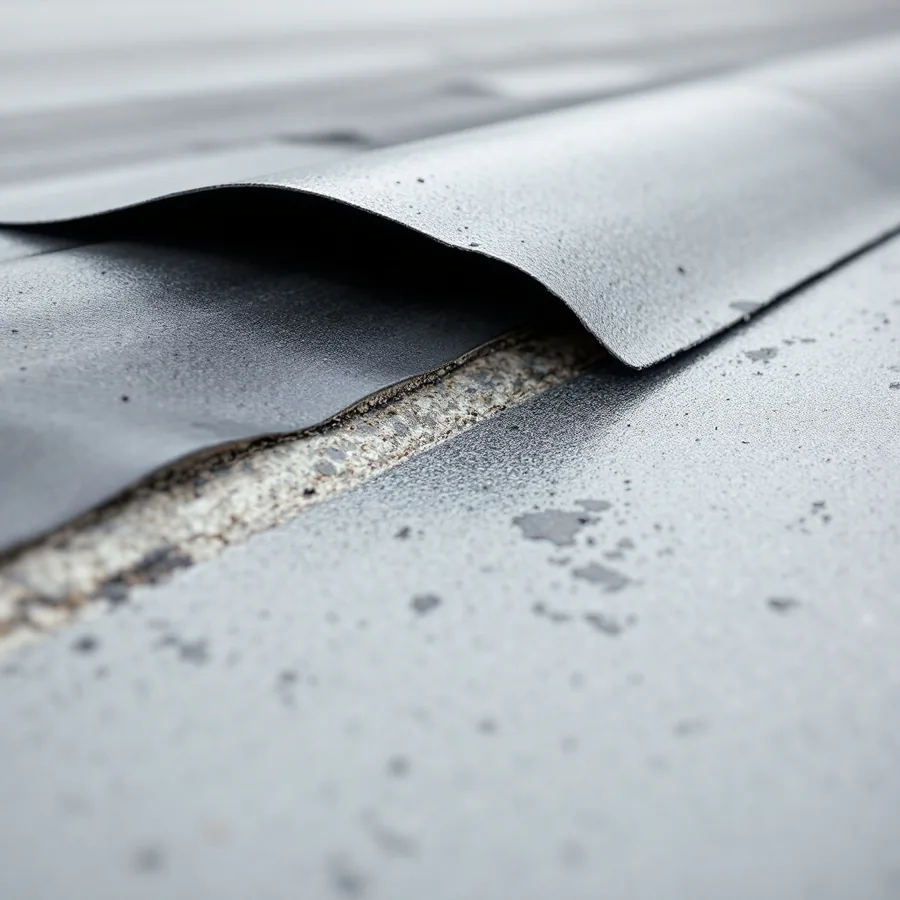
Seams
The single commonest failure. TPO welds and EPDM tapes are strong when done right and are the first thing to check when they are not. On an older EPDM roof, seam adhesive is the component most likely to have given up while the sheet itself is still sound.
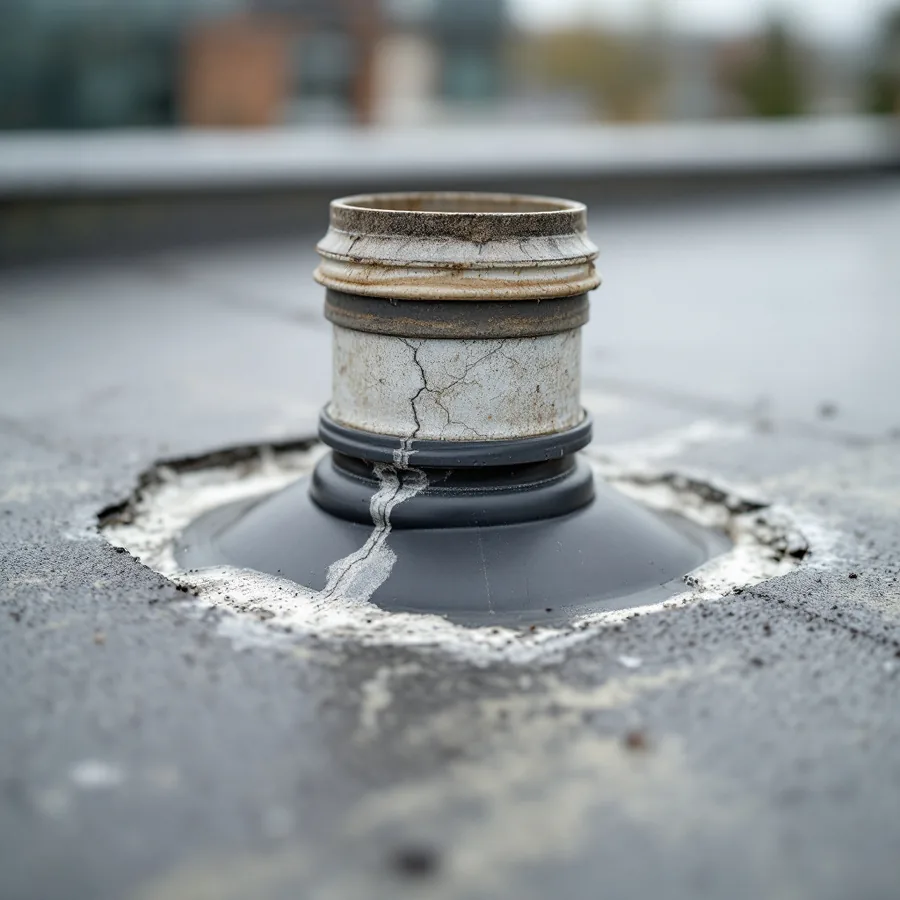
Penetrations
Vent pipes, extract fans, aerials, condenser feet, anything bolted through. Each is a hole with a boot or flashing around it, each ages faster than the membrane, and each one added after installation is a new opportunity.
Edges and terminations
Where the membrane turns up a parapet or stops at a drip edge. Wind gets under a loose termination and peels; water gets behind a failed one and travels.
Drains and scuppers
Blocked drains are a maintenance failure that looks like a roofing failure. The membrane around a drain is also the lowest point of the roof, which is the worst place to have a marginal detail.
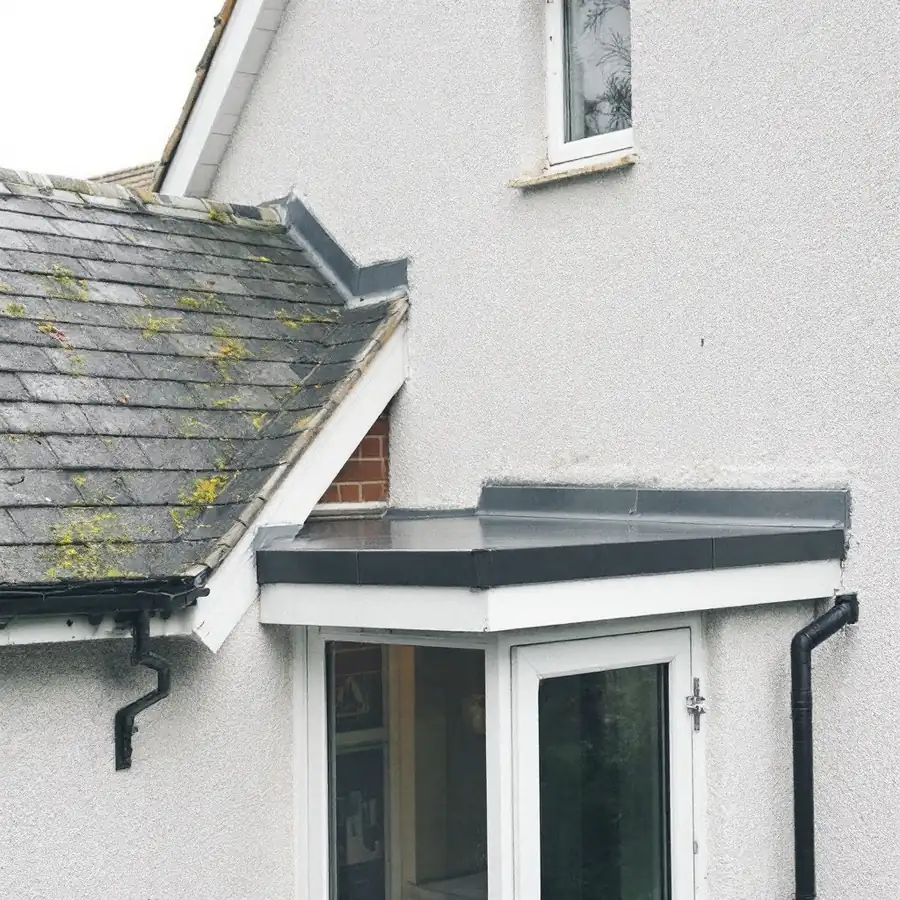
The junction with the main roof
Where a flat porch or addition meets the pitched roof or a wall. Two systems, two movements, one joint, and the place where the most expensive leaks on ordinary houses begin.
Foot traffic
Flat roofs get walked on because they can be. Repeated traffic on the same route abrades the surface, and a roof used as a terrace without walkway protection wears where people stand.
Water on a flat roof can travel a long way between the membrane and the deck before it appears inside, which is why the wet patch below is often nowhere near the failure above. The general method for tracing a leak is on our roof leak page.
The Stack And The Holes In It
Flat roof construction, and everything bolted through it
Under the membrane is a structure, and through the membrane are the openings. Both get decided by other trades, the framer years ago, the solar installer last spring, and both are where a roof that was fine becomes a roof that leaks.
What a flat roof is built from
From the bottom: joists or flat roof trusses spanning the room below, a deck of plywood or OSB fixed across them, then insulation, then the membrane. The two ways to arrange the middle have names. A warm roof puts the insulation above the deck, so the deck stays warm and dry and there is no ventilated cavity; a cold roof puts insulation between the joists and relies on a vented air space above it. On a low-slope residential roof the warm build-up is the one that behaves, because the ventilated cavity in a shallow flat roof is usually too thin to move air. If the deck itself has gone, that is structural work rather than roofing, and it moves the job into a different bracket, see what drives roof replacement cost.
The residential code permits unvented roof assemblies, with conditions: the space must sit entirely inside the building’s thermal envelope, no Class I vapor retarder on the ceiling side, and in the cold climate zones the air-impermeable insulation itself has to act as a Class II vapor retarder or carry one against its underside. Those conditions are what makes an unvented flat roof safe rather than merely common.
Flat roof ventilation, and when adding vents makes it worse
“Flat roof vents” is a phrase people search after a damp patch appears, and on a compact warm roof it is the wrong instinct. That assembly is unvented by design: there is no cavity for air to cross, so a vent cut into it adds a penetration and a flashing detail without creating a path. If moisture is appearing inside a flat roof, the question is where it entered and whether the insulation is wet, not how to let it out. On a genuine cold-roof build-up with a real air space, ventilation matters and the openings belong at the perimeter where the cavity actually runs.
Skylights on a flat roof
Here the code is specific and worth quoting to whoever is quoting you. A unit skylight on a roof pitched at less than three units in twelve must sit on a curb extending at least four inches above the plane of the roof, unless the manufacturer’s own instructions say otherwise. That is why deck-mounted skylights, the flush-looking ones, belong on pitched roofs: on a low slope, water arrives at the frame instead of running past it. On a flat roof the skylight is a small building sitting in the membrane, and the flashing up the curb is what keeps it dry.
Gutters, scuppers and drains
Water leaves a flat roof in one of three ways, and which one you have determines what fails. Over the edge into a gutter, the simplest and the commonest on a house extension. Through a scupper, an opening in a parapet. Or down an internal drain at a low point in the field of the roof. Code requires drains at each low point unless the roof sheds over its edges, and where a parapet could trap water it requires secondary overflow provision, an overflow drain set two inches above the low point, or a scupper three times the drain size with an opening at least four inches tall. On a house that overflow is not bureaucracy: it is the thing that tells you the primary drain has blocked, by putting water on the ground instead of on the ceiling. When it does show up on a ceiling instead, tracing a roof leak is its own problem, and on a flat roof the wet patch is rarely under the failure.
Repair Or Postponement?
Roof coatings, and when they are honest
Coating a flat roof is either a genuine extension of its life or an expensive way to hide a problem for two years. The difference is entirely about what is underneath, and it is checkable rather than a matter of opinion.
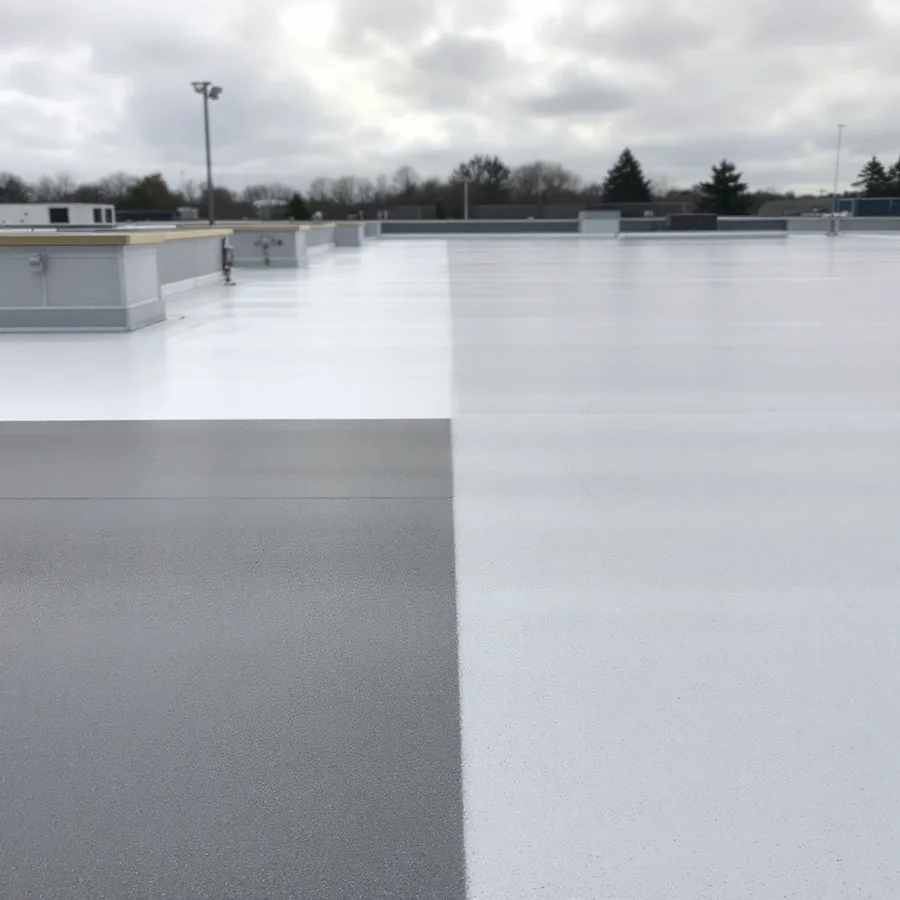
When a coating is a real repair
The membrane is intact and dry underneath, the failures are surface-level ageing rather than breaches, the drainage works, and the seams are sound. In that state a silicone or acrylic coating adds a genuine layer of protection, reflects heat, and can add years for a fraction of a replacement.
When it is postponement
Wet insulation under the membrane. A coating seals the water in and the assembly keeps rotting invisibly, and the next contractor prices a tear-off of a roof that now has a coating on it too. Ponding that has not been addressed. Seams that have opened. In all of those a coating buys time and costs more later.
How to tell which you have
A moisture survey. A meter, or an infrared scan of the roof after sunset when wet areas hold heat longer than dry ones. That survey is the difference between a coating being a good decision and a bad one, and it costs a fraction of either outcome. A contractor proposing a coating on a roof nobody has tested is proposing a guess.
Can you paint a TPO roof?
You coat it; you do not paint it. A coating formulated for roofs is a different product from paint, and TPO specifically resists the ordinary ones: coatings that bond readily to metal or to modified bitumen may not bond to a thermoplastic sheet at all without cleaning and a compatible primer. Which coating depends on the same thing everything else on this page depends on. Silicone absorbs very little water and outperforms the alternatives where water sits; acrylic is cheaper and weathers well but, in the trade’s own words, “when regularly exposed to ponding water, they do not perform as well long-term as silicone coatings.” And if the membrane is still inside a manufacturer’s warranty, ask the manufacturer before the coating goes on rather than after.
The industry publishes the caveat more bluntly than most contractors will say it out loud: coatings are not a substitute for proper roof system design and drainage, and they are not a fountain of youth for roof substrates that are beyond the end of their life cycles. A coating over a sound, dry, draining roof buys real years. Over a roof that ponds, it is paint on a drainage problem.
The moisture survey, and what it can actually tell you
Whether the insulation under the membrane is wet is measurable rather than arguable, and there are three established ways to measure it: infrared thermography, nuclear, and electrical impedance, the one usually called capacitance, covered by its own ASTM practice for moisture surveying with nondestructive impedance scanners. The limit worth knowing is that none of them sees water directly; they see a proxy. The infrared standard requires the scan to be verified by invasive testing, core cuts, or cores plus probe readings, and non-invasive meters are meant to complement that verification, not replace it. So a survey that produces a colored map and no core cuts has produced a hypothesis. Ask for the cores, and see what a roof inspection should actually include before you pay for one.
What to ask before agreeing
Has the insulation been checked for moisture, and how. What happens at the seams and penetrations, which is where the coating has to bond hardest. What the warranty covers and whether it survives the next owner. And what this does to the cost of the eventual replacement, because a coated roof is not cheaper to remove.
The Cheapest Thing Here
Flat roof maintenance
A pitched roof is largely self-cleaning. A flat one is not, and the difference between a flat roof that reaches its service life and one that does not is mostly a few hours a year.
Clear the drains, twice a year
Autumn and spring, more under trees. A blocked drain turns a roof designed to shed water into one holding it, and everything on this page that goes wrong starts there.
Look after rain, not on a schedule
Two days after heavy rain is the single most informative moment: anything still standing tells you about the fall, and it is invisible on a dry day.
Walk the seams and edges once a year
Carefully, and not on a hot day when the membrane is soft. You are looking for lifted seams, cracks at terminations and anything that has been added by another trade since last year.
Keep the debris off
Leaves and grit hold moisture against the membrane, block drains, and hide the surface you are trying to inspect. Sweeping is maintenance, not tidiness.
Control what gets bolted on
Satellite installers, solar crews and HVAC technicians all penetrate roofs. Every new fixing is a new potential leak, and the person who made it is not the person who warranties the roof.
Keep the records
Dated photographs after each check. On a flat roof the argument about whether damage is sudden or gradual is harder than on a pitched one, and a photographic history is what settles it.
Before You Put Anything On It
Solar and other rooftop equipment
A flat roof is the easiest place to mount solar and the easiest place to ruin a membrane doing it.
Ballasted or penetrating
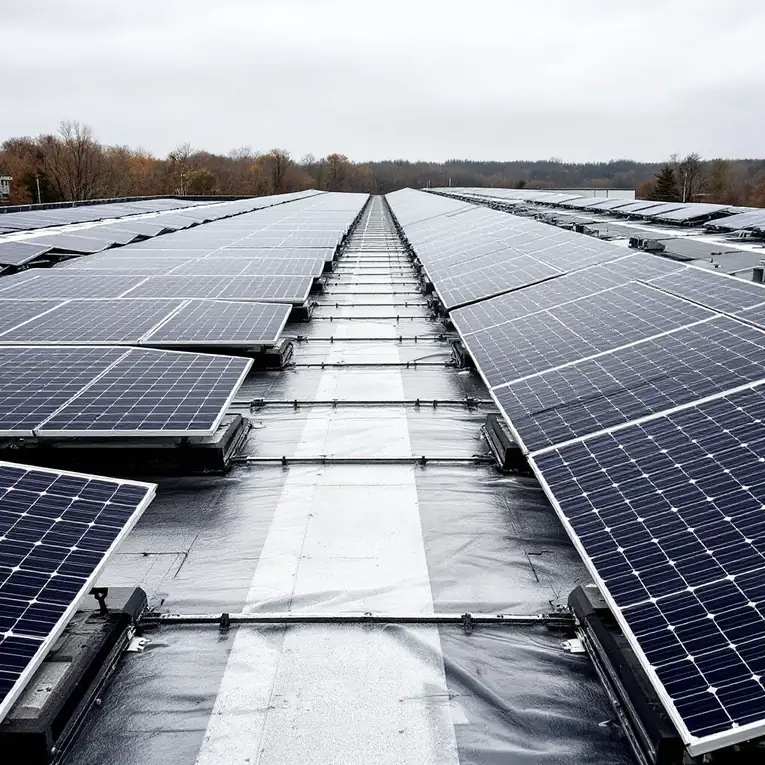
Ballasted systems sit on weighted trays and never pierce the membrane, which is much the safer approach on a flat roof, provided the structure can carry the additional load, which is a question for an engineer rather than for the solar installer. Penetrating mounts are lighter and every one of them is a hole that has to be flashed correctly and stay that way.
The timing question that saves money
If the roof has fewer than about ten years left, replace it before the array goes on. Removing and refitting panels to reroof underneath costs a meaningful fraction of the array, and it is entirely avoidable by doing the two jobs in the right order.
Who warranties what
Establish this in writing before anybody drills. A roofing warranty frequently excludes damage from work by other trades, and a solar installer’s warranty usually covers their mounts rather than your roof. The gap between those two documents is where the argument happens.
Access and airflow
An array covers the roof you are supposed to inspect. Leave walkways between rows, keep clearances at drains and seams, and remember that debris collects under panels where nobody sweeps.
Where This Page Stops
What we are not covering, and why
Two boundaries worth stating plainly rather than letting you discover them.
Large commercial systems
Warehouse and industrial roofs, roof-mounted plant, maintenance contracts and specification work are a different trade with different economics and different contractors. Everything here is written for the flat sections of ordinary houses.
Installation instructions
We do not publish how to weld a seam or torch a roll, because we are a referral service rather than a training provider, and because flat roofing is the discipline where installation quality most determines the outcome.
Product recommendations
We name the systems, not the brands. Ranking manufacturers honestly would require testing we have not done, and everything else is an opinion in the costume of research.
Straight Answers
Flat roof questions, answered
What is TPO roofing?
A single-ply thermoplastic membrane, usually white, whose seams are welded together with hot air rather than glued. The weld is its main advantage: done properly it is as strong as the sheet. The white surface reflects solar heat, which is worth real money in a hot climate and very little in a cold one. Installed cost runs roughly $7 to $12 per square foot with a service life commonly quoted at 20 to 30 years.
TPO or EPDM, which is better?
Neither, in the abstract. In a cold or mixed climate black EPDM is the safer default: it handles thermal movement, absorbs winter heat, has a fifty-year track record and any flat roofer can repair it. In a hot sunny climate white TPO earns its premium by reflecting solar gain. EPDM is also cheaper, at $5 to $9 per square foot against $7 to $12. The climate answers this question more reliably than any product comparison.
How much does a flat roof cost to replace?
Roughly $5 to $14 per square foot installed depending on the system, which puts a typical 1,500 square foot residential flat roof somewhere between $7,500 and $21,000. EPDM sits at the lower end, PVC at the upper. Tapered insulation to correct drainage, if the roof needs it, is additional and is often the difference between a quote that solves the problem and one that does not.
How long does a flat roof last?
EPDM 25 to 35 years, TPO 20 to 30, modified bitumen 15 to 25, with a large asterisk. Those are figures for a roof that drains properly and has its drains cleared. On a roof that ponds, every one of those numbers is optimistic, and annual inspection with drain maintenance genuinely moves the outcome more than the choice between systems does.
Is standing water on a flat roof normal?
Briefly after rain, yes. Still standing 48 hours later in normal drying weather, no, that is ponding, and it is a defect in the fall or the drainage rather than in the membrane. It is worth identifying before a replacement, because a new membrane laid over the same slope will sit under the same water.
Is a roof coating worth it?
It depends entirely on whether the insulation underneath is dry, which is checkable with a moisture meter or an infrared scan after sunset. On a sound, dry roof with intact seams, a coating is a genuine extension of life for a fraction of a replacement. Over wet insulation it seals the water in, the assembly keeps deteriorating unseen, and the eventual tear-off costs more. A coating proposed without a moisture survey is a guess.
Can I put solar on a flat roof?
Yes, and it is easier than on a pitched roof. Ballasted systems sit on weighted trays without piercing the membrane, subject to the structure carrying the load. Penetrating mounts are lighter and every fixing is a hole to flash. The important decision is timing: if the roof has under about ten years left, replace it first, because removing and refitting an array later costs a meaningful share of the array.
Why does my flat roof leak in one spot but not another?
Because water travels between the membrane and the deck before it finds a way through, so the wet patch inside is often a long way from the failure above. Flat roofs also fail at seams, penetrations, edges and drains rather than in the field, and those are all places where a small defect produces a leak somewhere else entirely.
Do you install flat roofs?
No. We are a matching service. We publish research on roofing and storm damage, including our own aggregation of two decades of National Weather Service records, and we connect homeowners with independent licensed and insured roofing companies. We do not install, inspect, repair, or adjust claims.
Where This Comes From
Sources
- Moisture, drying and mold after water intrusion, US EPA, Mold Cleanup in Your Home.
- Homeowner policy structure, sudden damage against wear, Texas Department of Insurance home insurance guide.
- County hail and wind records, our own aggregation of the NOAA NCEI Storm Events Database, 2006 to 2025.
- Damaging straight-line winds, NOAA National Severe Storms Laboratory.
- Contractor conduct after storms, Texas Department of Insurance and Utah Insurance Department.
- Roof slope, drainage and underlayment requirements, International Residential Code §R905 and International Building Code Chapter 15, read through state adoptions on UpCodes, with slope guidance from NRCA.
- Skylight curbs, roof ventilation and drainage, International Residential Code §R308.6.8 (curbs for skylights), §R806.5 (unvented assemblies) and §R903.4 (drainage and overflow).
- Coatings under ponding water, and what a coating cannot fix, Professional Roofing (NRCA).
- Insulation R-values per inch, US Department of Energy; in-service design values and the cost of wet insulation, National Roofing Contractors Association technical guidance.
- Single-ply field performance over ten years, WSRCA TPO Weathering Farm (blind-labeled, 16 membranes, 4 climates), and IIBEC technical advisories on TPO formulation history.
- Spray foam roof service life and recoating, RICOWI field guide published by IBHS.
- Storm preparedness, Ready.gov.
Our editorial standards explain how we source and check numbers. Cost and service-life figures are national market ranges observed across published contractor pricing guides and cross-checked between independent sources, not our estimate and not a quote; we are a referral service, not a roofing contractor. Service life on any flat roof depends more on drainage and maintenance than on the system chosen. Last updated .
Before you call anyone
The independent match — we are paid for the introduction, not for the size of your job
Most roofing advice is written by the company that wants to do the work. That is not a failing of the people who read it; it is a defect in who is talking. The estimate, the diagnosis and the invoice come from one party, and no amount of care on your side fixes that.
We are built the other way round. We do not repair roofs and we do not sell materials, so the payment reaches us when you are connected to a licensed, insured roofing company — the same amount whether your roof needs an eight-hundred-dollar repair or a twenty-thousand-dollar replacement. Nobody here has a reason to talk you into the larger number. How we make money and how we research are both written down.
Waiting is the one thing that actually costs money. An insurance clock runs from the date of the damage rather than the date you noticed it, and damage that sits through a season stops reading as sudden and starts reading as wear — which is the exclusion that pays nothing. And if your roof is simply worn out, say so on the call. No claim will pay for age, we will tell you that plainly, and you will have lost nothing but the call.