Roof Lifespan
How long does a roof last? The material sets the range. Your county decides where in it you land.
Every page that answers this question gives you the same table: asphalt twenty to thirty, metal thirty to fifty, slate a hundred. The table is not wrong, it is just incomplete, because the same shingle in two American counties is not doing the same job. We aggregated twenty years of NOAA storm records for all 3,199 US counties to put a number on that difference, and it is larger than the difference between materials.
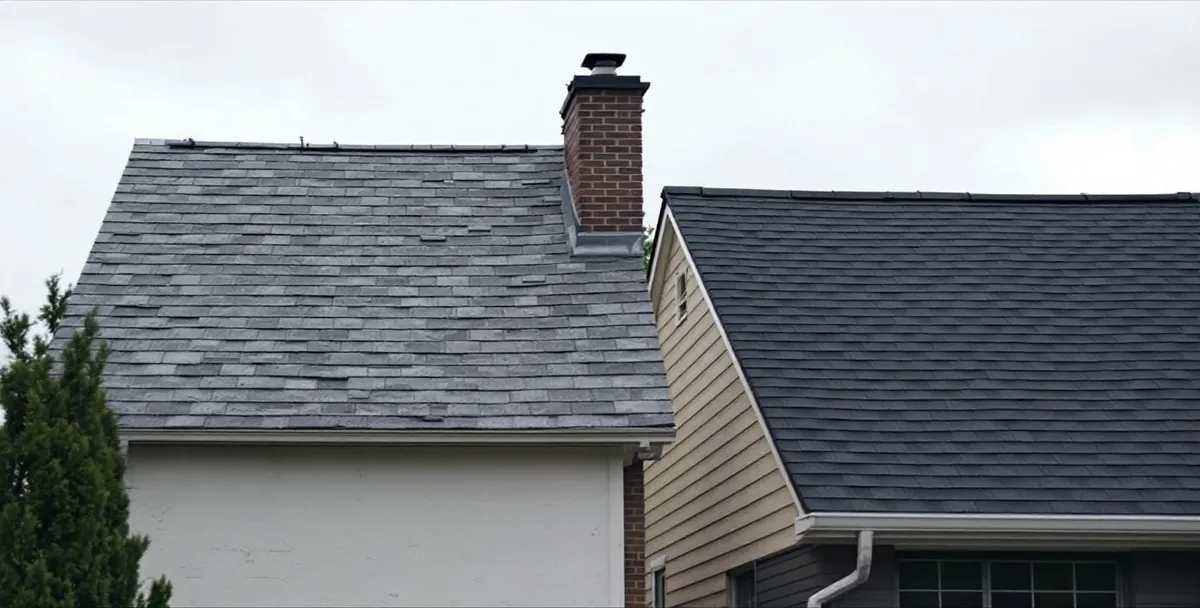
The honest answer, and why every table you have seen gives you a range
A roof lasts as long as the weakest part of it, and that is rarely the part named on the packaging. Asked how long a roof lasts on a house, the useful reply has three variables: what it is made of, what weather it stands in, and whether it was installed and ventilated properly. Published life expectancy figures hold the first one fixed and quietly assume the other two are average.
So the ranges below are real, and you should read them as a starting position rather than a forecast. A typical residential roof in the United States is asphalt shingle, and asphalt normally lasts twenty to thirty years. Whether yours reaches the top or the bottom of that is decided by things this page can show you.
- How long does a roof usually last? Twenty to thirty years for the asphalt shingle on most American houses, thirty to seventy for metal, far longer for slate and tile, with the caveat that the tile outlives the layer underneath it.
- What decides where you land? Exposure first, installation second, ventilation third. Our county data below quantifies the first one.
- When does the number stop mattering? The moment the roof shows the specific signs further down this page. An eighteen-year-old roof that is failing is older, in every way that counts, than a twenty-eight-year-old roof that is not.
Mechanism
What actually ends a roof, in the order it happens
The factors influencing roof lifespan are not a list of equals. They run in sequence, and knowing the sequence tells you what to look at in year twelve rather than year twenty-five.
One: the surface loses its armour
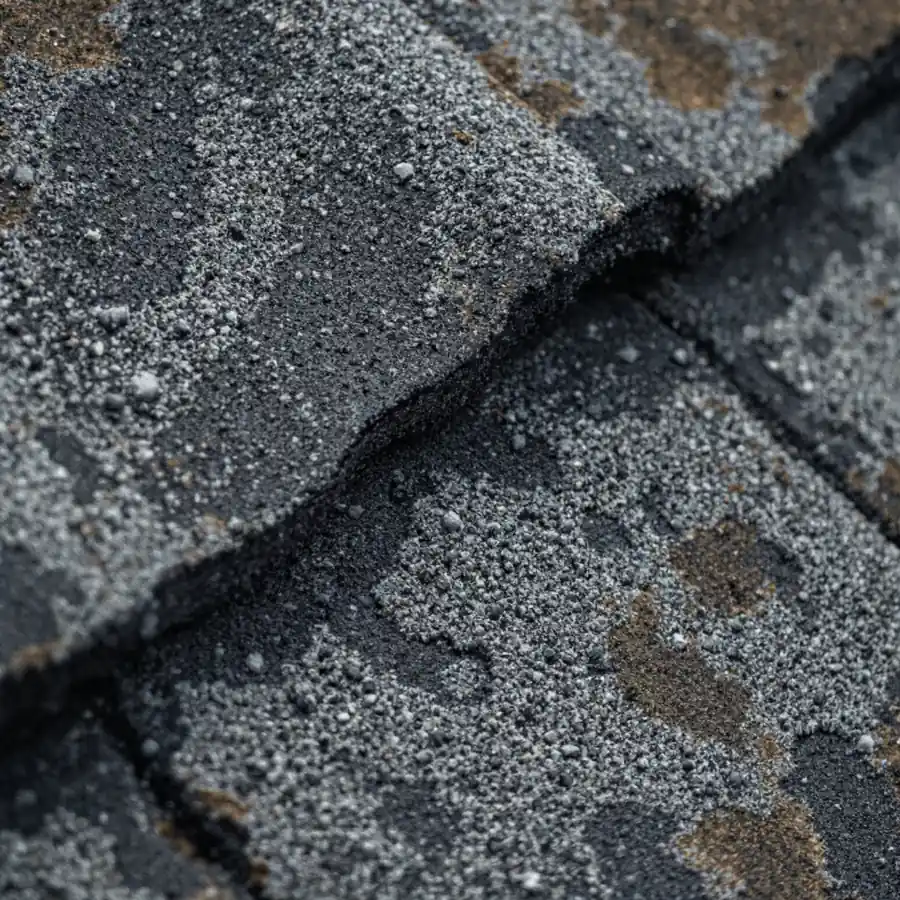
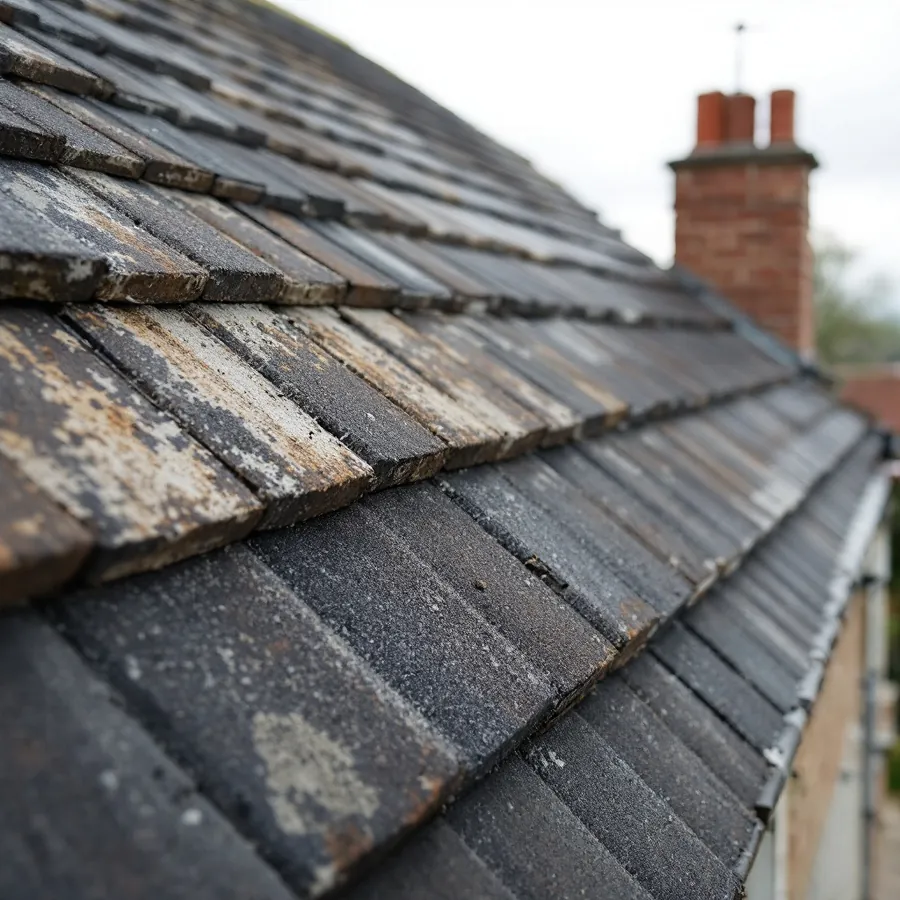
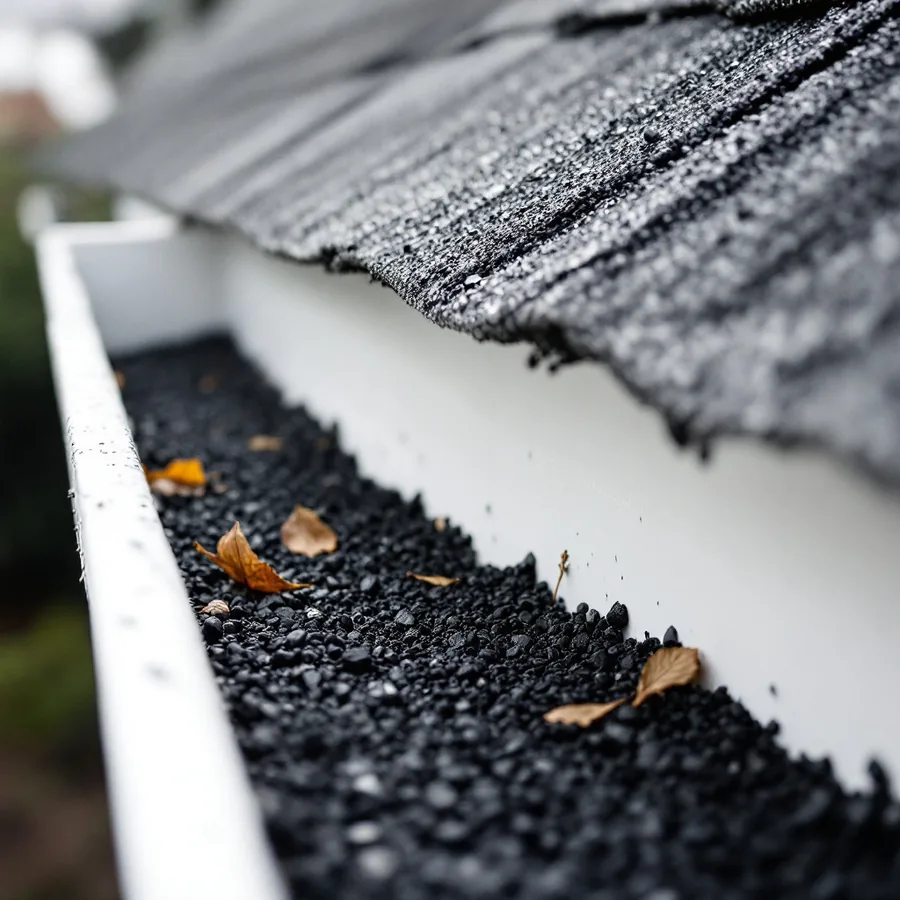
Asphalt shingles are a mat soaked in bitumen and covered in mineral granules. The granules are the sunscreen. Heat and ultraviolet light drive them off gradually and storms drive them off in batches, and every granule that ends up in the gutter exposes a little more of the bitumen to the sun that is destroying it.
Two: the seal strip stops sealing
Each shingle is glued to the one below by a strip of adhesive that softens in the sun and bonds. That bond is what makes a roof a single surface instead of a stack of tabs. It ages, and once it lets go, wind gets under the tab. A roof can lose its wind resistance years before it looks worn.
Three: the mat goes brittle
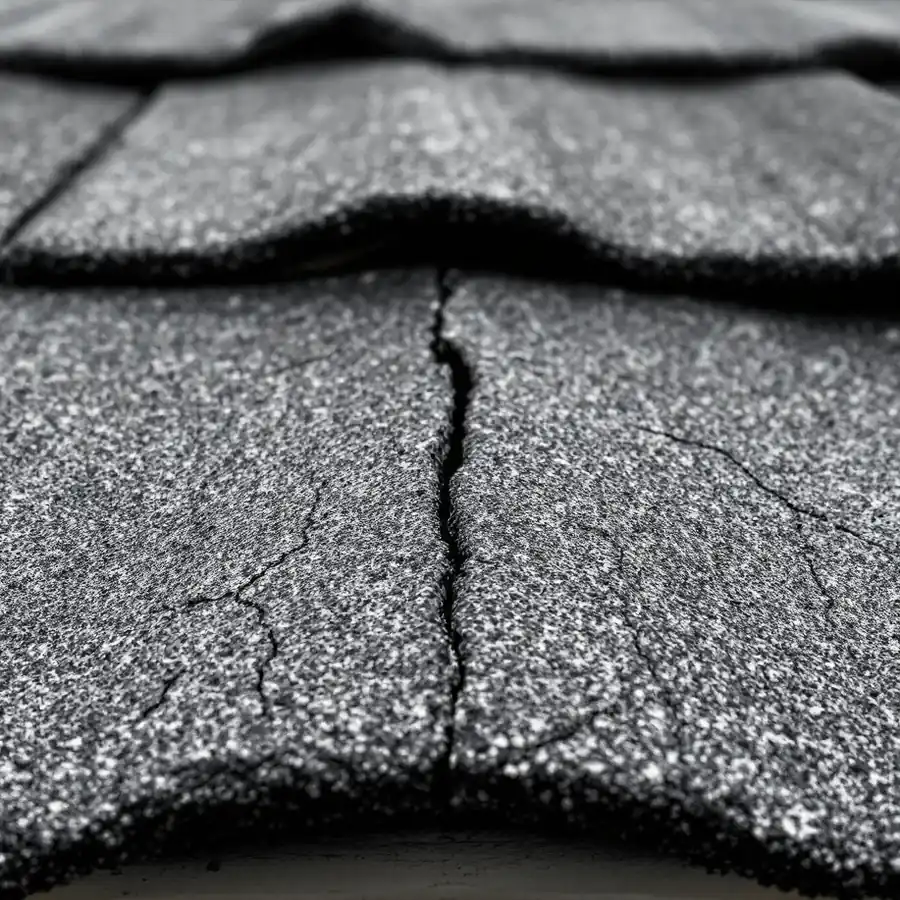
The shingle expands every morning and contracts every night. Thousands of cycles later the mat cracks rather than flexes, which is why old shingles break when you walk on them and why hail that would have bounced off a new roof cracks an old one.
Four: the details fail before the field
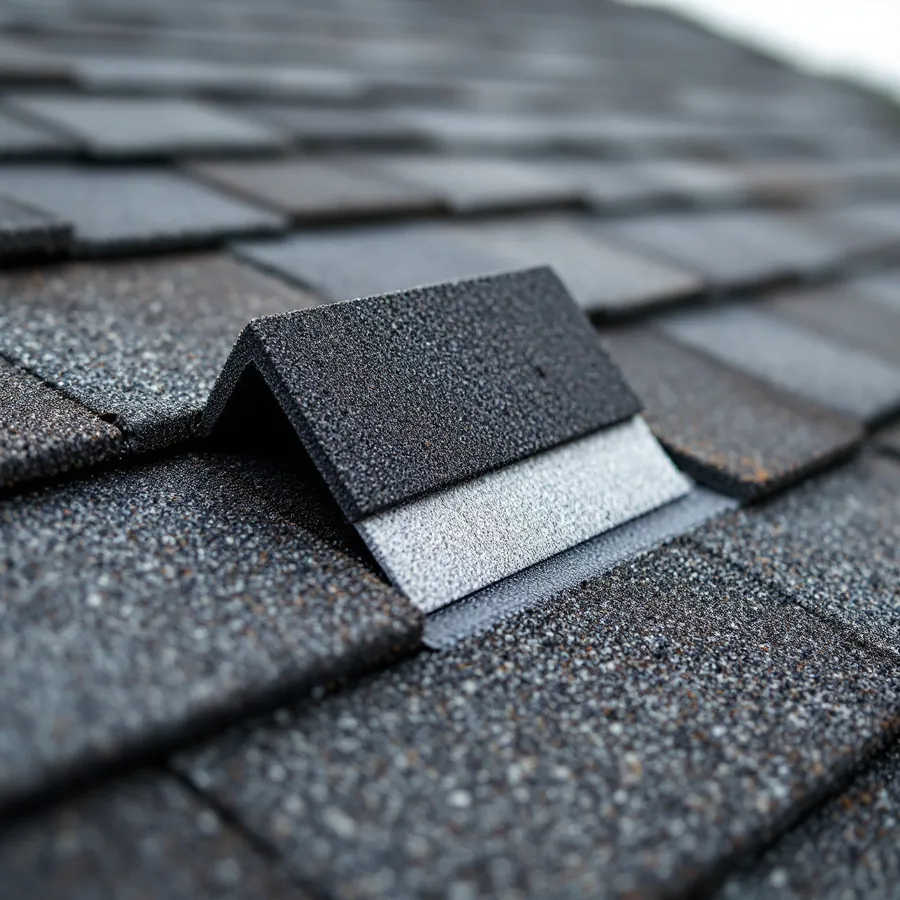
Most roofs do not leak in the middle. They leak where something interrupts them: a chimney, a vent pipe, a valley, a wall. Flashing and pipe boots have their own lifespans, often shorter than the shingles around them, and a roof can need attention at fifteen years in five specific places while the other ninety percent is sound.
Five: heat from below
A roof is cooked from both sides. ENERGY STAR describes the job of attic ventilation plainly: “natural air flow in a well-vented attic moves super-heated air out of the attic, protecting roof shingles and removing moisture.” An unvented or blocked attic runs the underside of the deck far hotter than the outside air, and every extra degree shortens the schedule above.
Our Own Count
Exposure: the number nobody in the results will show you
We took the NOAA storm archive for 2006 to 2025 and counted, for every county in the country, how many times hail of an inch or more was reported. That is the variable the published tables leave out.
An inch is not an arbitrary line. It is the National Weather Service threshold for a severe thunderstorm: “Hail 1 inch in diameter or larger.” It is also roughly where hail stops bouncing off an asphalt roof and starts bruising it.
| Where the county sits | Events of 1 inch or more in 20 years | What that means for a roof |
|---|---|---|
| Quietest, 143 counties | 0 | The published material range is realistic. Age and installation decide everything. |
| Median county | 29 | Roughly three severe hail events every two years somewhere in the county. |
| Top tenth of counties | 110 | Read the material range as a ceiling, not an expectation. |
| Worst county (El Paso, Colorado) | 998 on 263 separate days | Roof age here is measured in storms, not years. |
| Kansas, median county | 124 | The highest state median in the country. |
| California, median county | 2 | Sixty times less than Kansas. Same shingle, different job. |
What the spread means in practice
A thirty-year shingle is a product specification, not a promise about your address. In the quietest counties it is a reasonable expectation. In the top tenth it describes a roof that will more likely be replaced on an insurance claim than retired for old age. Both of those houses were sold the same shingle with the same number on the wrapper.
Reading your own state
State medians in our table run from 124 events per county in Kansas, through Oklahoma, Nebraska and the Dakotas in the eighties, down to single digits across the Pacific Northwest and 2 in California. Questions like how long a roof lasts in Florida, Texas, Arizona, Michigan, Ohio, Georgia, Indiana, Wisconsin, Minnesota or Washington state have the same shape of answer: take the material range, then move within it according to where your county sits.
Why we publish the count rather than a formula
Because a formula would be false precision. Exposure is measurable and we measured it. Installation quality and ventilation are not visible from any dataset, and they matter as much. What the count does is tell you which direction to adjust, and that is more than a national average can do.
Method: NOAA NCEI Storm Events bulk details, county-coded records only, window 2006 to 2025, counting events with a reported stone diameter of one inch or greater. 3,199 counties, 143 of them with no qualifying event. Reports are made by spotters and vary with population density, so a rural county is likely undercounted relative to a metro. Full method and limits: our county storm record and the data note in this page's repository.
Exposure, Part Two
Sun, salt and freeze: the exposure that never reaches a storm report
Hail is countable, which is why we counted it. Three other climate loads are just as real and leave no record, so they have to be reasoned about rather than tabulated.
Ultraviolet and heat, the desert case
In Arizona, Nevada and inland southern California the storm count is near zero and asphalt still ages quickly, because the load is ultraviolet light and surface temperature rather than impact. A dark roof in that climate runs extremely hot for months, the bitumen hardens, and the shingle reaches brittleness on schedule without a single hailstone. An average roof lifespan in Arizona is therefore a different conversation from one in Kansas, even though both climates are hard on roofs.
Salt and wind, the coastal case
Within a few miles of the ocean the variable is corrosion. Fasteners, flashings and any exposed metal age faster, which is why aluminium is the usual coastal metal and why a coastal roof often fails at its details while the field of the covering still looks new. Wind-driven rain also tests the underlayment in a way ordinary rain does not.
Freeze and thaw, the northern case
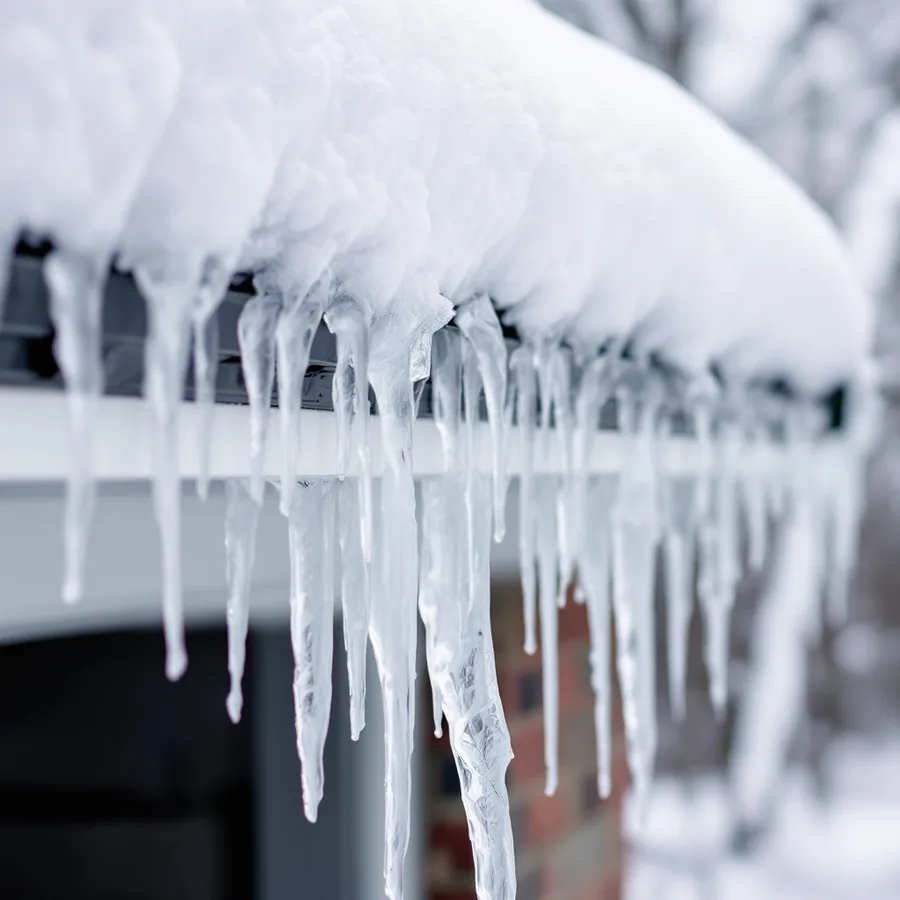
In Minnesota, Wisconsin, Michigan and upstate New York the load is cycling. Water gets into small gaps, freezes, expands and makes them bigger. Ice dams do the same at the eaves, which is the failure ENERGY STAR ties directly to attic temperature. A northern roof with balanced ventilation and an ice barrier at the eaves behaves very differently from one without, and the difference is measured in years.
Shade and humidity, everywhere
A slope that never dries stays biologically active. That is the mechanism the Forest Service describes for wood, and it applies in weaker form to asphalt, where moss lifts the edges of shingles and holds water against them.
Material
Asphalt shingles: twenty to thirty, and what moves you inside it
Composite, composition and asphalt are the same family of product under different regional names, and they cover most American houses.
The two grades, and why the cheaper one is not half price in years
Three-tab shingles are a single layer of mat. Architectural or dimensional shingles are two layers laminated together, which is why they look thicker and why they carry more weight per square. The laminated product resists wind and impact better and typically holds its granules longer. Three-tab life expectancy sits at the bottom of the published band, architectural at the top.
What pushes a composite roof to the short end
A hot climate and a dark colour. An attic with blocked or missing intake ventilation. Installation with the wrong nail count, or nails driven through the wrong part of the shingle. A second layer laid over an old roof, which traps heat against the new one. Any of those turns a thirty-year product into a twenty-year roof without a single storm.
What holds it at the long end
Ventilation that works, a light or reflective colour in a hot climate, and clean gutters so the eaves are not sitting wet. None of those are dramatic, and together they are worth more years than the upgrade from one shingle line to the next.
Material
Metal: thirty to seventy, and the two things that decide which
How long a metal roof lasts compared to shingles is not one comparison but two, because the systems fail differently.
Fasteners: concealed or exposed
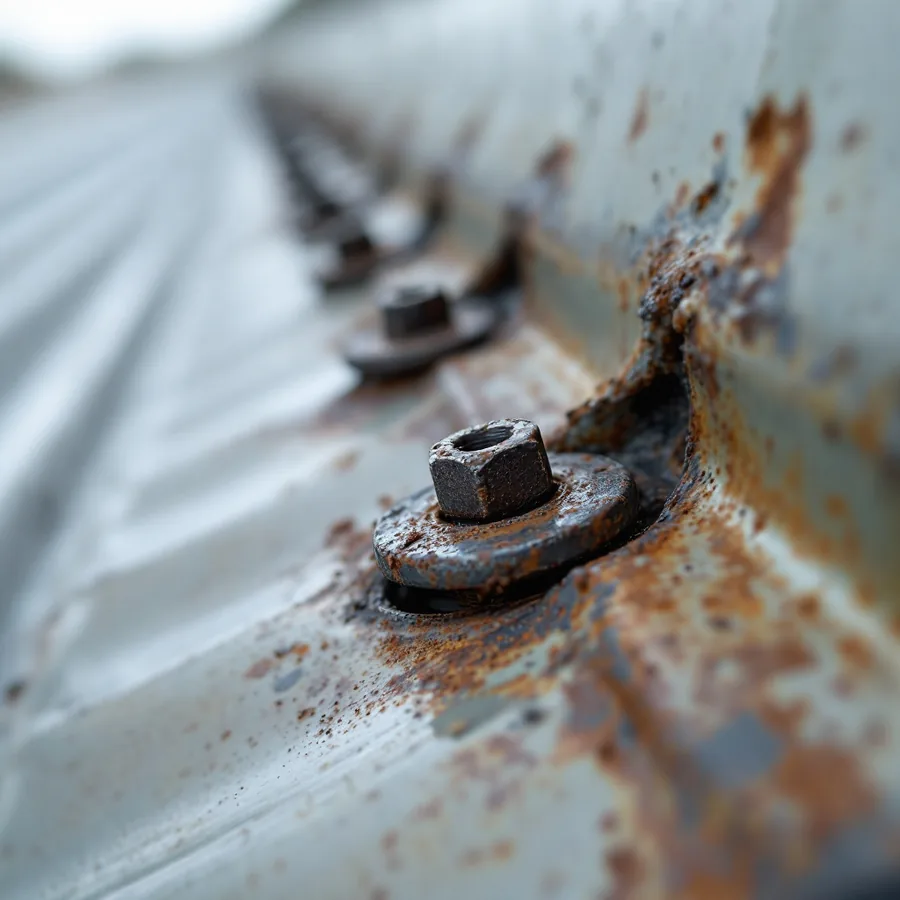
Standing seam hides its fasteners under the seam, so nothing that holds the roof down is exposed to weather. Corrugated and ribbed panels are screwed through the face, and each screw carries a rubber washer that dries out and shrinks. Those washers are the clock on an exposed-fastener roof, and they are replaceable, which is why such a roof can be maintained to a much longer life than its first set of screws.
Coating: what fades and what corrodes
Steel panels are galvanised or coated with a zinc-aluminium alloy, then painted. Colour fade and chalking are cosmetic and start on the sun-facing slope. How long the colour lasts on a metal roof is a paint question with its own warranty, separate from how long the panel lasts, and the two are frequently confused in sales conversations. Aluminium does not rust and is the usual choice on the coast. Copper is the outlier, measured in generations.
When to restore rather than replace
A metal roof whose panels are sound but whose fasteners and coating are tired is a candidate for restoration: new fasteners, sealed seams, a coating system over the top. That is a genuine option and also a genuine sales pitch, so the test is whether the panels themselves are straight, unperforated and still attached at the eaves.
Material
Tile and slate: the hundred-year materials and their real failure point
Clay, concrete, terracotta and slate outlast everything else on the roof, including the part that actually keeps water out.
The underlayment is the roof
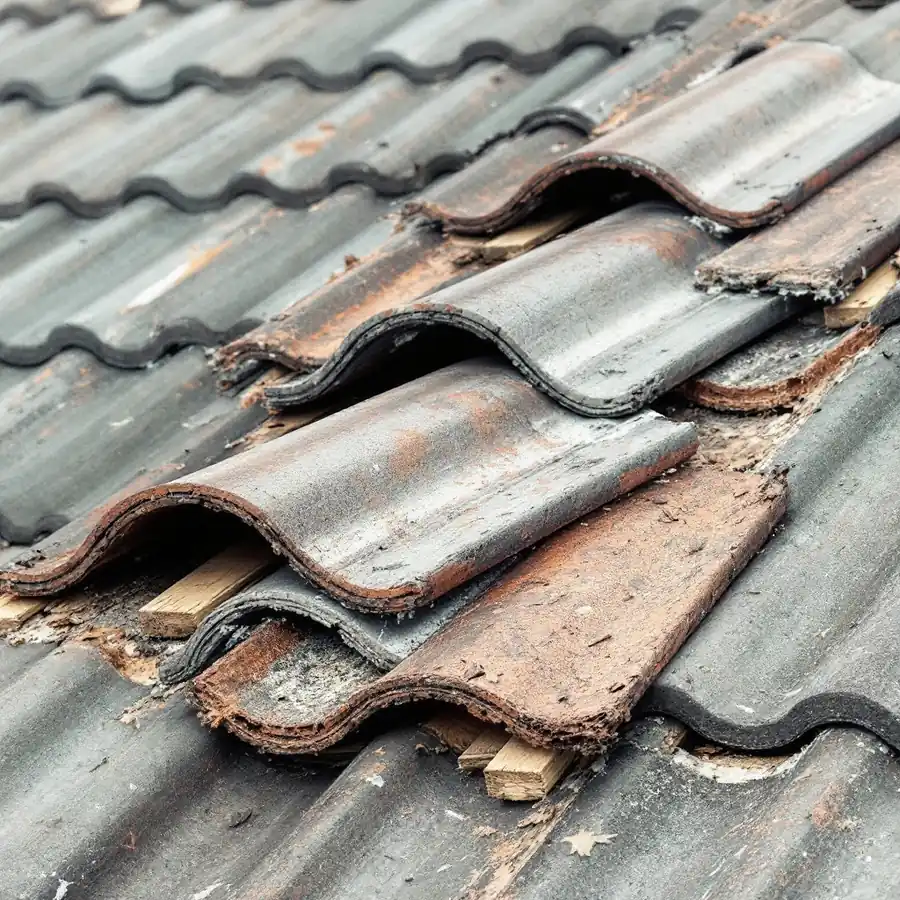
Tile sheds the bulk of the water and shields what is beneath it from sun. The membrane under the battens is what makes the assembly watertight, and it ages on a normal schedule of twenty to thirty years. That is why a tile roof lifespan of a century and a re-roofing project at year twenty-five are both true statements about the same house.
Breakage, and who causes it
Tiles break when people walk on them, and the people walking on them are usually installing something else: a satellite dish, solar panels, a new vent. Concrete tile is more forgiving than clay, Spanish and barrel profiles less forgiving than flat.
Slate, and the nails that hold it
Slate is stone, and stone does not wear out on a human timescale. The nails and the flashings do. A slate roof that starts shedding one slate a season is not worn out, it is telling you the fixings have reached the end of their life, and that is a repairable condition in the hands of someone who works on slate.
Material
Wood shake: the one where maintenance is the whole answer
Cedar has the widest gap between a well-kept roof and a neglected one of any material here.
The federal number
The Forest Products Laboratory of the USDA Forest Service puts it in one sentence: “Using preservative-treated or naturally durable wood for shingles should result in a roof free of decay for 25 to 30 years.” Note the condition attached to it. Durable species or treated wood, not any cedar.
What ends a cedar roof early
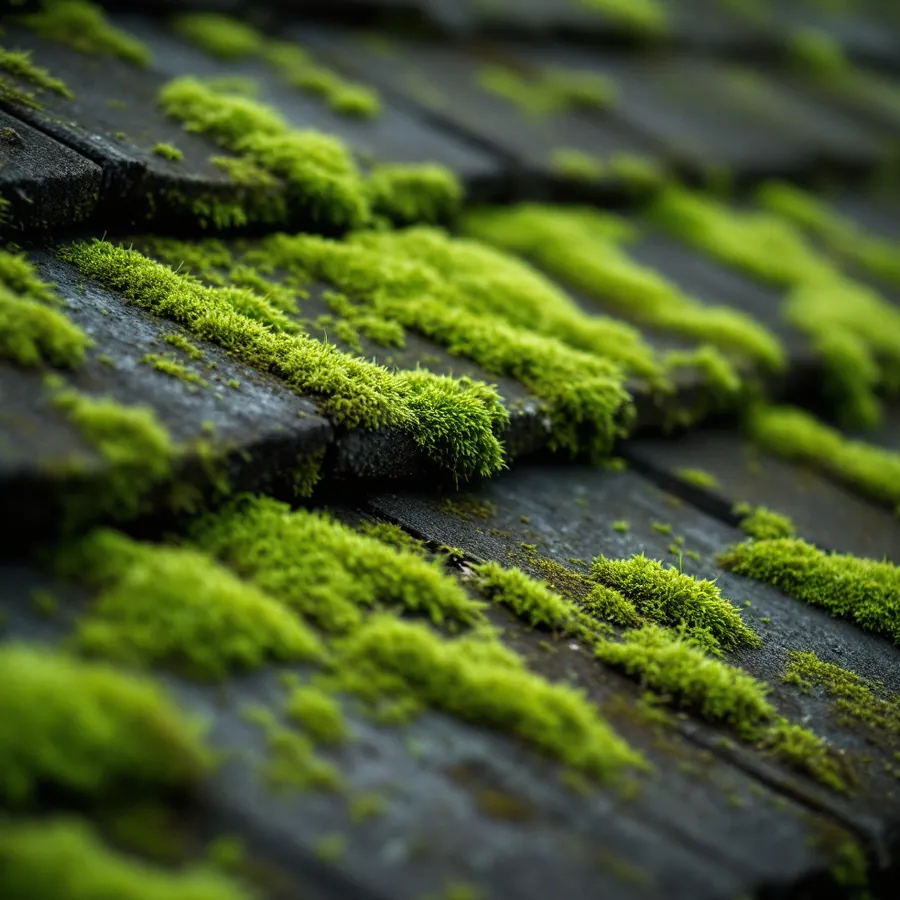
Biology. The same laboratory: “In warm, humid climates and on heavily shaded roofs, mildew, moss, algae, and lichens can grow; because these organisms retain moisture, the wood will decay with time.” Shade and humidity are therefore not background conditions on a wood roof, they are the main variable, and a north slope under trees is a different roof from the south slope of the same house.
The cheapest thing that works
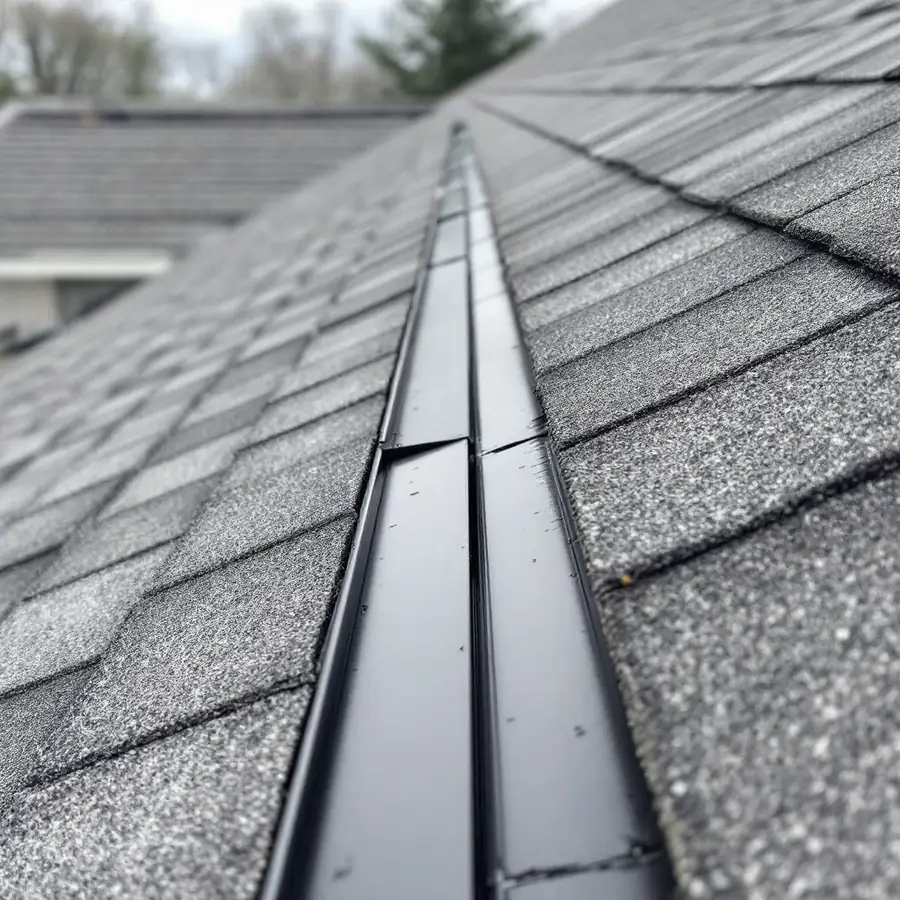
Metal at the ridge. The Forest Service is unambiguous: “The single most important way to prevent moss, mold, and mildew from developing on roofs is to use zinc, galvanized, or copper flashings.” Runoff carries traces of the metal down the slope and suppresses growth below it. It costs a fraction of a cleaning and it keeps working.
Material
Flat and low-slope: measured in membranes, not shingles
A flat roof does not shed water, it holds it briefly and drains it. Everything about its lifespan follows from that.
The common systems
Single-ply membranes such as TPO and EPDM rubber are sheets, seamed together on site. Modified bitumen is a torch or adhesive applied sheet. Built-up tar and gravel is the traditional layered system, and sprayed polyurethane foam is a coating that is recoated periodically rather than replaced. A rubber roof and a TPO roof are both in the twenty to thirty year conversation when installed well and drained properly.
Where they fail
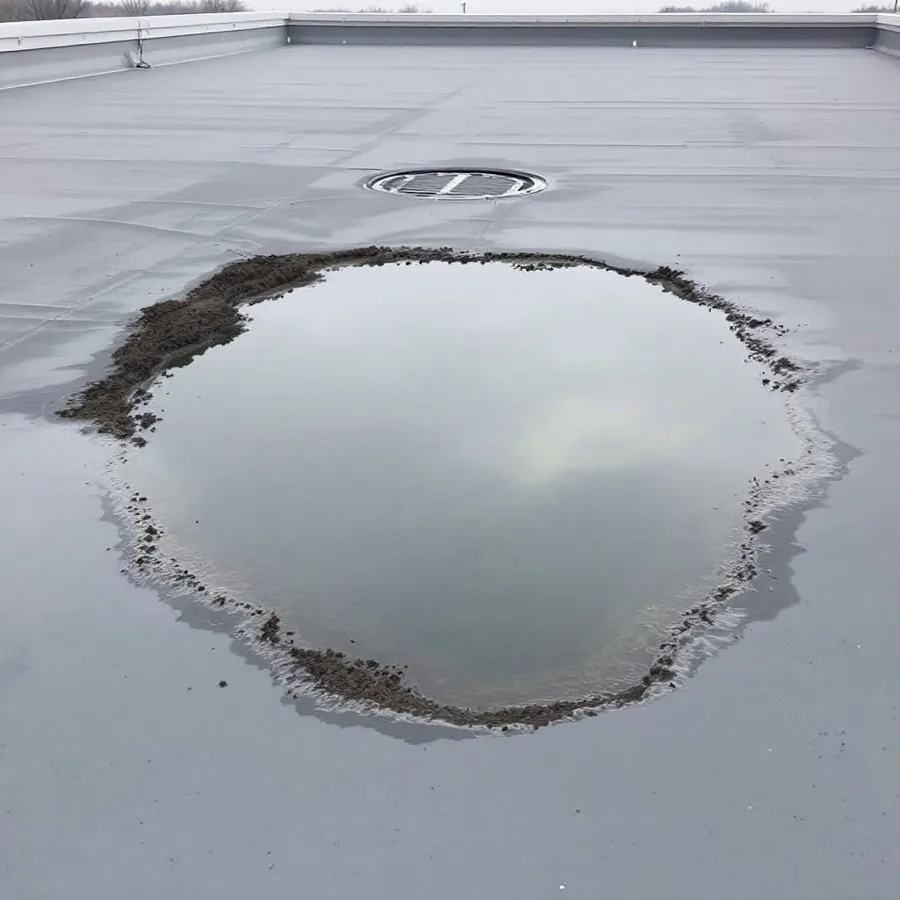
At the seams and at every penetration, which is where a commercial roof and a residential low-slope roof behave identically. Ponding water is the accelerant: a puddle that is still there two days after rain is working on the weakest seam it can find, around the clock.
The maintenance that pays
Clearing drains, checking seams twice a year, and fixing one lifted edge while it is still one lifted edge. On a membrane roof the difference between fifteen years and thirty is mostly attention, and the attention is cheap.
The Invisible Variable
Installation: the factor that outranks the name on the wrapper
Two identical shingles on two identical houses can differ by a decade, and the reason is usually one day of labour rather than a product decision.
Nails: count, placement and depth
Every shingle has a nailing strip, and the manufacturer specifies how many nails go in it and where. Nails placed above the strip hold almost nothing. Nails driven too deep cut the mat. Too few nails on a steep or windy slope is how a roof loses tabs in its first storm. None of this is visible from the ground once the next course is laid, which is exactly why the inspection during a permitted job is worth having.
Starter course, drip edge and the edges generally
Wind gets under a roof at its edges. A proper starter strip and drip edge are cheap, and they are among the first things omitted when a job is priced to win. A roof that fails at the rake in a windstorm usually failed at the edge detail rather than in the field.
Flashing: reused or new
Chimney, wall and valley flashings are the classic hidden economy. Reusing old flashing under new shingles saves a few hundred dollars and puts a twenty-year-old component under a twenty-five-year covering. The roof leaks there first, and the leak arrives after the workmanship warranty has expired.
Ventilation finished rather than mentioned
Exhaust at the ridge with no intake at the eaves does not ventilate anything, it just makes a hole. Balanced intake and exhaust is part of the installation rather than an accessory, and it is the part most often left half done.
Different Building, Different Clock
How the question changes on a commercial roof
The lifespan of a commercial roof is asked in the same words and answered on different terms, because the roof is a flat asset with a maintenance budget rather than a slope over a family.
Scheduled, not replaced
On a commercial low-slope roof the operating assumption is periodic inspection, seam repair and recoating, with full replacement at the end of a planned cycle. A membrane that would be ignored on a house is walked twice a year here, and that alone moves the outcome by years.
Drainage is the whole design
Where a sloped roof sheds water in seconds, a flat roof depends on drains, scuppers and the slight slope built into the deck. Blocked drainage turns a minor detail into ponding, and ponding is the strongest single predictor of early membrane failure.
What transfers to a house with a flat section
Plenty of homes have a low-slope porch, addition or garage roof. That section is a commercial roof in miniature: inspect it on a schedule, keep the drainage clear, and treat a puddle that survives two days after rain as a defect rather than a feature.
Side By Side
The materials in one table
Published ranges in the left column, and in the right the part that decides where a given roof lands.
| Covering | Usual range | What ends it | What extends it most |
|---|---|---|---|
| Three-tab asphalt | 15 to 20 years | Granule loss, then seal failure | Ventilation and a lighter colour |
| Architectural asphalt | 20 to 30 years | Same, slower | Correct nailing and ventilation |
| Exposed-fastener metal | 30 to 45 years | Fastener washers | Refastening at about year ten |
| Standing seam metal | 40 to 70 years | Coating, then flashing | Keeping the seams clear of debris |
| Concrete or clay tile | 50+ years, underlayment 20 to 30 | The underlayment beneath it | Not walking on it |
| Slate | 75 to 150 years | Nails and flashings | A slate specialist, not a generalist |
| Cedar shake | 25 to 30 years treated | Decay under moss and shade | Zinc or copper at the ridge |
| Single-ply membrane | 20 to 30 years | Seams and ponding | Working drains |
Paperwork
The “30-year roof” that is not a thirty-year promise
People search for how long a 25 year roof really lasts because they suspect the answer, and they are right to.
What the number on the wrapper is
A product line name and a warranty term, not a service life estimate. The warranty covers manufacturing defects in the shingle, which is a narrow category. It does not cover wind above a stated speed, hail, foot traffic, poor ventilation or bad installation, and those are what actually end roofs.
Prorated, and what that word costs
Most long material warranties are full for a short initial period and prorated afterwards. In the prorated years the manufacturer's liability falls as the roof ages, so a claim in year twenty on a thirty-year product returns a fraction of the material cost and no labour. That is not a scandal, it is the deal, and it is worth reading before treating the number as a plan.
The workmanship warranty is the one that matters
Most roofs that fail early fail from installation, and installation is covered by the contractor, not the manufacturer. Ask how long the workmanship warranty runs, whether it is in writing, and whether it survives the sale of the house. A five-year workmanship warranty from a company that has been trading for twenty years is worth more than a fifty-year material warranty with a prorated table attached.
Free Instant Tool
What your material says versus what our county data says
Pick the covering and where your county sits in the hail table above. You get the working range, what will end this roof, what to watch for, and what to do next. No prices, nothing sent anywhere.
Our fee for an introduction is fixed and identical whether the answer is “this roof has ten good years left” or “replace it”. That is why this tool has settings that tell you to do nothing.
Detective Work
How to tell how old your roof actually is
Most people asking at what age a roof should be replaced do not know the age. Here is how to find it without guessing.
The permit record, which is public
Where a permit was required, a re-roof leaves a dated public record with the building department. Search the jurisdiction's permit portal by address or parcel and read the issue date and the status. This is the only method that gives you a date rather than an estimate, and it takes about two minutes. Our permit page explains how to search it and, importantly, why some roofs have no record at all.
The paperwork trail
Closing documents from the purchase, a seller's disclosure, an old home inspection report, or an insurance claim file. Any of those can date the roof, and the insurance file has the advantage of naming the event.
Reading the roof itself
Count the layers at the rake edge, because a second layer means somebody re-roofed without a tear-off. Look at the vents and flashings: if they are visibly older than the shingles, the shingles were replaced and the details were not. Granule wear that differs sharply between slopes says the roof has taken directional weather rather than even age.
Why the layer count matters beyond curiosity
Because federal mortgage rules care. HUD's guidance for FHA appraisals states that “FHA will accept a maximum of 3 layers of existing roofing”, which makes the layer count a financing question as well as a roofing one.
Money
Age and your insurance policy
Roof age is one of the few house facts an insurer prices directly, which is why the question of how old a roof is turns into a bill long before it turns into a leak.
Replacement cost against actual cash value
A replacement cost policy pays what a new roof costs. An actual cash value settlement pays that minus depreciation for the age of the roof, which on an old roof can be most of the money. Insurers increasingly move older roofs onto the second basis, and the change usually arrives quietly at renewal rather than as a conversation.
What one state put in statute
Florida legislated on exactly this. Under Florida Statutes 627.7011, “An insurer may not refuse to issue or refuse to renew a homeowner's policy insuring a residential structure with a roof that is less than 15 years old solely because of the age of the roof.” And for roofs past that age, the statute gives the homeowner a route: an inspection showing “the roof has 5 years or more of useful life remaining” blocks a refusal based on age alone. Other states have no such rule, which is worth knowing before assuming your insurer must keep you.
Does replacing a roof increase insurance
Usually the opposite, because a new roof lowers the expected claim. The premium can still rise for reasons unrelated to your house, and a new roof also raises the insured value of the building, so the two effects can cancel. What it reliably does is keep you insurable, which in hail country is the real benefit.
Does homeowners insurance pay to replace a roof
For sudden accidental damage from a covered peril, usually yes, subject to your deductible and the replacement cost or actual cash value basis above. For a roof that has simply reached the end of its life, no. Wear is not a peril, and this is the single most common misunderstanding in roofing claims.
At The Closing Table
What roof age means when a house changes hands
The roof is the part of a house that most often turns into a negotiation, and there is a federal number behind it.
The two-year rule
HUD's reference guide for FHA-insured purchases sets the bar plainly: “The roof should have a remaining physical life of at least two years.” A roof with less than that has to be addressed before the loan closes, which is why an ageing roof becomes a price conversation rather than a maintenance plan.
What a buyer should ask
The date of the last replacement, the permit record for it, the number of layers, and whether the workmanship warranty transfers. Those four answers are more useful than any visual estimate of remaining life.
What a seller should do about it
Find the documents before listing. A dated permit and an inspection report showing remaining life move the negotiation more than a fresh coat of anything, and they cost nothing if the record exists.
Evidence
Signs that the number no longer matters
When these appear, the age of the roof stops being the interesting question.
- Granules in the gutters, by the handful. Some shedding is normal on a new roof and on an old one it is the armour leaving.
- Tabs that lift freely. A sealed shingle tears before it lifts. One that swings up by hand has lost its bond, and that is functional wind damage with nothing missing.
- Curling or cupping at the edges. The mat is shrinking and the shingle no longer lies flat, which means water can get under it.
- Bald patches and shiny areas. Exposed bitumen ages several times faster than covered bitumen.
- A sagging line anywhere. That is structure or decking, not covering, and it is the one sign on this list that should produce a phone call today.
- Daylight through the decking in the attic. Look on a bright day with the light off.
- Stains on the ceiling below. By the time it shows inside, the water has been in the assembly for a while.
- Moss and heavy algae, especially on a shaded slope. On wood it is the mechanism of decay; on asphalt it holds moisture and lifts the edges.
Maintenance
What extends a roof, and what does nothing
Three of these are worth doing every year. Two are sold constantly and earn their place only in specific cases.
Ventilation, which is the big one
Intake at the eaves, exhaust at the ridge, and nothing blocking either. ENERGY STAR describes the winter half of the job too: “allowing a natural flow of outdoor air to ventilate the attic helps keep it cold, which reduces the potential for ice damming.” Insulation stuffed into the soffit vents is the most common defect, and it is fixable in an afternoon.
Gutters and overhanging branches
Blocked gutters keep the eaves wet and the first course of shingles is the one that pays. Branches over the roof drop debris, hold shade and give squirrels a route. Both are maintenance in the ordinary sense and both buy years.
Fixing small things while they are small
A cracked pipe boot, one lifted flashing, three missing shingles after a storm. Each is a cheap visit and each, left alone, becomes decking.
Roof cleaning and washing
Moss and algae removal is worthwhile on wood and on shaded asphalt, with one condition: no pressure washing on asphalt. High pressure strips granules and takes years off the roof to make it look better for a season. Soft washing is the method, and zinc or copper at the ridge is the preventative the Forest Service recommends.
Coatings on a shingle roof
Rejuvenation sprays and coatings for asphalt are marketed hard. They are not a substitute for replacement, they can affect the material warranty, and on a roof that is already losing its mat they buy little. On metal and on low-slope membranes, by contrast, coating systems are a recognised part of the maintenance cycle.
Attachments
Solar, satellite and everything else bolted through the covering
Anything fixed through a roof is a hole in it, and holes have lifespans of their own.
Sequence matters more than the hardware
A solar array typically outlives one asphalt roof. Mounting an array on a roof with eight years left means paying to remove and reinstall it later, and that removal is rarely cheap. The rule that survives contact with reality: if the roof will not comfortably outlast the array, replace the roof first.
Penetrations, and who sealed them
Each mount, cable entry and satellite bracket is a hole through the water barrier. Sealant is not a permanent flashing, and a trade that is not a roofing trade will often reach for sealant. When a leak appears near an array, the array installer and the roofer each point at the other, which is a good argument for having the roofer set the flashings.
Foot traffic
Tile breaks, ageing asphalt cracks and metal panels dent under boots. Every visit by a technician for something unrelated to roofing is a small withdrawal from the roof's remaining life, which is one more reason to do roof-adjacent work while the covering is new rather than old.
Decision
When to replace rather than repair
The arithmetic is simpler than it looks, and it turns on remaining life rather than on the size of the damage.
Repair while the rest of the roof has years left
Localised damage on a roof with ten or more good years is a repair. Matching is the only complication, and on a roof that age the match will be imperfect but adequate.
Replace when the repair is a down payment on the same job
If the roof is within a few years of its range, spending on repairs means paying twice for the same square footage. The exception is a repair that buys a planned replacement date, which is a legitimate reason to fix something you intend to remove.
Can a roof be replaced in sections
Yes, and it is a reasonable answer to directional storm damage: one slope, taken to its corners. It is not a way to spread a whole replacement over years, because the join between old and new is a weak point and the colour will not match across a ridge.
When is the best time of year
Mild, dry weather in the shoulder seasons, for a practical reason: sealant strips need warmth to bond, and crews in peak season are stretched. Work in the rain is not impossible but it is not planned, and a crew that will tear off a roof with rain forecast is telling you something about how they schedule.
Who Is Talking
What we do, and why this page has no prices in it
We are not a roofing contractor. We research this market and connect homeowners with independent licensed and insured roofing companies, and we are paid a fixed fee for the introduction, the same whether the job is one slope or a whole house. That is the reason this page can tell you that a roof with a decade left should be left alone, and the reason the county data above is published rather than used as a sales prompt.
Where the numbers come from
The exposure table is our own aggregation of the NOAA storm archive. Every other figure on this page is quoted from the federal or state source linked beside it. We publish no price averages, because a national average roof price describes nobody's roof.
Straight Answers
Roof lifespan questions, answered
How long does a roof last on a typical house?
Twenty to thirty years for the architectural asphalt shingle on most American homes, fifteen to twenty for older three-tab, thirty to seventy for metal depending on the fastening system, and far longer for tile and slate, whose underlayment and fixings fail long before the material does. Where you land inside the range depends on exposure, installation and ventilation.
How much does the state or county change the answer?
More than the material choice does. In our aggregation of NOAA storm data for 3,199 counties from 2006 to 2025, the median county saw 29 hail events of an inch or more in twenty years, the top tenth saw 110 or more, and the worst county saw 998. Kansas counties median 124; California counties median 2.
How long does a 25 or 30 year roof really last?
The number is a product line and a warranty term, not a service life estimate. The warranty covers manufacturing defects, is usually prorated after an initial full period, and excludes wind above a stated speed, hail, foot traffic and installation faults. In ordinary exposure a thirty-year architectural shingle commonly reaches the mid twenties; in the hail-heavy tenth of counties it is often replaced on a claim well before that.
Does homeowners insurance pay to replace an old roof?
For sudden accidental damage from a covered peril, usually yes, subject to your deductible and to whether the policy pays replacement cost or actual cash value. For a roof that has simply worn out, no: wear is not a peril. Roof age also affects whether you stay insurable, and Florida is the one state that has legislated on it directly.
How do I find out how old my roof is?
Search your jurisdiction's permit portal by address or parcel and read the issue date and status of the last re-roof permit. That gives a date rather than an estimate. Failing that, check closing documents, seller disclosures, old inspection reports or insurance claim files, and count the layers at the rake edge.
Does a metal roof really last twice as long as shingles?
Standing seam usually does. Exposed-fastener metal sits closer to good asphalt unless the fasteners are serviced, because the rubber washers on the screws age faster than the panels. Coating and colour have their own warranty and their own lifespan, separate from the structural life of the metal.
Will cleaning or coating extend the life of my roof?
Removing moss and algae helps on wood and on shaded asphalt, provided nobody pressure washes asphalt, which strips granules. Zinc or copper at the ridge prevents regrowth and the Forest Service names it as the most important single measure. Rejuvenation coatings for asphalt are not a substitute for replacement and can affect the material warranty; coatings on metal and membrane roofs are a normal part of maintenance.
At what age should a roof be replaced?
At the age where the signs appear rather than at a number on a calendar. Practically, get a dated inspection at about year fifteen in ordinary exposure and earlier in the hail-heavy counties, and use that report to plan a replacement on your schedule instead of after a storm, when every crew in the metro is booked.
Where This Comes From
Sources
- Hail and thunderstorm-wind records used for our county exposure count — NOAA National Centers for Environmental Information, Storm Events Database.
- The one-inch severe hail threshold — NOAA Storm Prediction Center, SPC Products.
- Remaining roof life and layer limits for FHA-insured purchases — U.S. Department of Housing and Urban Development, HOC Reference Guide: Roofs & Attics.
- Roof age, non-renewal and the inspection exception — Florida Statutes § 627.7011.
- What attic ventilation does for shingles in summer and winter — ENERGY STAR, About Attic Ventilation.
- Service life of wood shakes and shingles, moss and metal strips — USDA Forest Service, Forest Products Laboratory: Wood Shakes and Shingles for Roof Applications (PDF).
Our editorial standards explain how we source and check what we publish. The county exposure table is our own aggregation, with its method and limits stated in the section above; every other figure is quoted from the linked federal or state page and was checked on September 2026. We are a referral service rather than a roofing contractor. Published , last checked .
Before you call anyone
The independent match — we are paid for the introduction, not for the size of your job
Most roofing advice is written by the company that wants to do the work. That is not a failing of the people who read it; it is a defect in who is talking. The estimate, the diagnosis and the invoice come from one party, and no amount of care on your side fixes that.
We are built the other way round. We do not repair roofs and we do not sell materials, so the payment reaches us when you are connected to a licensed, insured roofing company — the same amount whether your roof needs an eight-hundred-dollar repair or a twenty-thousand-dollar replacement. Nobody here has a reason to talk you into the larger number. How we make money and how we research are both written down.
Waiting is the one thing that actually costs money. An insurance clock runs from the date of the damage rather than the date you noticed it, and damage that sits through a season stops reading as sudden and starts reading as wear — which is the exclusion that pays nothing. And if your roof is simply worn out, say so on the call. No claim will pay for age, we will tell you that plainly, and you will have lost nothing but the call.