Before You Commit
Standing seam metal roof, what it costs and when it is worth it
Every page you will read about metal roofing is published by somebody who sells metal roofing. This one is not: we are a referral service, and we get paid the same whichever covering you choose. So here is the part the brochures leave out, the price fork that halves the bill, the hail clause that can make a dented metal roof pay nothing, and the situations where metal is simply the wrong answer.
(844) 833-2185Toll-free and answered every day of the year. The call reaches an independent licensed and insured roofing company covering your area, we do not do the work ourselves, which is exactly why we can tell you when you do not need it.
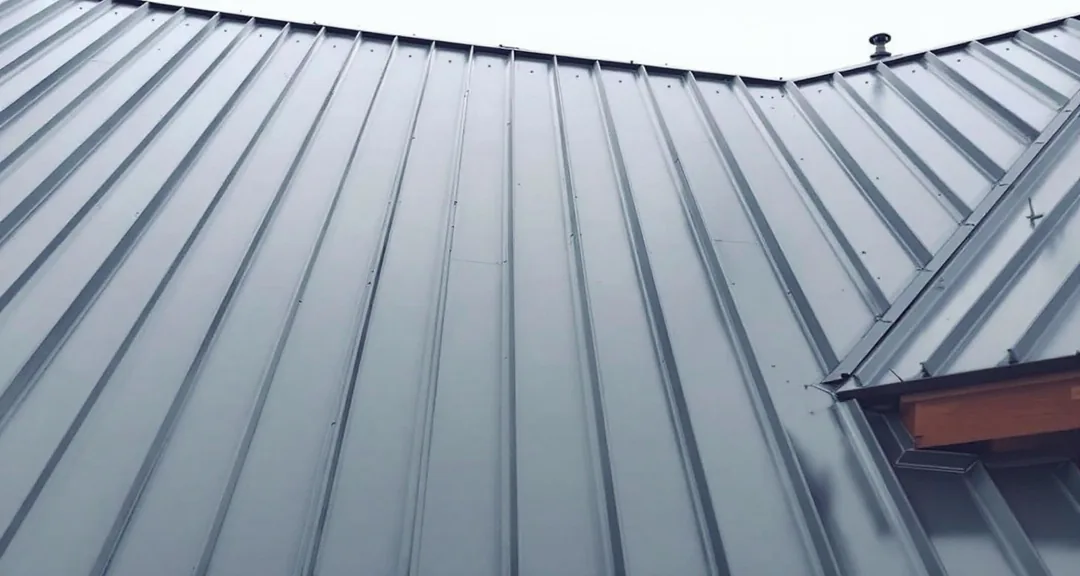
Four things decide whether metal is right for you
- Which metal system, not which metal. Standing seam and exposed-fastener panels are both “a metal roof”, and one costs roughly twice the other.
- How long you are staying. Metal wins on a fifty-year horizon and loses on a seven-year one. The break-even is a date, not an opinion.
- What your policy says about cosmetic damage. In hail states many policies exclude denting that does not stop the roof working, which is exactly what hail does to metal.
- Who installs it. Metal is less forgiving of a bad installer than asphalt is. The fastest way to ruin a good roof is a cheap crew.
Free Instant Tool
Metal roof cost calculator, sanity-check your quote
The most common question homeowners ask about metal roofing is not how it works, it is whether the number they were quoted is sane. Pick your roof area and the system you were quoted, and compare it against market pricing and against what the same roof would cost in architectural asphalt. This is orientation, not an estimate: we do not quote work.
Ranges are national market pricing observed across published contractor guides, rounded to the nearest hundred. Regional labor swings them, and they rise sharply in the weeks after a large storm. A quote outside this range is not automatically wrong, but it is a question worth asking out loud.
The Decision That Halves The Bill
Types of metal roof: standing seam or exposed fastener
Both are metal roofs. They are not the same product, they do not last the same length of time, and one costs about half the other. Manufacturers bury this inside profile lists; it is the first thing worth understanding.
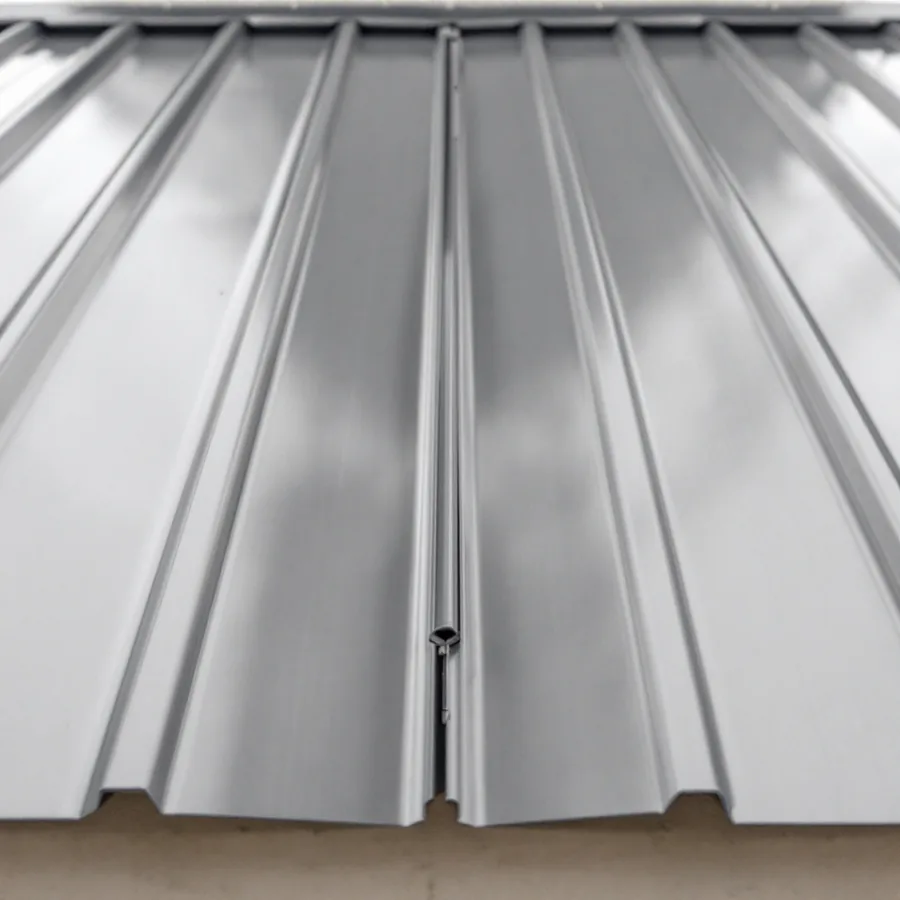
Standing seam
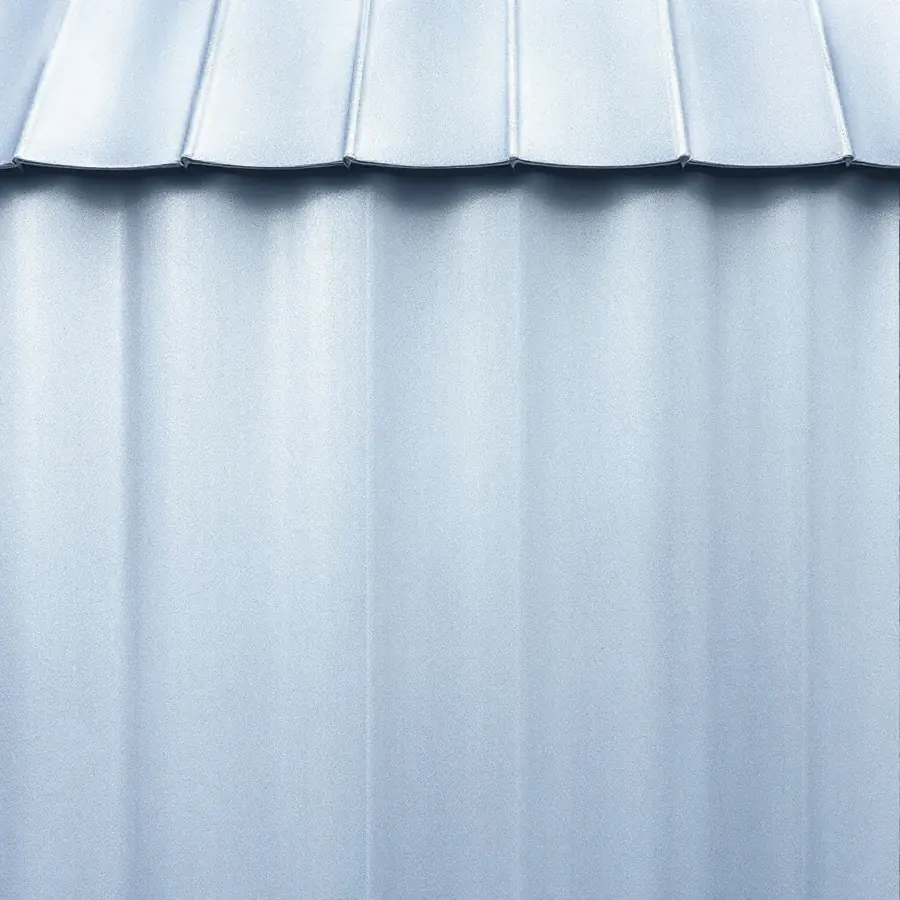
Panels lock together at raised vertical seams and the fasteners are hidden underneath, clipped to the deck. Nothing penetrates the weather surface, so there is nothing to back out, and the panels are free to expand and contract with temperature. This is the system people mean when they picture a modern metal roof.
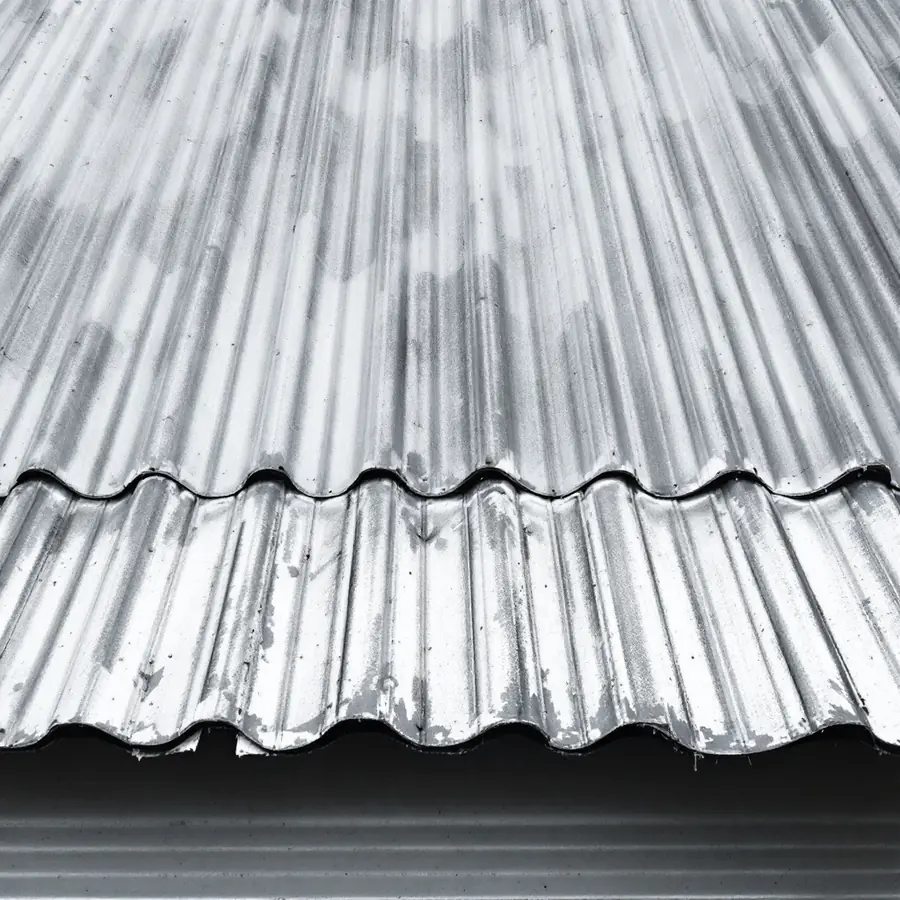
Exposed fastener
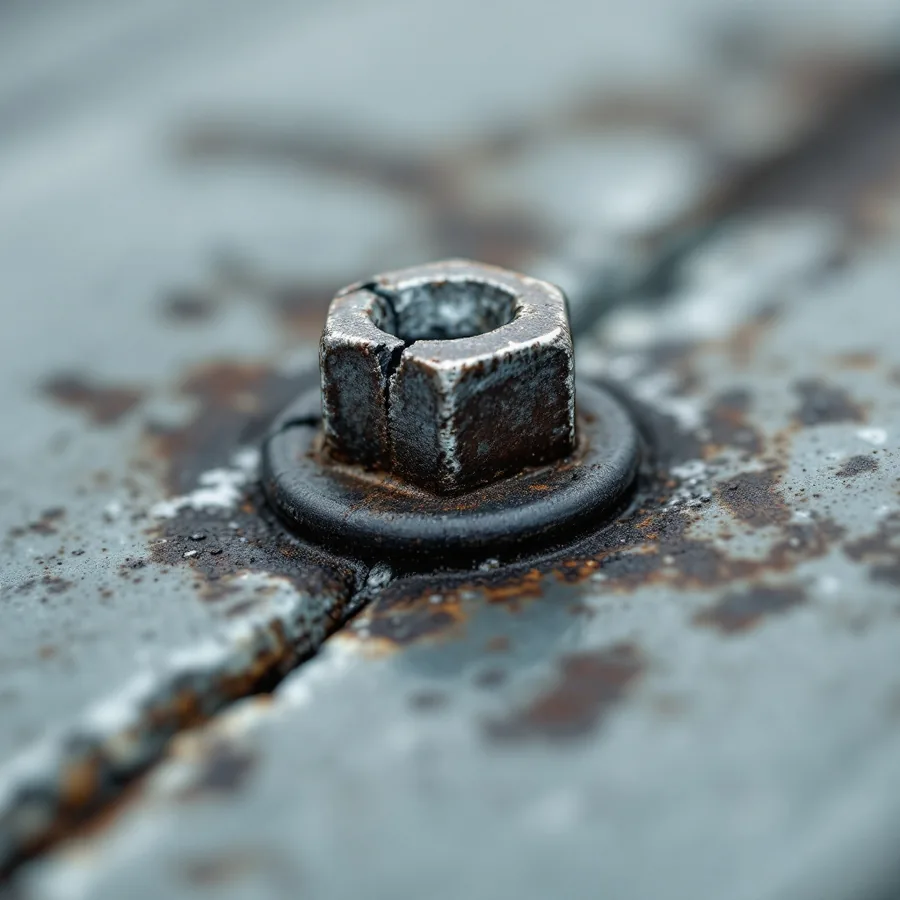
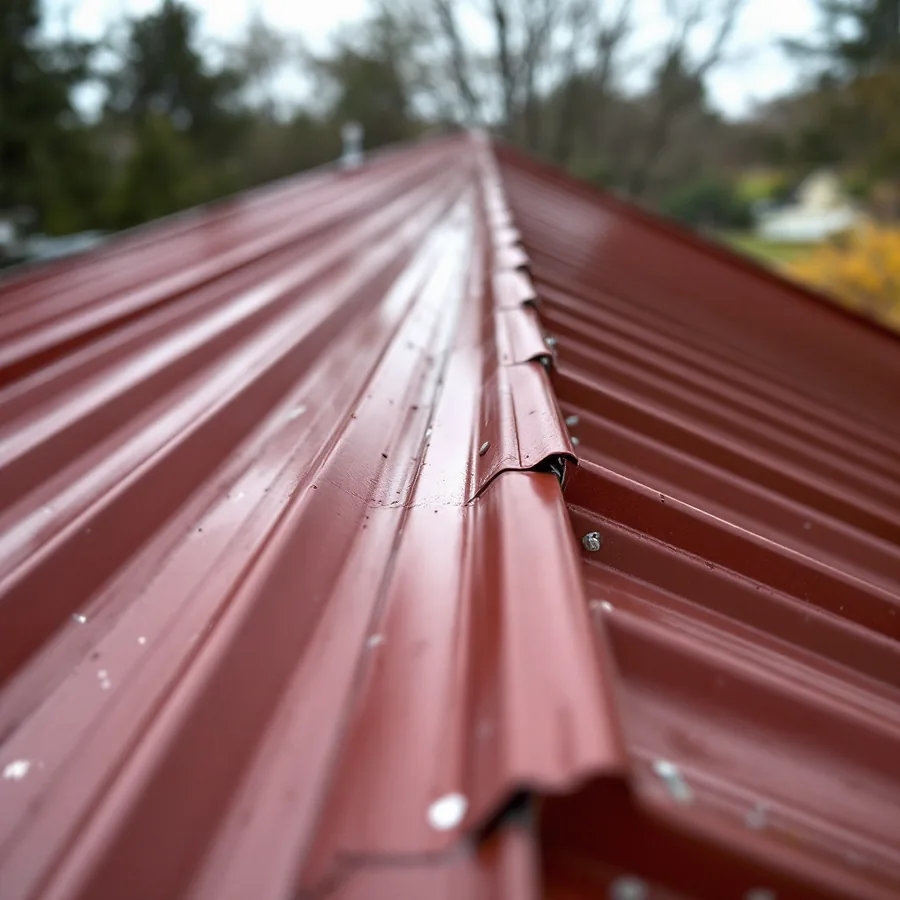
Panels are screwed through the face into the deck, with a rubber washer under each screw head. Corrugated and R-panel roofs work this way. It is faster to install, dramatically cheaper, and every screw is a hole through your roof sealed by a gasket that ages.
Where exposed fastener fails
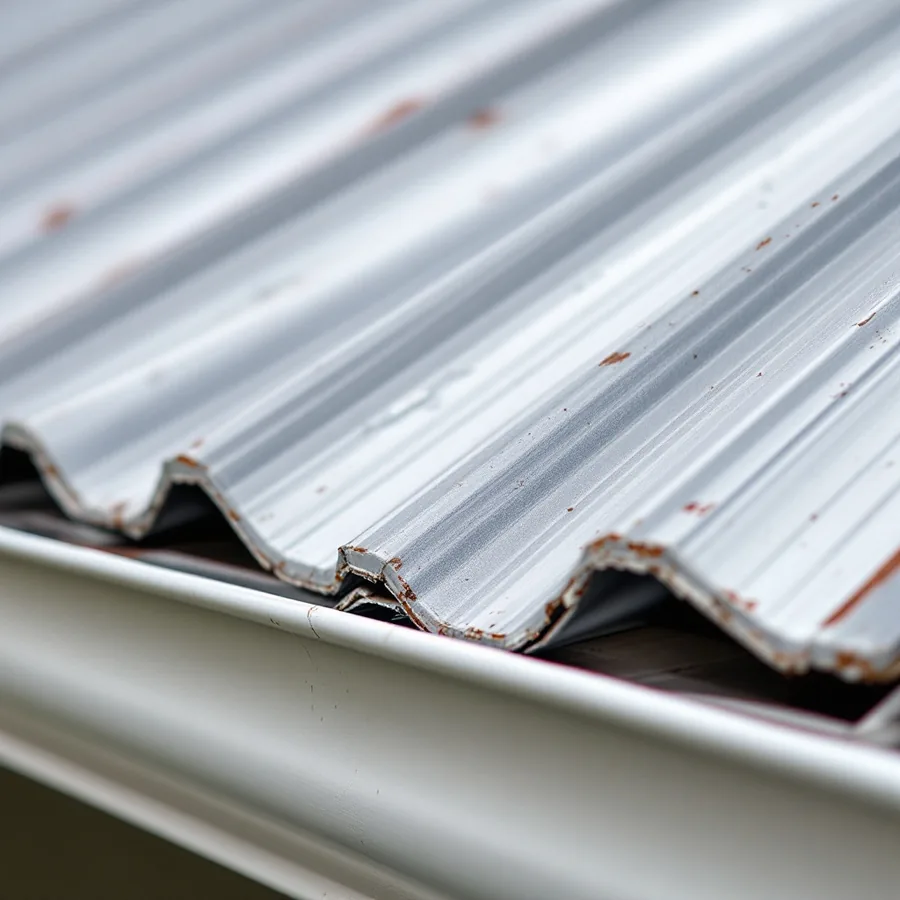
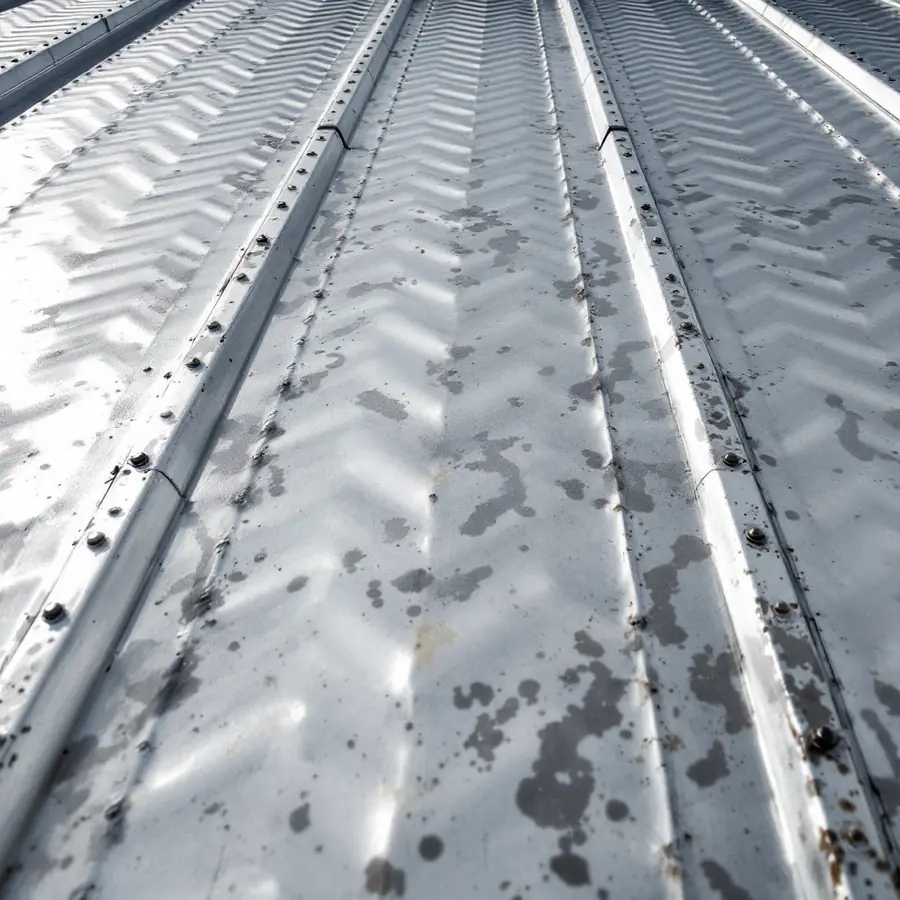
Not at the metal, at the washers. They harden, shrink and stop sealing, and the screws themselves loosen with thermal movement. A roof with thousands of fasteners needs them checked and eventually replaced, and that maintenance is the real cost that the lower price defers rather than removes.
Where standing seam costs more
Material is thicker, panels are often formed on site, and the labor is skilled rather than fast. Trim, flashing and terminations are where the money and the expertise go. Two quotes can differ by thousands entirely on how the edges are detailed.
Snap-lock or mechanically seamed
Within standing seam there is a second fork. Snap-lock panels press together by hand and suit ordinary residential pitches. Mechanically seamed panels are folded closed with a machine and are what you want on a low slope or somewhere genuinely exposed, and they cost more again.
Metal shingles and tiles
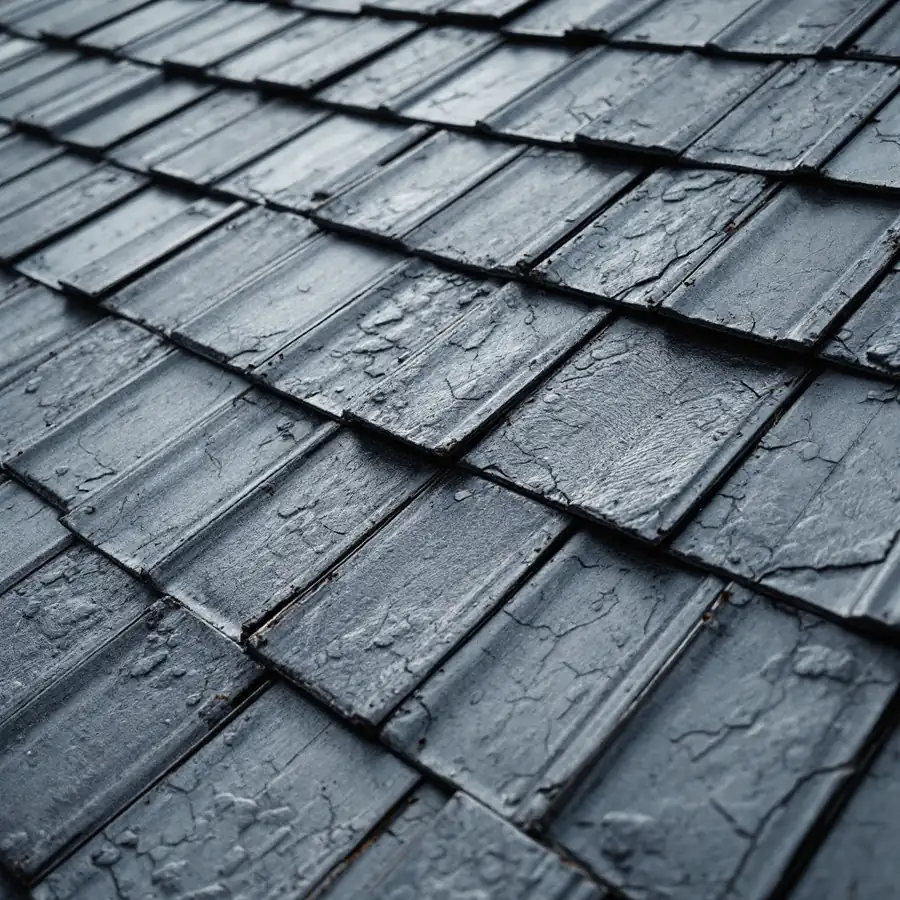
Stamped panels that imitate slate, shake or tile. They give the material’s lifespan with a traditional look, install closer to the way shingles do, and sit between the two systems on price. On a complicated roof with many hips and valleys they are often the practical answer.
Money
What a metal roof costs, and what moves the number
Priced per square foot of roof surface, installed. The spread inside each row is wider than people expect, and it is mostly labor and detailing rather than metal.
| System | Installed range | What you are paying for |
|---|---|---|
| Architectural asphalt (for comparison) | $5–$7 | The default. Twenty to thirty years, and every crew in the country can fit it |
| Exposed fastener, steel | $5–$12 | The cheapest way into metal, with fastener maintenance attached |
| Galvalume or galvanised steel (bare) | $4–$8 | Unpainted coated steel. Galvalume’s aluminum-zinc coating outlasts plain galvanising |
| Standing seam, steel | $10–$16 | The mainstream choice. Hidden fasteners, thicker gauge, skilled labor |
| Standing seam, aluminum | $11–$17 | Will not rust. Worth the premium near salt air, not otherwise |
| Metal shingles or tiles | $10–$18 | Traditional appearance, easier on complex roof shapes |
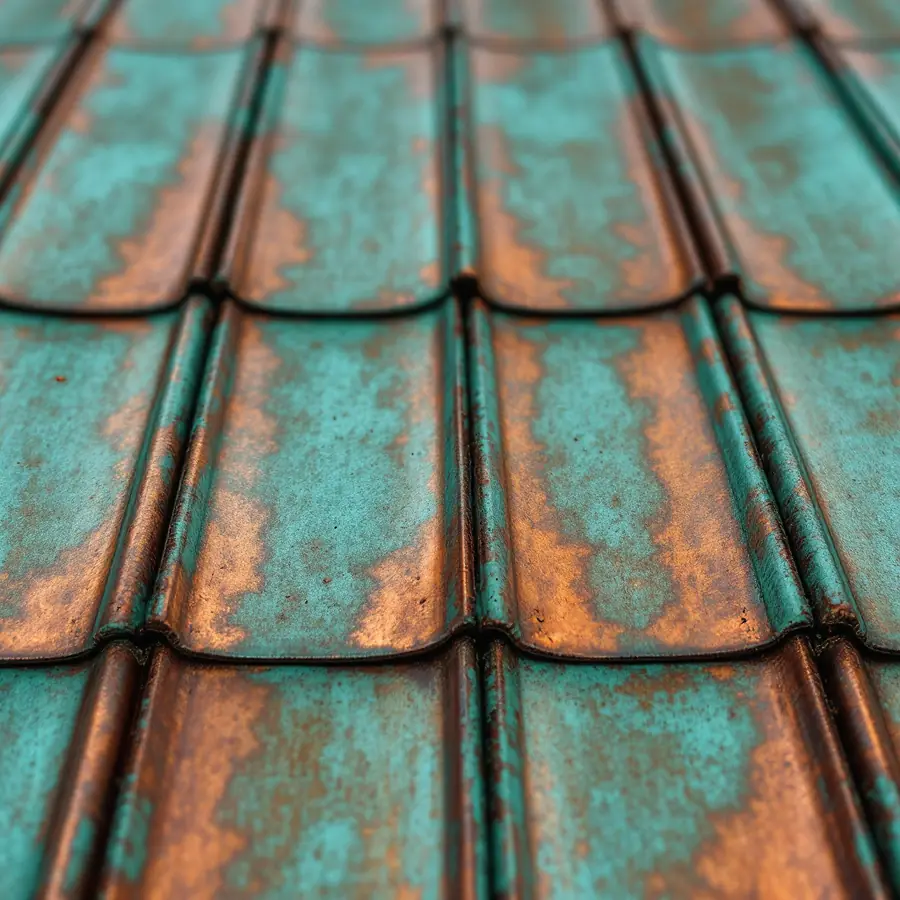
| Standing seam, copper | $18–$32 | A century of service and a patina. A different category of decision |
Steel, Galvalume, aluminum: what you are actually buying
Almost every residential metal roof in America is steel, and what protects that steel is a metallic coating applied before any paint goes on. Galvanised steel carries a zinc coating; Galvalume carries an aluminum-zinc coating that lasts considerably longer in most environments and has become the standard substrate under painted panels. Aluminum skips the question entirely because it does not rust, which is why it is specified near salt air and why it costs a little more. Copper and zinc are architectural materials priced accordingly. If a quote says only “metal”, ask which substrate and which coating, they are different lines on a spec sheet and different lifespans on your roof.
Gauge, and why the cheap quote is thinner
Metal thickness is given as gauge, and the number runs backwards: a lower gauge is thicker metal. Standing seam is typically 22 or 24 gauge; exposed-fastener panels are commonly 26 or 29. Two quotes for “a metal roof” can differ by several gauges, and that difference shows up in how the roof handles hail, foot traffic and its own expansion. Ask for the gauge in writing, because it is the specification most often left off a quote.
Minimum slope, and why it decides the system
Roof pitch sets which metal systems are even permitted. Exposed-fastener panels generally need a reasonable slope to shed water past every screw hole, and snap-lock standing seam has its own lower limit. Below those, the answer is a mechanically seamed standing seam roof, where the seam is folded closed with a machine and sealant is run inside it, and that costs more again. Manufacturers publish a minimum slope for each of their profiles, and a quote that puts a low-slope-unsuitable panel on a shallow roof is not a bargain, it is a leak with a delay on it. If any part of your roof is shallow, make the slope the first question rather than the last.
What legitimately moves the price
Roof complexity above everything: every hip, valley, dormer and skylight is trim and flashing cut and formed by hand, and a complicated roof can cost half as much again as a simple gable of the same area. Then pitch and access, because steep and unreachable both slow the work. Then what is underneath, decking replaced by the sheet, and whether old covering comes off. And finally the underlayment specification, which on metal matters more than on asphalt and is a common place to quietly economise.
What should make you ask questions
A quote well under the ranges above usually means one of four things: thinner gauge than you assumed, exposed-fastener panels described as “metal roofing”, installation over the existing roof without addressing what is under it, or trim and flashing reused rather than replaced. None of those is automatically wrong. All of them should be stated on the quote rather than discovered afterwards.
The Clause Nobody Selling Metal Will Mention
Metal, hail, and the cosmetic damage exclusion
Metal is genuinely good in hail: it does not lose granules, it does not bruise, and it keeps working after impacts that would put an asphalt roof onto a claim. That strength is also the problem, and it is written into policies rather than into brochures.
What the exclusion actually says
A cosmetic damage exclusion is an endorsement added to a homeowner policy which removes coverage for wind and hail damage that changes how the roof looks without stopping it working. The wording turns on function: marring, pitting and denting that leave the roof still keeping water out are not covered. On a metal roof that describes hail damage almost exactly. Dozens of visible dents, a roof that still performs, and nothing paid.
Where it came from, and how common it is
The approach began in Texas, where the insurance regulator adopted an endorsement for impact-resistant roofs in 1998; the industry forms bodies introduced their own versions in 2013, and the exclusion spread with them. It is most common in the hail belt, Texas, Colorado, Missouri and neighbours, and has been moving into the Midwest. It is not part of the standard policy form: it is attached separately, which is precisely why people do not know they have it.
How to find out whether you have one
Look at the endorsement list on your declarations page rather than the policy booklet, and search for the words cosmetic, marring or pitting. If you are buying a metal roof partly for hail resistance, do this before you sign, not after the first storm. It is a five-minute check that changes the arithmetic of the whole decision.
The trade that is actually being offered
Read together, metal in a hail region is a trade rather than a win. You are buying a covering that is far less likely to fail and far less likely to be paid for when it is damaged. If your intention was “metal will survive the hail”, that holds. If it was “metal means the next storm is the insurer’s problem”, the endorsement may say otherwise, and an impact-rated asphalt roof, which does bruise and therefore does get claimed, can be the more economical answer in a county that gets hit often.
Primary source on the origin of the endorsement: Texas Department of Insurance, Commissioner’s Bulletin B-0030-98 · general policy guidance: TDI home insurance guide.
Decide On Numbers
How much hail does your county actually get?
“Metal stands up to the weather” is a sentence, not a quantity. Whether that sentence is worth ten thousand dollars to you depends on how much weather there is where you live, and that is a number, not a feeling.
Look it up before you decide
We aggregated two decades of the National Weather Service storm log for every county in the country: hail days, events with stones of an inch or more, the largest stone recorded, and thunderstorm wind. Check your own county and read the metal decision against it.
If your county is high
Frequent damaging hail is the strongest case for metal, and simultaneously the situation where the cosmetic exclusion matters most, because you will be looking at a dented roof. Check the endorsement list first. Both facts point the same way: this is a decision to make with the policy open.
If your county is low
The weather-resistance argument mostly falls away and metal has to justify itself on lifespan, appearance and energy instead. Those are real reasons. They are just different reasons, and they should be the ones you are actually paying for.
The Comparison Everyone Wants
Metal roof versus asphalt shingles
The honest version, including the part where asphalt wins.
| Standing seam metal | Architectural asphalt | |
|---|---|---|
| Installed cost | $10–$16 / sq ft | $5–$7 / sq ft |
| Service life | Commonly quoted at 40–70 years | Commonly quoted at 20–30 years |
| Hail behavior | Dents, keeps working | Bruises, granule loss, can need replacing |
| Hail claim | Often excluded as cosmetic | Normally covered as functional damage |
| Repairability | Panels run ridge to eave, a local repair is rarely local | Individual shingles replaced in an afternoon |
| Installer pool | Narrow. The work is a speciality | Every roofing company in your area |
| Resale of the decision | Distinctive; not to every buyer’s taste | Invisible and expected |
Where the break-even actually falls
On a 2,000 square foot roof the metal premium is commonly in the region of ten thousand dollars, the full cost breakdown sets out both sides. If asphalt lasts twenty-five years and metal fifty, metal buys you the second roof you would otherwise have paid for, but only if you are still there, and only if the second asphalt roof would have cost what the first one did. If you expect to move within a decade, you are buying appearance and peace of mind rather than economics, and it is worth being clear with yourself about which one you are paying for.
The case for asphalt that metal sellers skip
It is cheaper to buy, cheaper to insure in hail country, trivially repairable, and fitted by anyone. Impact-rated asphalt shingles carry the highest impact classification in common use, attract premium discounts from many insurers, and, unlike metal, when hail does damage them, that damage is normally the kind a policy pays for.
Duration
How long a metal roof lasts, and what fails first
The metal is rarely what wears out. Everything attached to it is on a shorter clock, and that is where a fifty-year roof turns into a thirty-year one.
The coating, not the steel
What you are really buying on a painted steel roof is the finish. A high-performance fluoropolymer coating holds color and gloss for decades and is warranted accordingly; a cheaper polyester finish chalks and fades much sooner. Two roofs of identical metal can be a generation apart in appearance purely on which paint system was specified, and the specification is a line on the quote, if it is there at all.
Fasteners and washers
On exposed-fastener roofs this is the maintenance item, and it is not optional. Neoprene washers harden and shrink, screws back out under thermal movement, and a roof that has never had its fasteners checked will eventually leak at hundreds of small points at once.
Sealants, trim and penetrations
Sealant at flashings and terminations has a service life measured in years rather than decades. So does the boot around every pipe. On any roof these are the first things to fail; on metal they are also the things most affected by the panels moving with temperature.
How to judge whether the installation was done well
You can evaluate a finished metal roof from the ground with binoculars, and it is worth doing while the crew is still reachable. Sight along the seams: they should be straight and parallel, and panel ends should line up at the eave. Look at the terminations, ridge, eave, gable and around every penetration, because sloppy trim is the visible symptom of hurried work underneath. Check that panels are not fixed so rigidly that they cannot move, that no dissimilar metal is in contact with the panels, and that there are no exposed fasteners anywhere they were not specified. And look for footprints and scuffs in the finish: a crew that walked the panels carelessly during installation has already started the roof’s ageing.
What actually shortens a metal roof
Poor installation more than anything else. Panels fixed so they cannot move, incorrect fastener spacing, dissimilar metals in contact, and trim details improvised on the day. Metal is less forgiving than asphalt of a crew learning on your house, and the failures show up years later when the argument about who pays is already lost.
Appearance
Colors and finishes
The most-searched question about metal roofing after price, and the one with the fewest wrong answers, but two decisions here have consequences beyond looks.
Dark colors and heat
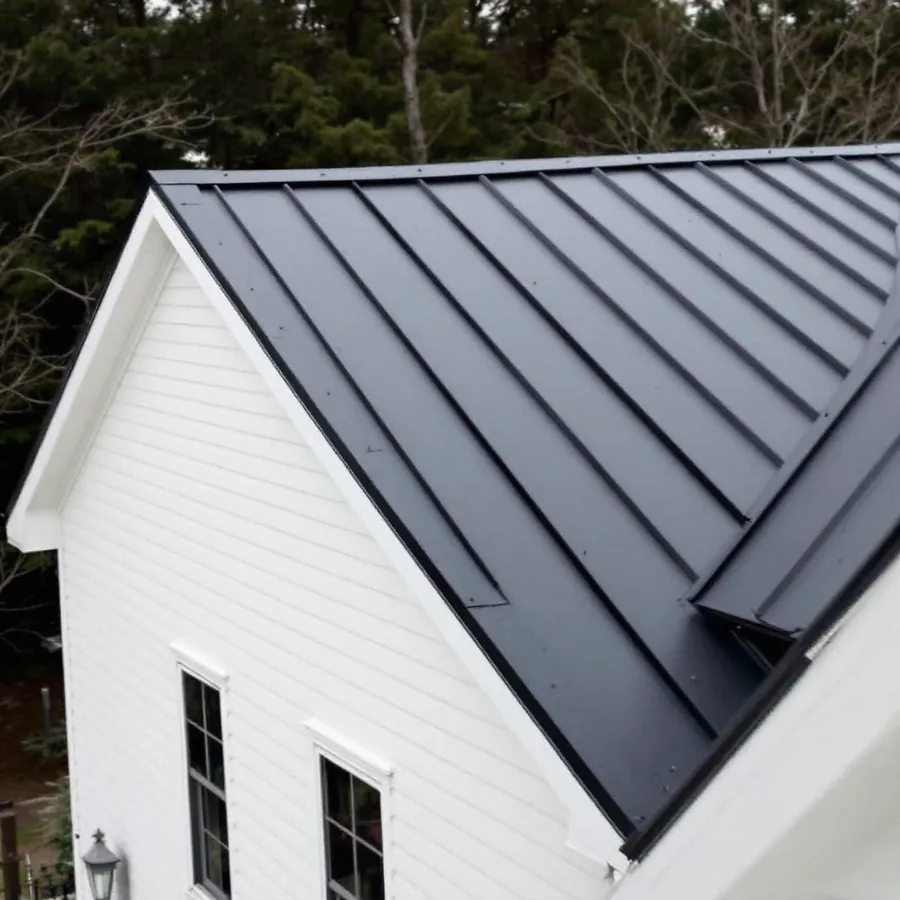
A dark roof absorbs more solar heat than a light one, and on metal the effect is immediate rather than gradual. Reflective pigment technology narrows the gap considerably, so a dark roof with a reflective finish is not the same as a dark roof without one. If cooling load matters where you live, this is a specification question, not a color question.
Finish quality outlives color choice
Whether you regret the color in fifteen years depends less on the shade than on whether the paint system holds it. Ask which coating is specified, and what the finish warranty covers, chalk and fade are usually warranted separately and with tighter limits than the metal itself.
Matte, gloss and what shows
Low-gloss and textured finishes hide oil-canning, the gentle waviness visible in flat metal panels under raking light. Oil-canning is an inherent characteristic of the material rather than a defect, and it is the single most common thing homeowners are unhappy about after installation. Striations or stiffening ribs in the panel reduce it.
The colors people actually pick
Black and near-black metal roofs are the most-searched choice by a distance, followed by greys, greens and whites; among named finishes, burnished slate is the one homeowners ask for most often. A white or light roof reflects the most heat and shows the least oil canning; a black roof is the strongest statement and the least forgiving of a wavy panel. There is no wrong answer here, only a hotter or cooler one.
Matching to the house
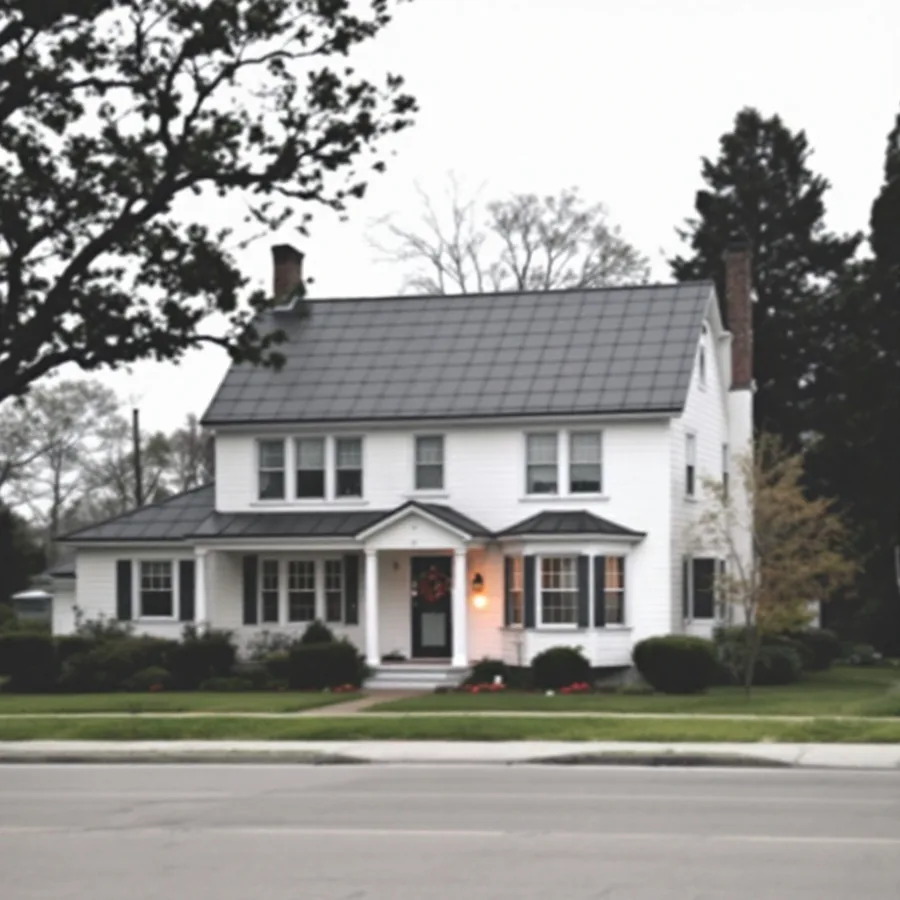
Metal reads as a stronger design statement than asphalt. On a period house it can be exactly right and can also be exactly wrong, and it is worth seeing the actual panel in daylight against your own brick or siding rather than choosing from a chart.
What the neighborhood allows
Homeowner associations and conservation districts have opinions about roofing material and color, and finding out afterwards is expensive. Check before ordering, because metal panels are typically formed to your job and are not returnable.
Trim is a second decision
Ridge caps, gable trim, drip edge and valley metal are all color choices too, and they are what the eye actually reads at the edges of the roof. Matching or contrasting is a real design decision that many quotes make silently on your behalf.
The Shortcut
Installing metal over the existing shingles
It is done, it is often legal, it saves real money, and it is where a cheap metal quote usually comes from. Whether it is a good idea depends on four things nobody volunteers.
What it saves and what it hides
Skipping tear-off removes the labor of stripping the roof and the cost of disposing of it, a meaningful share of the job. It also means nobody looks at your decking. Wet, soft or delaminated sheathing stays where it is, under a covering designed to last fifty years, and the next person to see it will be whoever removes the metal.
Layers and what the code allows
Most jurisdictions permit a limited number of roof coverings, commonly two. If the asphalt underneath is already a second layer, going over it is not an option regardless of what a quote says. This is a permit question with a definite answer, and it is worth having that answer in writing.
Furring strips and ventilation
Laying panels directly on old shingles transfers every irregularity into the metal and leaves nowhere for heat and moisture to go. Done properly the metal sits on furring strips, which creates an air gap that both flattens the surface and lets the assembly breathe. That step is the difference between a sound installation and a cheap one, and it is the line most often missing from the quote.
Weight, and when it genuinely does not matter
Metal is light, considerably lighter than a second layer of asphalt would be, so structural load is rarely the objection. The objections that hold are the decking you did not inspect, the layer count, and the ventilation you did not build.
Straight Answers
The three things everyone asks, answered plainly
Two of these are largely myths and one is real but usually misunderstood.
Is it noisy in rain?
Mostly a myth, and it comes from barns. A residential metal roof sits on solid decking with underlayment and has an insulated attic beneath it, and the result is quieter than people expect, frequently indistinguishable from asphalt. The version that is loud is metal fixed to open purlins with nothing underneath, which is how agricultural buildings are made and how houses are not.
Does it attract lightning?
No. Metal does not attract strikes; it conducts them if one occurs, and a conductive roof on a grounded structure disperses that energy rather than concentrating it into something combustible. Metal roofing is not classed as a lightning risk, and roofs of every material are struck.
Does it cut cooling bills?
Real, and routinely overstated. Reflective finishes reduce the solar heat a roof absorbs, and in a hot sunny climate that shows up on the bill. In a cold or cloudy one it is close to nothing, and it is never the sole reason the numbers work. Treat energy savings as a bonus, not as the payback plan.
Say It Out Loud
When metal is the wrong choice
No page written by someone who sells metal roofing ends up here in this much detail. These are the situations where we would tell you to buy asphalt.
You are moving within about ten years
The whole economic case rests on outliving the roof you did not have to buy. Sell before the second asphalt roof would have been due and you have paid the premium and handed the benefit to the next owner. Buyers price a good roof; they rarely price it at what it cost.
Hail is frequent and your policy excludes cosmetic damage
You would be paying extra for a roof that gets visibly damaged and pays nothing when it does. In that specific combination an impact-rated asphalt roof is often the better financial answer, because its damage is the kind insurers cover.
The roof is complicated and the budget is tight
Hips, valleys, dormers and skylights are where metal gets expensive, because every one is trim formed and fitted by hand. A complex roof done in metal on a thin budget produces exactly the cost-cutting, reused flashing, improvised terminations, that makes metal fail early.
You cannot find an installer with a metal track record
This one overrides everything above. A well-installed asphalt roof beats a badly installed metal one every time and by a wide margin. If the only company available is one that mostly does shingles and will “do metal too”, the honest answer is to buy the roof they are good at.
The Paperwork
Warranties, and which one matters
A metal roof comes with several warranties from different parties covering different things. The long number on the brochure is usually the least useful of them.
Finish warranty
Covers the paint: chalking, fading, peeling. This is the number that says thirty or forty years, and it typically has limits, a permitted amount of fade, a permitted amount of chalk, and prorates over time. Ask what the limits are, because “40-year finish” rarely means the color is guaranteed for forty years.
Substrate warranty
Covers the metal itself against rust-through. Meaningful on coated steel, and largely academic on aluminum, which does not rust. Read what voids it: contact with dissimilar metals and standing debris are common exclusions.
Workmanship warranty
From the installer, covering their labor. On metal this is the one that decides whether a problem is your problem, because most metal roof failures are installation failures. A two-year workmanship warranty on a fifty-year roof tells you something.
Weathertightness warranty
The strong one: the system is warranted not to leak. It is normally available only on engineered systems installed by certified crews, and mostly on commercial work. If it is offered on a house, it is a genuine signal about the installer.
Snow guards and solar mounting
Two attachments worth planning before installation rather than after. Metal sheds snow in slabs, and in snow country snow guards along the eave are what stops that landing on a path, a car or a person. Solar needs mounting hardware designed for the profile, clamps that grip a standing seam without piercing it. Anything that mounts by drilling through the panel is a hole in a roof that was sold to you for having none.
What voids all of them
Walking the roof incorrectly, mounting anything through the panels, pressure washing, and letting dissimilar metals touch. Solar mounting is the common modern trap, there are clamp systems designed for standing seam that do not penetrate, and using anything else can end the warranty.
Get them before you sign
All of these are documents, not claims. Ask for the actual warranty texts with the quote. A company that cannot produce them before the work is not going to produce them afterwards.
Straight Answers
Metal roofing questions, answered
How much does a metal roof cost?
Standing seam steel runs roughly $10 to $16 per square foot of roof area installed, which puts a typical 2,000 square foot roof somewhere between $20,000 and $32,000. Exposed-fastener panels are about half that. Copper is a different category at $18 to $32. Roof complexity moves these more than anything else, and regional labor swings them further. Use the range check above against your own roof area.
Is a metal roof worth the cost?
It depends on one thing more than any other: how long you are staying. Metal is commonly quoted at 40 to 70 years against 20 to 30 for architectural asphalt, so it buys the second roof you would otherwise have paid for, if you are still there to collect. Under about a decade of ownership you are buying appearance and durability rather than economics, which is a legitimate reason as long as you know that is what you are buying.
Why is standing seam so expensive?
Thicker metal, panels often formed on site to the exact length of your roof, hidden clip systems, and above all skilled labor on trim and terminations. The metal is a minority of the bill. That is also why two standing seam quotes can differ by thousands: the difference is in how the edges, valleys and penetrations are detailed, not in the panels.
What is the difference between standing seam and corrugated metal?
Corrugated panels are screwed through the face with a rubber washer under each screw, fast, cheap, and every fastener is a sealed hole that ages. Standing seam hides its fasteners under raised interlocking seams, so nothing penetrates the weather surface and the panels can move with temperature. It costs about twice as much and lasts correspondingly longer.
Does a metal roof stop hail damage?
It stops hail causing functional damage far better than asphalt does, but it dents. And many policies in hail states carry a cosmetic damage endorsement excluding denting that does not stop the roof working, which is exactly what hail leaves on metal. Check your declarations page for the words cosmetic, marring or pitting before you buy metal for hail resistance.
Can a metal roof go over existing shingles?
Often yes, subject to local limits on the number of roof layers, commonly two. Done properly it goes on furring strips, which flattens the surface and allows the assembly to ventilate. Done as a shortcut it goes straight onto the old shingles, nobody inspects the decking, and any rot underneath is sealed in for the life of the metal.
How long does a metal roof last?
The metal commonly outlasts everything attached to it. Figures of 40 to 70 years are normal for a well-installed standing seam roof, but sealants, pipe boots and, on exposed-fastener systems, washers are on a much shorter clock. Whether you get the long number depends more on installation quality and maintenance than on the panels.
Are metal roofs noisy or dangerous in lightning?
Neither, in a house. The noise reputation comes from barns, where metal is fixed to open purlins with nothing beneath it; on solid decking with underlayment and an insulated attic it is usually indistinguishable from asphalt. And metal does not attract lightning, it conducts and disperses a strike rather than concentrating it into something that burns.
Do you install metal roofs?
No. We are a matching service. We publish research on roofing and storm damage, including our own aggregation of two decades of National Weather Service records, and we connect homeowners with independent licensed and insured roofing companies. We do not install, inspect, repair, or adjust claims.
Where This Comes From
Sources
- Cosmetic damage endorsement, origin and wording, Texas Department of Insurance, Commissioner’s Bulletin B-0030-98.
- Homeowner policy structure and endorsements, Texas Department of Insurance home insurance guide.
- County hail and wind records, our own aggregation of the NOAA NCEI Storm Events Database, 2006 to 2025.
- Hail size and behavior, NOAA National Severe Storms Laboratory.
- Contractor conduct after storms, Texas Department of Insurance and Utah Insurance Department.
- Storm preparedness, Ready.gov.
Cost ranges are national market pricing observed across published contractor pricing guides, not our estimate and not a quote; we are a referral service, not a roofing contractor. Service-life figures are the ranges manufacturers and trade bodies commonly publish, and depend heavily on installation quality. Last updated .
Before you call anyone
The independent match — we are paid for the introduction, not for the size of your job
Most roofing advice is written by the company that wants to do the work. That is not a failing of the people who read it; it is a defect in who is talking. The estimate, the diagnosis and the invoice come from one party, and no amount of care on your side fixes that.
We are built the other way round. We do not repair roofs and we do not sell materials, so the payment reaches us when you are connected to a licensed, insured roofing company — the same amount whether your roof needs an eight-hundred-dollar repair or a twenty-thousand-dollar replacement. Nobody here has a reason to talk you into the larger number. How we make money and how we research are both written down.
Waiting is the one thing that actually costs money. An insurance clock runs from the date of the damage rather than the date you noticed it, and damage that sits through a season stops reading as sudden and starts reading as wear — which is the exclusion that pays nothing. And if your roof is simply worn out, say so on the call. No claim will pay for age, we will tell you that plainly, and you will have lost nothing but the call.