Winter Roofs
Ice dam removal: what the bill is made of, and why you are buying it in the worst week of the winter
Ice dam removal is sold by the hour and bought in a hurry. Three things decide what it costs you: how many hours a crew spends on your eaves, whether the method is steam or something that harms the roof, and whether you are calling in a week when every roof in the city has the same problem. We counted how often that week comes. Across twenty winters of station records for 29 cities, the worst winter brought a median of 3.3 times the dam weather of a typical one.
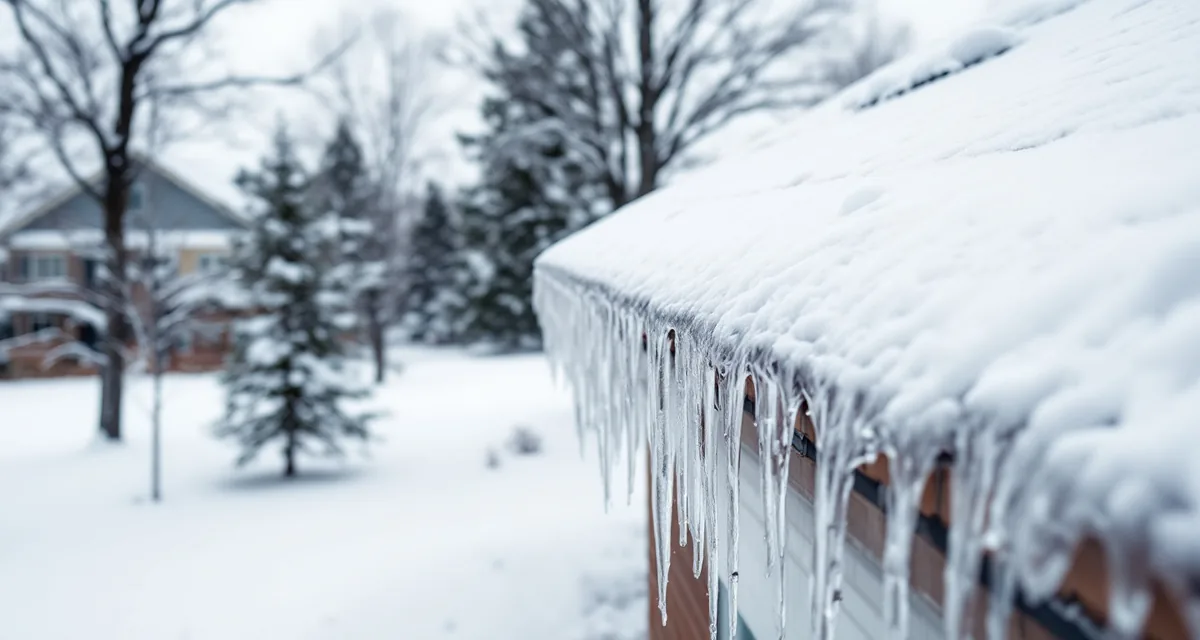
Ice dam removal is bought in the worst week of the winter
- Cost is hours. An hourly rate, a minimum, a travel charge and sometimes an emergency premium. Ask for all four in writing.
- Steam is the method. Chipping, salt and pressure washing are the ones that leave you needing a roofer afterwards.
- Insurance splits the loss. Damage from the dam is generally covered. Removing the ice often is not.
What it is, and why nobody schedules it
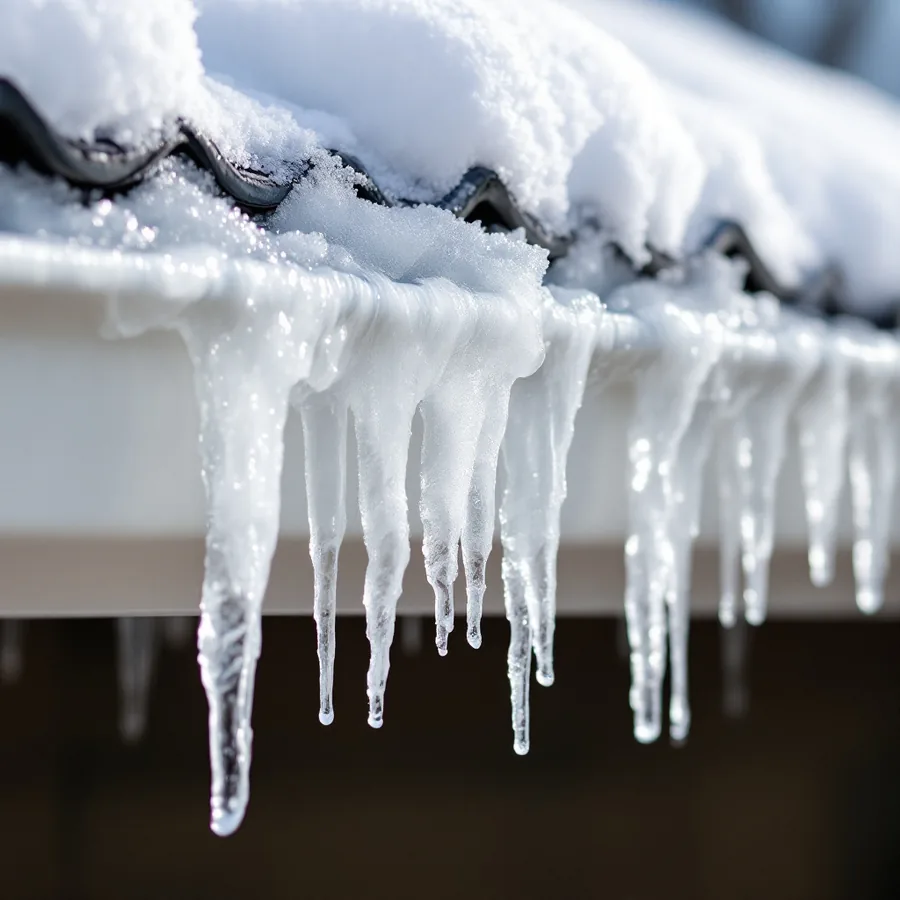
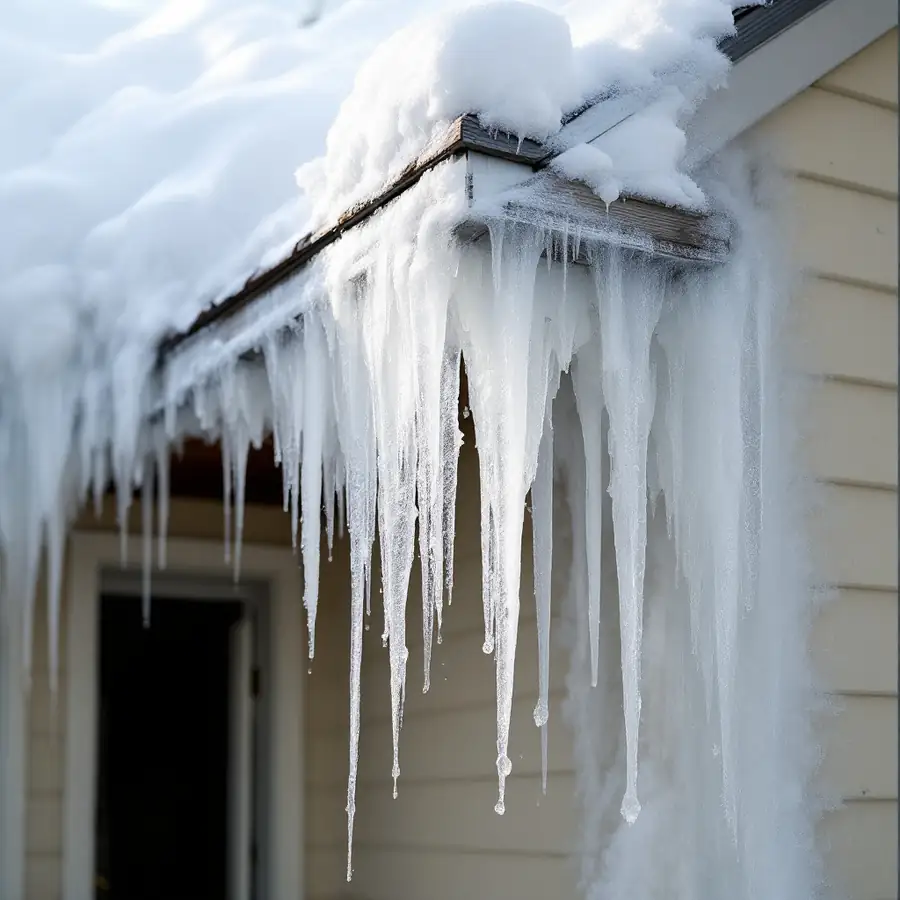
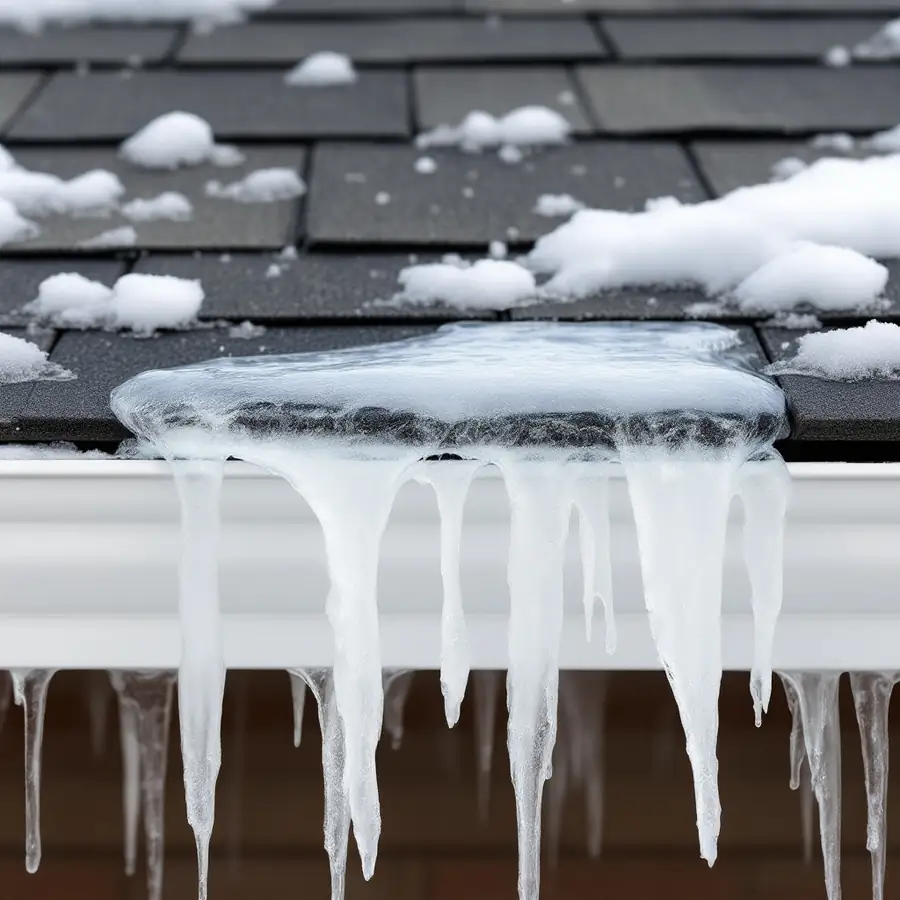
An ice dam is a ridge of ice along the lower edge of a roof that holds meltwater behind it. Removing one means getting that ridge off the roof, or at least cutting drainage channels through it, without damaging the shingles underneath. Roof ice dam removal, ice dam roof removal and ice dams on roof removal are three ways of typing the same job, and the job has one feature that sets it apart from almost everything else a roofer does: nobody schedules it.
You do not buy ice dam removal in October. You buy it on the day water appears on a ceiling, in the same week as several thousand other people in the same city, from a trade that could not afford to keep that many crews on the payroll for the winters when nothing happens. That is the whole economics of the thing, and it is why the ice dam removal cost you are quoted has less to do with your roof than with the calendar.
So this page does three things in order. It shows how often the bad week actually arrives, from our own count of weather records. It takes the bill apart line by line, without quoting prices we cannot stand behind. And it sets out what to check about the method and the company, because the cheapest hour is the one that does not end with a damaged roof.
Our Own Count
Our count: dam weather by city across twenty winters
We pulled daily station records for cold-climate cities and counted the days on which an ice dam can grow or leak. The typical winter and the worst winter turn out to be different animals.
What was counted
The Global Historical Climatology Network daily archive, kept by NOAA's National Centers for Environmental Information, holds each station's daily maximum and minimum temperature and the depth of snow on the ground. We took twenty winters, from 2005-06 through 2024-25, and counted two kinds of day. A dam day has at least four inches of snow on the ground and a daily high at or below freezing: there is snow on the roof, the outside air never thaws, and whatever the attic melts refreezes at the eave. A thaw day has the same snow, a high above freezing and a low below it: the dam softens, holds water, and that is usually the day the ceiling starts to drip. Those definitions are ours, and the limits of them are stated below the table.
The table
| City | Median winter, days | Worst winter | Quietest winter |
|---|---|---|---|
| Anchorage, Alaska | 137.5 | 162 (2006-07) | 11 (2015-16) |
| Sault Ste. Marie, Michigan | 118.5 | 140 (2014-15) | 39 (2023-24) |
| Duluth, Minnesota | 96 | 135 (2013-14) | 22 (2011-12) |
| Fargo, North Dakota | 73 | 128 (2010-11) | 0 (2023-24) |
| Concord, New Hampshire | 57 | 120 (2007-08) | 18 (2011-12) |
| Burlington, Vermont | 45.5 | 80 (2010-11) | 3 (2015-16) |
| Bangor, Maine | 45 | 83 (2013-14) | 9 (2005-06) |
| Minneapolis, Minnesota | 42 | 101 (2010-11) | 1 (2011-12) |
| Syracuse, New York | 41.5 | 82 (2010-11) | 7 (2011-12) |
| Green Bay, Wisconsin | 39.5 | 97 (2007-08) | 12 (2011-12) |
| Madison, Wisconsin | 36 | 89 (2007-08) | 1 (2024-25) |
| Portland, Maine | 33.5 | 78 (2007-08) | 6 (2023-24) |
| Rochester, New York | 23.5 | 66 (2010-11) | 3 (2022-23) |
| Grand Rapids, Michigan | 23 | 91 (2013-14) | 6 (2019-20) |
| Buffalo, New York | 21 | 70 (2010-11) | 5 (2011-12) |
| Milwaukee, Wisconsin | 17 | 75 (2013-14) | 2 (2021-22) |
| Albany, New York | 17 | 64 (2010-11) | 0 (2015-16) |
| Sioux Falls, South Dakota | 16 | 94 (2022-23) | 4 (2021-22) |
| Des Moines, Iowa | 15 | 86 (2009-10) | 0 (2016-17) |
| Billings, Montana | 15 | 59 (2017-18) | 3 (2019-20) |
| Detroit, Michigan | 13.5 | 68 (2013-14) | 3 (2011-12) |
| Cleveland, Ohio | 12 | 40 (2009-10) | 0 (2022-23) |
| Chicago, Illinois | 11.5 | 40 (2014-15) | 0 (2019-20) |
| Spokane, Washington | 10 | 47 (2016-17) | 0 (2009-10) |
| Salt Lake City, Utah | 8 | 45 (2012-13) | 0 (2011-12) |
| Omaha, Nebraska | 7.5 | 74 (2009-10) | 0 (2013-14) |
| Pittsburgh, Pennsylvania | 7.5 | 40 (2009-10) | 0 (2015-16) |
| Providence, Rhode Island | 6 | 42 (2014-15) | 0 (2019-20) |
| Denver, Colorado | 6 | 57 (2006-07) | 0 (2017-18) |
The part that changes what you do
Take Minneapolis, the city most ice dam companies are built around. The median winter there had 42 days of dam weather. The winter of 2010-11 had 101. The winter immediately after it, 2011-12, had 1 day. Demand for the same service in the same city moved by a factor of a hundred between two consecutive years.
That is not peculiar to Minnesota. Across all 29 cities the worst winter had a median of 3.3 times the dam weather of the typical one, and in 22 of the 29 it was at least double. 11 of the 29 cities had at least one winter with no dam weather at all. Chicago's median winter had 11.5 such days, its worst had 40, and 3 of its winters had none. Denver's median was 6 and its worst 57.
Two things follow, and they pull in opposite directions. In the far north the dam is a permanent winter condition and removal is a recurring bill until the cause is fixed. Everywhere else, the typical winter teaches a house nothing, and then one winter in several arrives with three or four times the exposure and no crew to be had. Most of the money spent on ice dam removal is spent in those winters.
What this count cannot tell you
- Snow depth is measured on the ground, not on your roof. A roof sheds, drifts and melts differently. Read the count as weather your roof was exposed to, not as days it had a dam.
- Weather is half the cause. A cold, well sealed attic can sit through every one of these days without a dam. The count says how often a leaky house is tested, not whether yours is leaky.
- One station per city. An airport is not a neighbourhood, and lake-effect bands can double the snow a few miles away.
- Three stations were left out. Boston, Worcester, Hartford did not have usable snow depth records for enough of the winters, and a thin record would have produced a low count that looked like a fact.
The Bill
Ice dam removal cost: what the bill is made of
How much does ice dam removal cost is a question with an honest answer in four parts and no honest answer in one number.
Why we publish the lines and not a figure
We do not print an average cost for ice dam removal, or an average cost of ice dam removal by state, and it is not coyness. The cost for ice dam removal on a given house is hours multiplied by a rate, and both move more between one week and the next than a national figure moves between years. A number printed here would be right for almost nobody and would be quoted back to a contractor as if it meant something. What holds still is the structure of the bill, and a homeowner who knows the structure can tell a fair quote from an opportunistic one in about a minute.
Per hour is the unit
Ice dam removal cost per hour is the figure to ask for first, because every other number on the invoice is built on it. If the question is how much does professional ice dam removal cost, the answer is that rate multiplied by the time on site, with the three other lines below added on. An ice dam steam removal cost runs higher by the hour than rougher methods, for the plain reason that steam is slower, and the section on method explains why the slower hour is usually the cheaper one.
The four lines
| Line | What it is | Ask |
|---|---|---|
| Hourly rate | The charge per hour of work on site, usually for a crew of two with one machine. | Per crew or per person, and does the clock start at arrival or at the first steam? |
| Minimum charge | A floor of so many hours billed regardless of how fast the job goes. | How many hours, and is it waived if the job is next door to another one? |
| Travel or trip charge | A fixed fee or billed drive time for getting the truck to you. | Flat or by the hour, and from where? |
| Emergency premium | A higher rate for same-day, night or weekend work. | What exactly triggers it, and what is the rate if you wait until tomorrow? |
What is usually not on the bill and should be asked about
Snow removal from the roof above the dam, which a crew generally has to do before it can reach the ice, is sometimes billed at the same hourly rate as steaming and sometimes at a lower one. It is faster work and worth asking about. Interior work is a separate trade entirely. An ice dam removal service takes ice off a roof; it does not dry a ceiling or repair one.
The machine is not the visit
People searching for an ice dam steamer cost are often pricing the wrong thing. The machine costs what a machine costs, and that is the owner's problem. What you are buying is a professional ice dam removal service cost made of the four lines above, and a company that has just bought a steamer needs to recover it in a short season, which is one reason rates rise so sharply in a bad winter.
The Multiplier
What decides the hours
The rate is the company's. The hours are mostly yours, and several of them can be removed before the truck arrives.
Six things that set the clock
- Length of eave. Ice is removed by the linear foot. A dam along one side above the kitchen is a different job from a dam around the whole perimeter.
- Thickness. A dam that has been building for three weeks is several times the ice of one caught in its first week. This is the factor that punishes waiting.
- Snow above it. Every foot of snow on the lower roof has to come off before the ice can be reached. Raking it yourself, safely and from the ground, removes billable time.
- Height and pitch. A second-storey eave or a steep roof means ladders, staging or tie-off, and all of that is time before any ice comes off.
- Valleys, dormers and skylights. Ice packs into every inside corner. An ice dam around skylight flashing or in a roof valley is slow hand work with the wand.
- Access. How close the truck gets, whether there is water on site, and whether the path to the ladder has been shovelled.
The arithmetic, with your numbers
Take the quote apart the way the invoice will be built. Hours on site, or the minimum if that is larger, multiplied by the hourly rate. Add the travel charge. If it is an emergency call, apply the premium to the rate before multiplying. That is the whole sum. The useful thing about writing it out is that it shows which term you control: you cannot change the rate, you can sometimes avoid the premium by a day, and you can nearly always reduce the hours.
The cheapest hours are channels
If water is coming in, the leak stops when the meltwater has somewhere to go, not when the last of the ice is gone. A crew that cuts channels through the dam every few feet relieves the water in a fraction of the time full removal takes. Ask for that first. Whether to pay for the rest becomes a decision you make once the ceiling has stopped dripping, rather than one made for you at the emergency rate.
The Method
Steam ice dam removal, and how to tell a steamer from a pressure washer
The method matters more than the rate, because the wrong one converts a removal bill into a roof repair.
Why steam
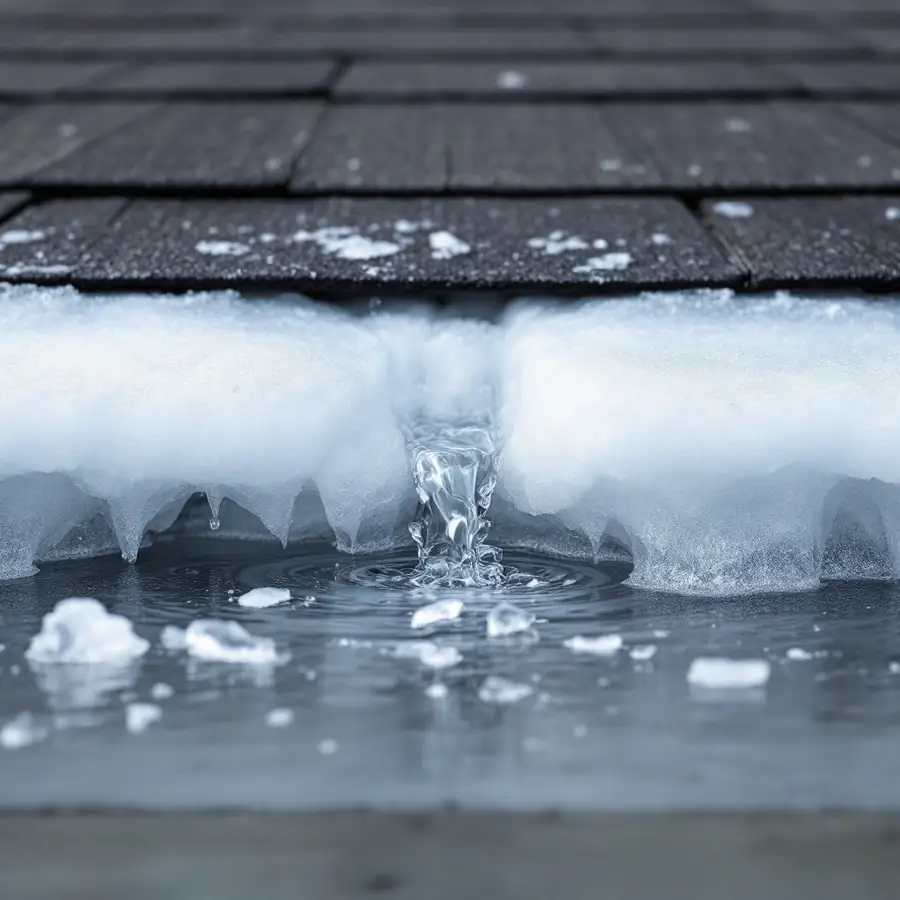
Ice dam removal with steam melts the bond between ice and shingle instead of breaking it. The wand cuts the dam into blocks that slide off, and the roof surface underneath is touched by vapour rather than by a tool. That is why specialist companies advertise it as the standard, and why the alternatives all share one defect: they act on the roof as well as on the ice.
What the alternatives do to shingles
| Method | How it works | What it risks |
|---|---|---|
| Low-pressure steam | Melts through the ice and releases it from the surface. | Slow, and therefore the dearest by the hour. Little risk to the roof when done with care. |
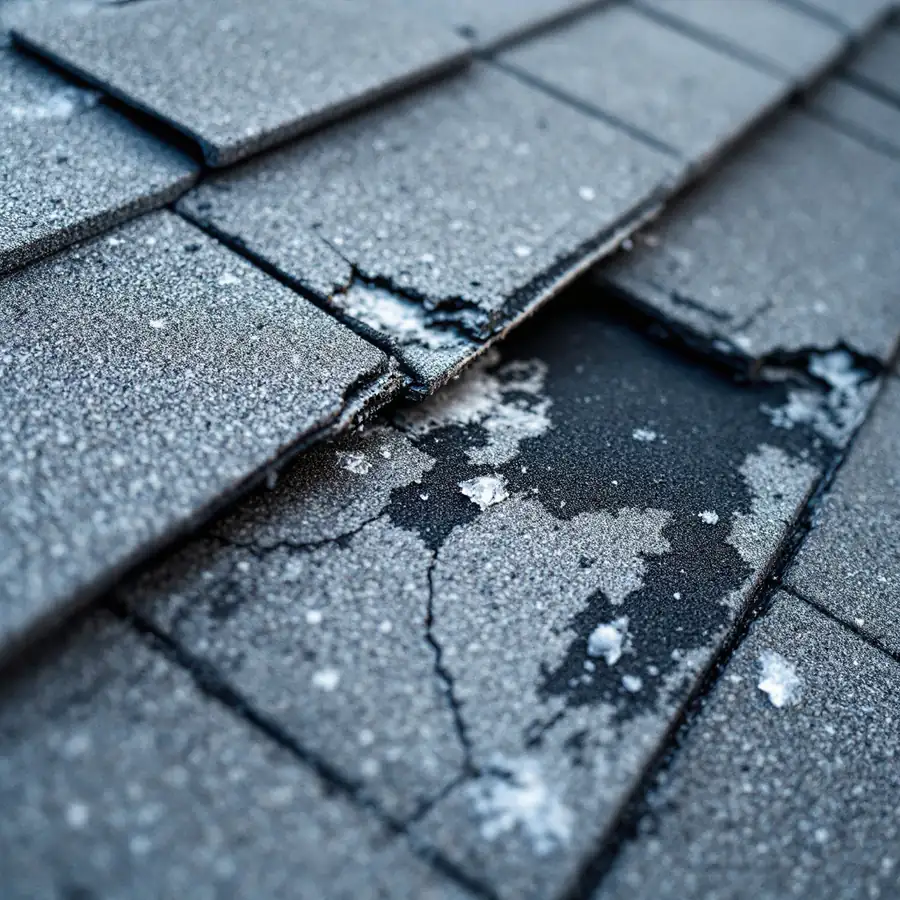
| Hot pressure washing | Cuts ice with a jet of hot water. | The same jet can strip granules and drive water up under the laps. |
| Chipping | Hammer, hatchet, chisel or shovel. | Cold shingles are brittle. Wisconsin's insurance regulator says plainly not to chip ice away, because it may damage shingles. |
| Rock salt | Lowers the melting point. | Corrodes metal, stains, and is hard on whatever grows under the eave. |
| Calcium chloride in a stocking | Melts a narrow channel where it is laid. | Slow and partial. A stopgap for drainage, not removal. |
How to tell which machine has turned up
The two machines look alike from the driveway, and in a busy winter plenty of pressure washers get described as steamers. Three things separate them. Ask what comes out of the wand: a steamer produces a soft plume of vapour, while a pressure washer produces a hard jet that carves. Ask what pressure it runs at, and expect a specific and low answer rather than a shrug. And watch the first minute of work: steam melts a clean slot, a jet throws ice and water. If granules are washing down the gutter, stop the job.
Renting the machine yourself
People do look for an ice dam steamer rental, and it is worth being clear about what a rented machine leaves out. It does not come with the ladder work, the fall protection or the practice it takes to release ice without lingering on one spot. The steamer is the small part of the service. The part you are paying a crew for is doing it on an icy roof and coming down again.
The cheapest method is not the cheapest outcome
A faster method at a lower hourly rate can be the expensive choice if it shortens the life of the roof. Granules are the surface that protects asphalt from the sun, and a roof that lost them in February shows it in August. Our page on how long a roof lasts explains why that surface is the clock on a shingle roof.
On The Day
What a professional ice dam removal service does, in order
Knowing the sequence lets you see whether the hours are being spent or padded.
- Look inside first. A good crew asks where the water is showing, because that tells them which stretch of eave to open first.
- Set up access. Ladders, tie-off and a clear path. This is real time and it is billed.
- Take the snow off above the dam. Usually the lower several feet of the roof, so the ice can be reached and so nothing is left to feed it.
- Cut channels. Slots through the dam down to the roof surface, so trapped water drains at once.
- Remove the dam in blocks. Steam under and behind each section until it releases, then slide it off rather than pry it.
- Clear the gutter and the downspout last. So the water that follows has a way down.
- Tell you what they saw. Lifted shingles, bare patches, the places the ice was thickest. That last one is a map of where your attic is losing heat.
Professional ice dam removal done in that order solves the leak early and leaves the slow, thorough part to the end, where you can decide how much of it you want. A crew that starts at one corner and works steadily round the house is being thorough at your expense.
Hiring
Who to call for ice dam removal: companies and contractors, and what to check
In a bad winter anyone with a ladder and a truck becomes an ice dam removal company. Five checks sort them.
Who actually does this work
Ice dam removal companies come in three kinds. Specialists who do little else in winter and own steam equipment. Roofing contractors who take it on for their own customers and sometimes for anyone. And seasonal operators, often from another trade or another state, who appear when the phones start ringing. Ice dam removal contractors of the first two kinds have a reputation in your town to protect in April. The third kind may be excellent or may be gone by then.
The five checks
- Insurance, in writing. Liability and workers' compensation, with a certificate you can read. Someone is about to stand on an icy roof at your address.
- The rate, in writing. Hourly rate, minimum, travel and emergency premium on one sheet before work starts. An ice dam removal service that will not write its rate down has told you what the invoice will be like.
- Steam, specifically. Ask what machine and what pressure. See the section above.
- A local address or a local reference. Someone in your town who used them last winter, or a business that will still exist in spring.
- An itemised invoice. Arrival time, departure time, crew size. You will want it if an insurer becomes involved.
What we do, and what we do not
We are a referral service, not a roofing company. We connect homeowners with independent licensed and insured roofing companies and we are paid a fixed fee for the introduction, whether the visit ends in an hour of steam or in nothing at all. We do not remove ice, set anyone's rate, or promise that a crew is free in your area this week. In the kind of winter the table above describes, that last point is the honest one.
Your Own Hands
DIY ice dam removal: what works from the ground and what damages the roof
There is a real version of DIY ice dam removal, or do it yourself ice dam removal as it is often typed. It happens on the ground, and most of it is about the snow rather than the ice.
What works
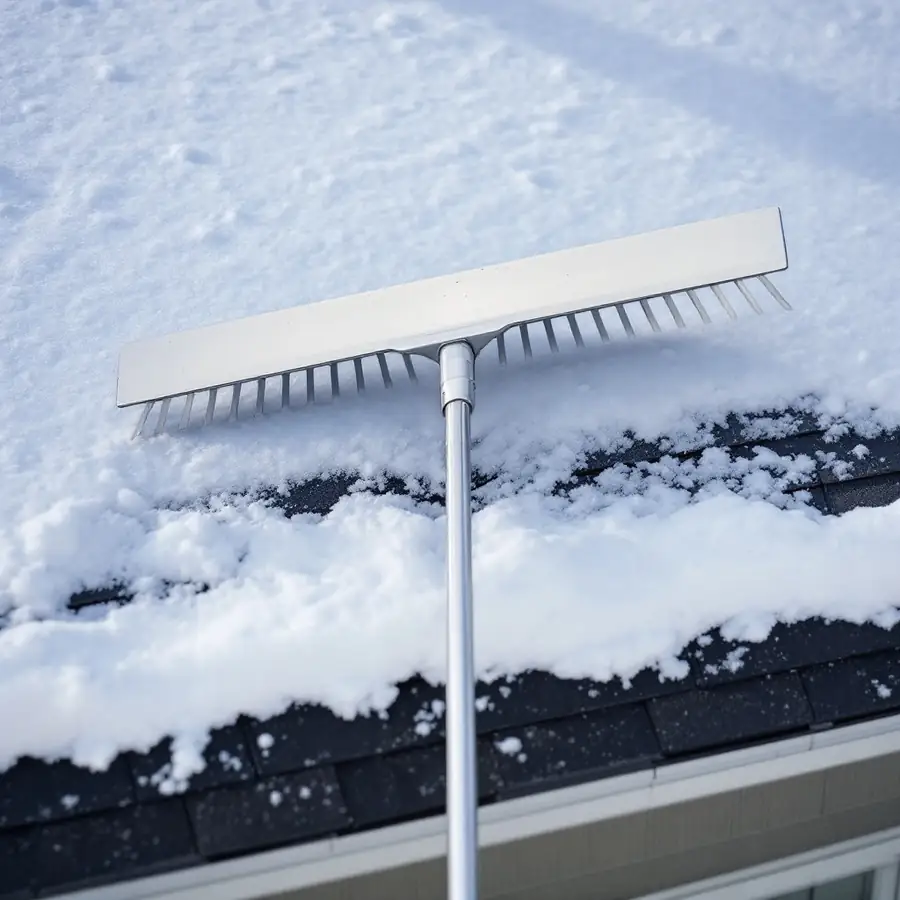
A roof rake, which is a long-handled blade for pulling snow off the lower roof while you stand on the ground. Clearing the bottom few feet takes away the supply of meltwater, and a dam that is not being fed stops growing. Wisconsin's Office of the Commissioner of Insurance gives exactly this advice: remove snow from the bottom portion of the roof with a roof rake or push broom. North Dakota State University's extension engineer adds the caution that matters most, which is to keep the rake well clear of overhead power lines.
What sometimes helps
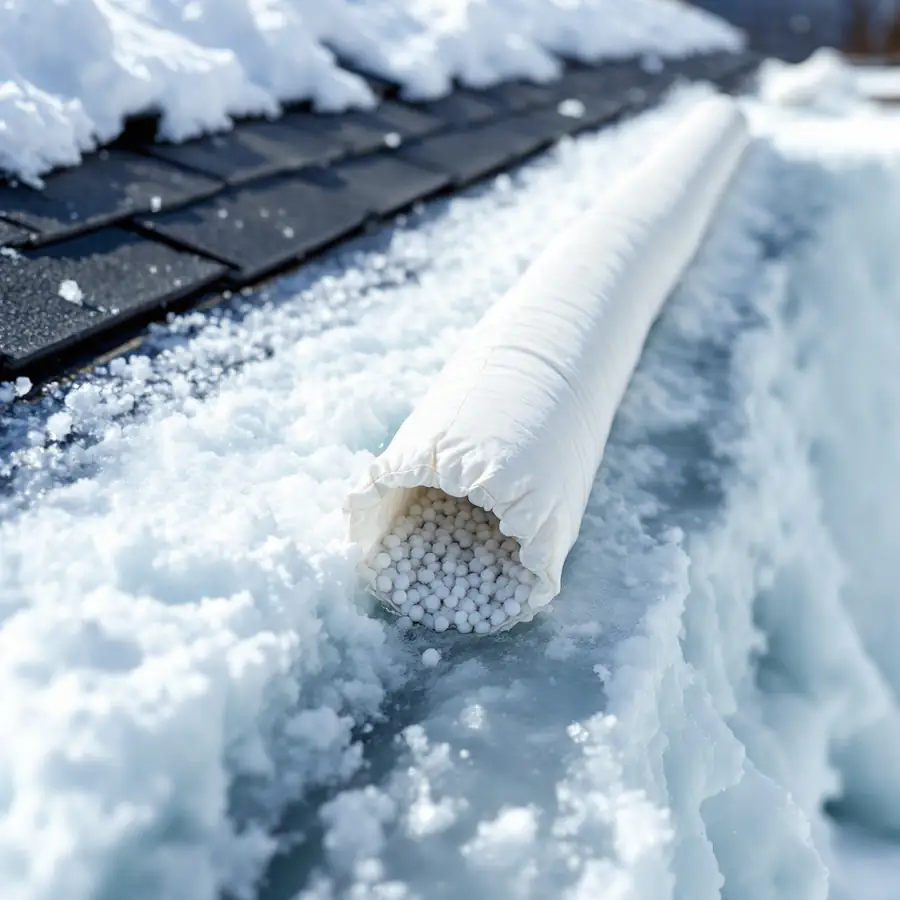
Calcium chloride ice melt in a fabric tube, laid across the dam so that it melts a channel for water to escape. It is slow, it clears a slot rather than a dam, and the runoff is not kind to plants or metal. As a way of relieving a leak while you wait for a crew it has a place. As ice dam removal DIY it is a drain, not a cure.
The ice dam removal tool list that should stay in the garage
- Hammer, hatchet, chisel, ice pick. Shingles are brittle in the cold and the ice is bonded to them. What comes away comes away together.
- Rock salt. Hard on metal flashings, gutters and the garden below.
- A pressure washer. The same objection as when a contractor brings one.
- A ladder against an icy eave. This is the one that puts people in hospital, not the ice.
- A heat gun or open flame. Asphalt, underlayment and wood are all fuel.
The line between the two
Anything you can do standing on the ground is a reasonable thing to try. Anything that needs you on the roof or on a ladder against ice is the work you are paying a crew with fall protection to do. The federal workplace safety agency's alert on this kind of work opens with the sentence that every year workers are killed or seriously injured clearing snow and ice from roofs, and those are people who do it for a living.
The Edge
Ice dam removal from gutters
The gutter is where the ice is most visible and least important.
Why the gutter is not the dam
A gutter full of ice looks like the problem, and gutter ice dam removal is what many people ask for first. But the gutter hangs out in the cold air beyond the wall, and ice in it is harmless until it joins the ice on the roof behind it. The dam that leaks is the ridge sitting on the shingles above the heated house. Clear that and the gutter becomes a cosmetic matter.
What goes wrong when the gutter is attacked first
A gutter packed with ice is carrying a great deal of weight on a few fasteners. Prying at it pulls the hangers, bends the trough and can take the fascia board with it. Ice dam removal from gutters is done last and with steam for that reason: melt the ice free, let it drop in pieces, and open the downspout so the next thaw has somewhere to go.
Gutters do not cause ice dams
Houses with no gutters at all get ice dams. The National Weather Service does advise keeping gutters and downspouts clear so melting snow can drain, which is sound, and it does not follow that a clean gutter prevents a dam. The cause is above the gutter and inside the house.
The Supply
Roof snow and ice removal: when taking the snow off is the better purchase
An ice dam is made of yesterday's snow. Removing the snow is cheaper than removing the ice it becomes.
Two different jobs under one name
Roof snow and ice removal covers two services that are priced and performed differently. Taking snow off a roof is quick, done with rakes and shovels, and prevents a dam from forming or growing. Roof ice removal is slow, done with steam, and deals with a dam that already exists. A company quoting for ice and snow removal from roof should tell you how much of the time is which.
When snow removal is the right call
After a heavy fall with a cold week forecast, on a house that has dammed before. When a dam exists but has not leaked, and you want it to stop growing. And when the weight itself is the worry, on a low-slope section or an older structure. In each case ice removal from roof surfaces may never be needed if the snow goes first.
The part nobody should do casually
The Occupational Safety and Health Administration's hazard alert on removing snow from rooftops reports that falls cause the most worker deaths and injuries in this work: off roof edges, through skylights, and from ladders. Its first planning question is whether the snow can be removed without anyone going onto the roof at all. That is a good question for a homeowner to ask a contractor, and a better one to ask oneself.
Right Now
Ice dam roof leak: what to do tonight
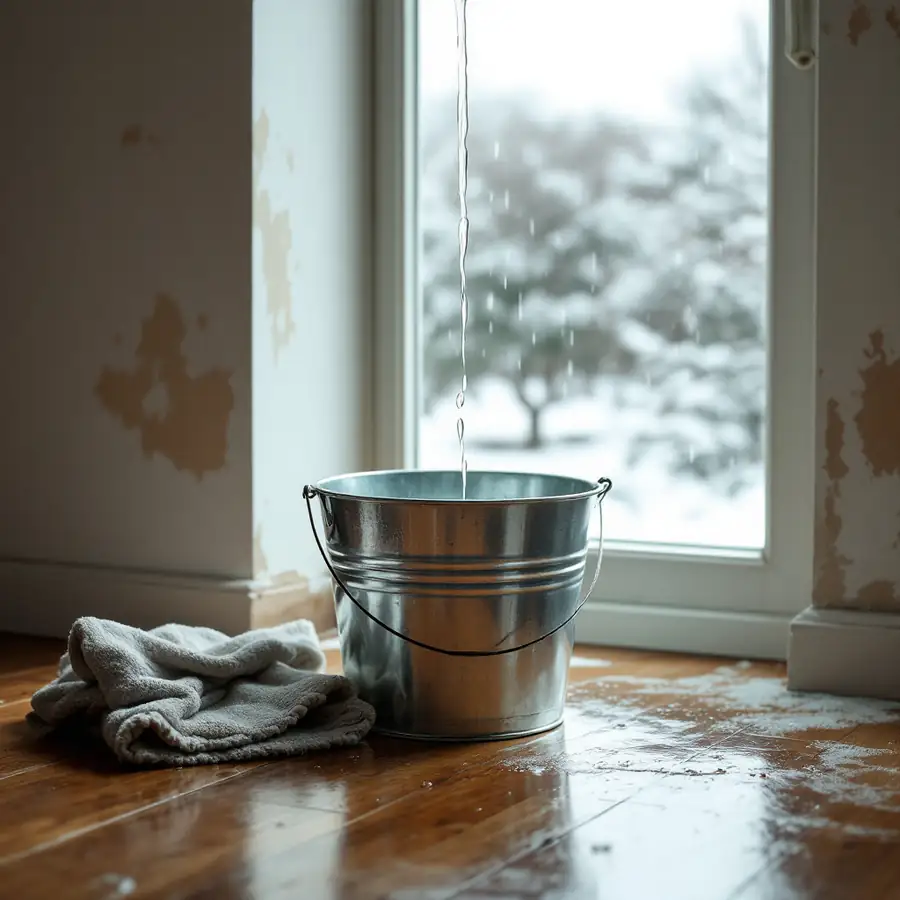
An ice dam leak is water that has been standing on the roof and has found a way under the shingles. The roof is not broken. The water is in the wrong place.
Recognising it
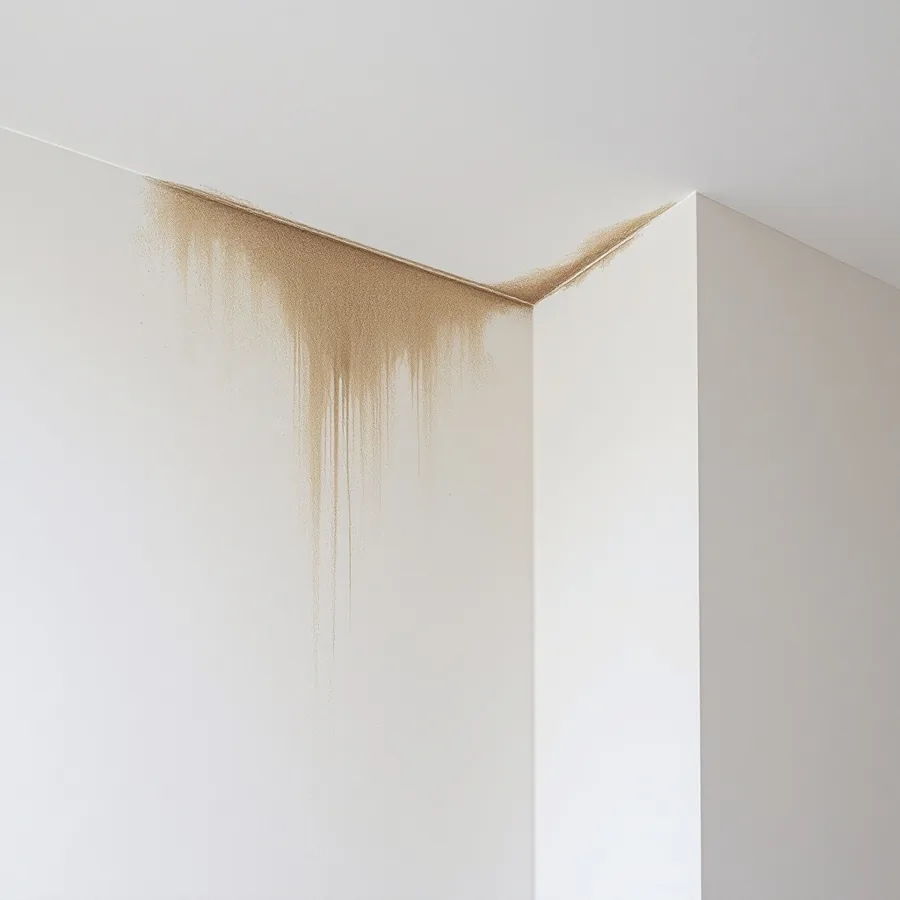
An ice dam on roof causing leak shows up in a particular place: on the ceiling or the top of the wall along an outside wall, often above a window, and often days after the snowfall rather than during it. The National Weather Service describes the sequence as heavy snow that melts by day and refreezes at night, and notes that it usually takes several days of that cycle before water works its way under the shingles.
In order
- Contain it. Buckets, towels, plastic over furniture. If a ceiling is bulging, a small hole at the lowest point lets the water out in one place instead of bringing the plaster down.
- Photograph everything before you move it. The stain, the ice outside, the date. This costs nothing and is the first thing an adjuster asks for.
- Take away the supply. Rake the snow off the lower roof from the ground if you safely can.
- Call for channels, not for full removal. See the section on hours above.
- Dry it properly afterwards. Wet insulation and a wet wall cavity are a second problem with their own clock.
What it is not
An ice dam causing roof leak in February does not mean the roof needs replacing in March. If the same ceiling stays dry through spring rain, the roof is doing its job and the dam was the fault. If it leaks in rain as well, that is a different fault, and our page on roof leak repair works through how to tell which one you have.
Who Pays
Is ice dam damage covered by insurance, and is ice dam removal covered
Two questions that are nearly always asked as one, with two different answers.
The damage: generally yes
Are ice dams covered by homeowners insurance, and does homeowners insurance cover ice dam damage? State regulators say that in general it does. The Connecticut Insurance Department's winter claim guidance puts it in one sentence: interior or exterior damage caused by an ice dam on a roof is generally covered. Wisconsin's regulator explains the logic, which is that water coming from the top down, including ice dam seepage behind drywall, is covered by a standard homeowner's policy. So where people ask does insurance cover ice dam damage, or does home insurance cover ice dam damage, the general answer from the people who regulate the policies is yes, subject to your own wording.
The removal: often no
Does insurance cover ice dam removal, as distinct from the damage? Is ice dam removal covered by insurance at all? The same Connecticut sentence finishes: however many policies do not pay for ice dam removal. That is the part of the loss this page is about, and for most households it is paid out of pocket. Some insurers may treat removal as a reasonable step to prevent further damage once a loss has begun, which is why the question has to be put to your own insurer and not to a web page.
| Part of the loss | Usual position | What changes it |
|---|---|---|
| Water damage inside | Generally covered | Your deductible; evidence it was sudden |
| Damage to the roof itself | Generally covered where the dam caused it | A roof already in poor condition |
| Removing the ice | Often not covered | Policy wording; whether damage had begun |
| Fixing the cause | Not covered | Nothing. Insulation is maintenance |
The condition that can undo a claim
The Wisconsin release carries a warning worth reading twice: homeowner's insurance may provide coverage for ice damage, but a roof already in poor condition before the weather event may affect that coverage. An ice dam insurance claim on a roof at the end of its life invites the argument that age did the damage. A dated roof inspection from before the winter is the cheapest answer to that argument there is.
The deductible arithmetic
Home insurance ice dam cover pays the damage above your deductible. So set the two numbers side by side. If the damage so far is smaller than the deductible, a claim pays nothing, and the removal bill is the whole of your loss whether you file or not. If the damage is well above it, the claim is worth making and removal is what stops the figure growing. For ice dam roof damage insurance claims the order of events matters: photographs, then mitigation, then permanent repairs only after the insurer has seen it. Our page on the roof insurance claim process covers how a scope gets agreed.
If ice dam damage covered by insurance is the question you arrived with, the short version is this. The ceiling is probably covered. The crew on the roof probably is not. And the insulation that would have prevented both never is.
Urgency
Emergency ice dam removal service: what the word changes
Emergency is a rate, a queue position and sometimes a sales word. Only one of those is worth paying for.
What it buys
An emergency ice dam removal service puts you ahead of scheduled work and sends a crew outside ordinary hours. In the kind of winter our count describes, that can be the difference between today and next week, and when water is running down a wall it is worth the premium.
When it is not an emergency
Ice with no water indoors is not one, however alarming it looks from the driveway. Icicles are not one. A dam that has been there a fortnight without leaking has told you it can wait until a weekday. In each case you can take the snow off, watch the ceiling, and book the work at the ordinary rate.
How to triage by leak
If you are told there is a wait, say where the water is. Crews in a bad week sort calls by active leaks first, and a caller who can say that water is coming through the kitchen ceiling at the outside wall is in a different queue from one who says there is a lot of ice. Say it accurately. Then ask for channels.
The Cause
Why it comes back: the dam is a heat problem
Removal treats this winter. The thing that produced the dam is still in the house.
Three ingredients
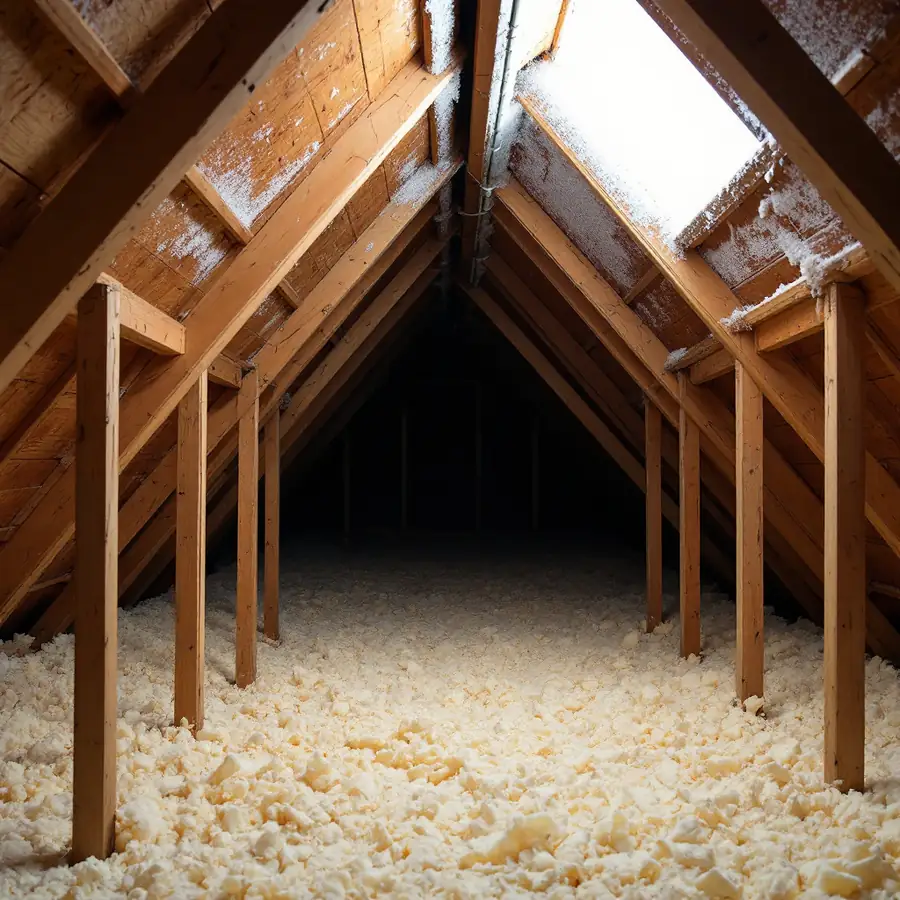
The Department of Energy's Building America program, through the Pacific Northwest National Laboratory, says ice dam formation requires three things to occur: snow on the roof, a poorly air sealed or poorly insulated attic, and freezing temperatures. You control one of them. Heated air leaking into the attic warms the underside of the roof deck and melts the snow above it; the water runs down to the cold eave and freezes.
The order of the fix
- Air seal the ceiling. The laboratory calls this the most important step: seal all of the air leaks from the conditioned space into the attic. Light fixtures, the attic hatch, plumbing and wiring holes, the tops of walls.
- Insulate. Only after sealing, or the insulation simply filters the warm air on its way through. The National Weather Service office in Grand Rapids cites at least R-30, with R-38 preferable in northern climates. North Dakota State University's extension engineer puts the northern figure higher, at roughly fifteen inches of blown insulation or R-50. The two differ, and both are well above what many older attics have.
- Ventilate. Cold air in at the eaves and out near the ridge, with a clear gap above the insulation at the eave so the air can actually move. The laboratory's guide gives that gap as at least two inches.
Reading your own roof
The place where the dam was thickest is the place the attic leaks most. Bare patches of roof while the neighbours' are white, icicles in one stretch and not another, a dam above the bathroom: each is a map. A crew that tells you where the ice was worst has given you the brief for the insulation contractor, free.
The comparison worth making once
Look up your city in the table. Multiply the median number of days by the years you expect to stay, and consider what one bad winter in that span would cost in removal and in ceilings. Against that, an afternoon of air sealing and a layer of insulation is a one-time purchase that also lowers the heating bill. In the far north the sum is not close. In the cities with a low median and a savage worst winter, it is the insurance you buy against the year nobody can book a crew.
The Two Add-Ons
Heat cables and the ice barrier: what each one does and does not do
Both are sold as ice dam solutions. One manages the water and one manages the leak, and neither touches the cause.
Heat cable
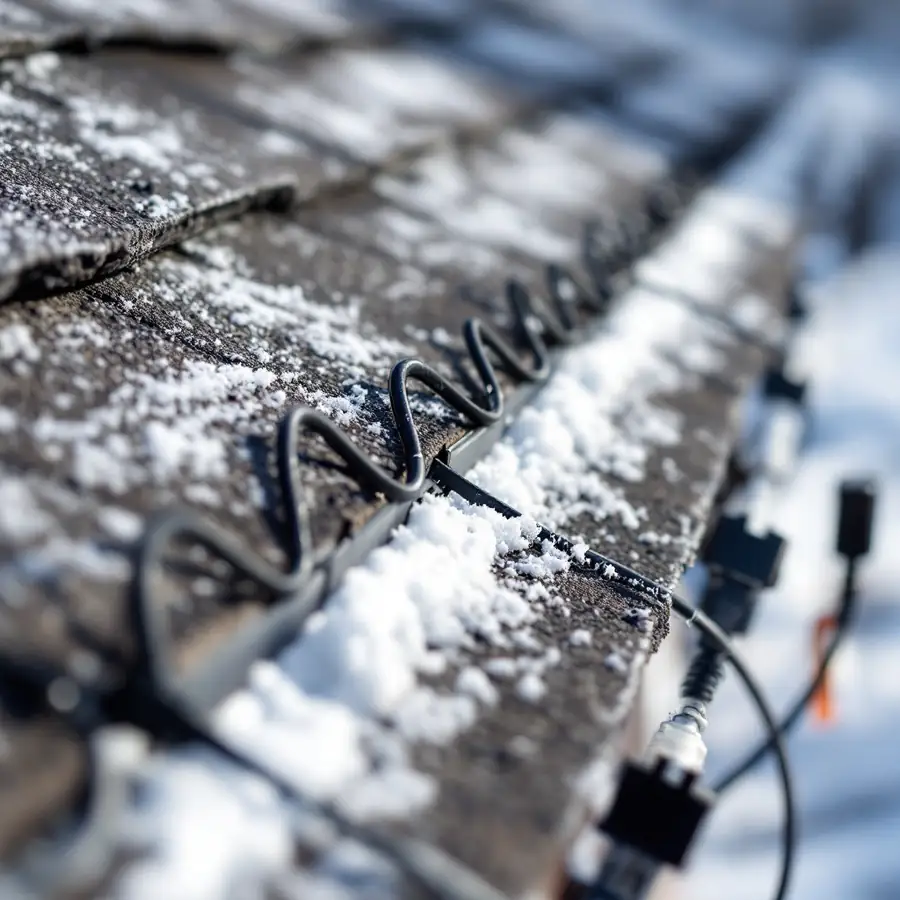
An ice dam heat cable is electric cable laid in a zigzag along the eave and through the gutter, and it keeps channels open so meltwater can drain. It does not stop the snow melting further up and it does not stop ice forming between the loops. On a roof where the architecture makes the real fix impractical, a cathedral ceiling or a valley over a heated room, it is a reasonable way of living with the problem. It runs on electricity all winter and it needs to be installed without puncturing what it sits on.
The ice barrier membrane
A self-adhered membrane under the shingles along the eave, which seals around the nails and keeps standing water out of the house. The laboratory guide notes that building codes often require it along the eaves, and it describes it as an added layer of protection if ice dams occur. That is the right way to read it: the membrane does not prevent a dam, it prevents the dam from becoming a leak. It can only be installed when the roof is being replaced, and our page on what a Michigan roof replacement includes shows how the requirement is written and measured.
On a metal roof
Can ice dams form on metal roofs? They can. Metal sheds snow faster and gives ice less to grip, and it still dams where heat escapes and where a valley or a low pitch holds snow. The cause is the attic, not the covering. Our page on standing seam metal roofing covers how those roofs handle snow.
Work It Out
Work out what you are actually buying
Three questions, nothing sent anywhere. What comes out is what our count says about your city, what to buy in your situation, what the bill will be made of, and the question to put to your insurer.
We are paid the same fixed fee for an introduction whether the visit ends in an hour of steam or in advice to buy a roof rake, which is why this tool has answers that tell you to buy less.
The Short List
Questions to ask before anyone climbs
Each has a short answer if the company does this work properly.
- What is your hourly rate, your minimum, your travel charge and your emergency rate? Four numbers, in writing.
- Is that per crew or per person, and when does the clock start? The commonest source of a surprising invoice.
- Is it steam, and at what pressure? A specific answer or none.
- Will you cut channels first? The fastest route to a dry ceiling.
- Is snow removal billed at the same rate? It is quicker work.
- Can I see your certificate of insurance? Before the ladder goes up.
- Will the invoice show arrival and departure times? For you, and for an adjuster.
- Where was the ice thickest? Ask it at the end. The answer is your insulation brief.
Straight Answers
Questions homeowners ask about ice dam removal
How much does ice dam removal cost?
It is billed by the hour, so the honest answer has four parts rather than one figure: an hourly rate, a minimum number of hours, a travel or trip charge, and sometimes an emergency premium. We do not publish an average because both the rate and the hours swing more between a quiet week and a bad one than any national number does between years. Ask a company for those four figures in writing and you can work out your own bill before the truck arrives.
Is ice dam removal covered by homeowners insurance?
Often not. The Connecticut Insurance Department states that interior or exterior damage caused by an ice dam on a roof is generally covered, however many policies do not pay for ice dam removal. Some insurers may treat it as a step to prevent further damage once a loss has started. Ask your agent the two questions separately, damage and removal, and get both answers in writing before the winter you need them.
Does homeowners insurance cover ice dam damage?
Generally yes, according to state insurance regulators, subject to your deductible and your policy wording. Wisconsin's regulator explains that water coming from the top down, including ice dam seepage behind drywall, is covered by a standard homeowner's policy, and adds that a roof already in poor condition before the weather event may affect that coverage. Photograph the damage before moving anything and keep receipts for whatever you do to stop it spreading.
Is steam the best way to remove an ice dam?
It is the method that acts on the ice and not on the roof. Steam melts the bond between ice and shingle so the dam can be cut into blocks and slid off. Chipping, rock salt and hot pressure washing all remove ice faster or more cheaply by the hour, and all of them can damage shingles in the cold. Ask what machine a company uses and what pressure it runs at, and watch the first minute of work.
Can I remove an ice dam myself?
You can do the part that happens on the ground. Pulling snow off the lower roof with a roof rake removes the supply of meltwater, and a dam that is not being fed stops growing. Calcium chloride in a fabric tube laid across the dam will melt a drainage channel slowly. Do not chip at the ice, do not use rock salt, and do not put a ladder against an icy eave. Keep the rake well away from overhead power lines.
Who should I call for ice dam removal?
A company that owns steam equipment, carries liability and workers' compensation insurance, and will put its hourly rate, minimum, travel charge and emergency premium in writing before starting. That is usually a winter specialist or an established local roofing contractor. In a severe winter many seasonal operators appear, and the five checks on this page are how to tell them apart. Have the number before the first storm if your house has dammed before.
How often do ice dams happen where I live?
It depends on the city and far more on the winter. In our count of 29 cities over twenty winters, Minneapolis had a median of 42 days of dam weather per winter, 101 in its worst and 1 in its quietest. Across all the cities the worst winter had a median of 3.3 times the dam weather of the typical one. The table on this page lists every city.
Will the ice dam come back after removal?
Yes, in the next spell of the same weather, unless the cause is dealt with. An ice dam needs snow on the roof, freezing air and heat escaping from the house into the attic, and removal changes none of those. The lasting fix is to air seal the ceiling below the attic, then add insulation, then make sure the attic is ventilated from eave to ridge. Federal building research lists air sealing as the most important of the three.
Do gutters cause ice dams?
No. Houses without gutters get ice dams, because the dam forms on the roof above the heated part of the house and not in the gutter. Keeping gutters clear helps meltwater drain during a thaw, which the National Weather Service recommends, and that is not the same as preventing a dam. Ice in the gutter matters only once it joins the ridge of ice on the shingles behind it.
Where This Comes From
Sources and method
- Our own count of dam weather by city, aggregated from the NOAA NCEI Global Historical Climatology Network daily archive: daily maximum, minimum and snow depth at one station per city, winters 2005-06 to 2024-25. The definitions of a dam day and a thaw day are ours. Method and limits are in the file published beside this page.
- What insurance generally covers: the Connecticut Insurance Department, Winter Insurance Claim Tips, as published 23 June 2026, and the Wisconsin Office of the Commissioner of Insurance, press release of 29 January 2019.
- Why dams form and the order of the fix: the Department of Energy Building America Solution Center at Pacific Northwest National Laboratory.
- Insulation levels and the melt and refreeze cycle: the National Weather Service office in Grand Rapids, and North Dakota State University Extension, release of 4 January 2023, quoting extension engineer Ken Hellevang.
- The hazards of rooftop snow and ice work: the Occupational Safety and Health Administration hazard alert, Falls and Other Hazards to Workers Removing Snow from Rooftops and Other Elevated Surfaces.
Our editorial standards explain how we source and check what we publish. Every source above was read on the day of publication. Where two of them give different insulation figures we print both. Nothing here is insurance or legal advice, and a claim is decided by your own policy wording. The city counts are our own aggregation of a federal archive, built on definitions we chose, and their limits are stated where they are presented. We publish no price averages and no product rankings. We are a referral service rather than a roofing company. Last updated .
Before you call anyone
The independent match — we are paid for the introduction, not for the size of your job
Most roofing advice is written by the company that wants to do the work. That is not a failing of the people who read it; it is a defect in who is talking. The estimate, the diagnosis and the invoice come from one party, and no amount of care on your side fixes that.
We are built the other way round. We do not repair roofs and we do not sell materials, so the payment reaches us when you are connected to a licensed, insured roofing company — the same amount whether your roof needs an eight-hundred-dollar repair or a twenty-thousand-dollar replacement. Nobody here has a reason to talk you into the larger number. How we make money and how we research are both written down.
Waiting is the one thing that actually costs money. An insurance clock runs from the date of the damage rather than the date you noticed it, and damage that sits through a season stops reading as sudden and starts reading as wear — which is the exclusion that pays nothing. And if your roof is simply worn out, say so on the call. No claim will pay for age, we will tell you that plainly, and you will have lost nothing but the call.